
A few days ago, I posted this image. It shows that the gender wage gap is mostly about married men and their exceptional earnings. In this thread, I'm going to explain why married men earn so much more than everyone else🧵

The question is: Does marriage maketh man? Or Are all the good men married? That is, does marriage lead men to earn more, or do men who earn more get married more often?

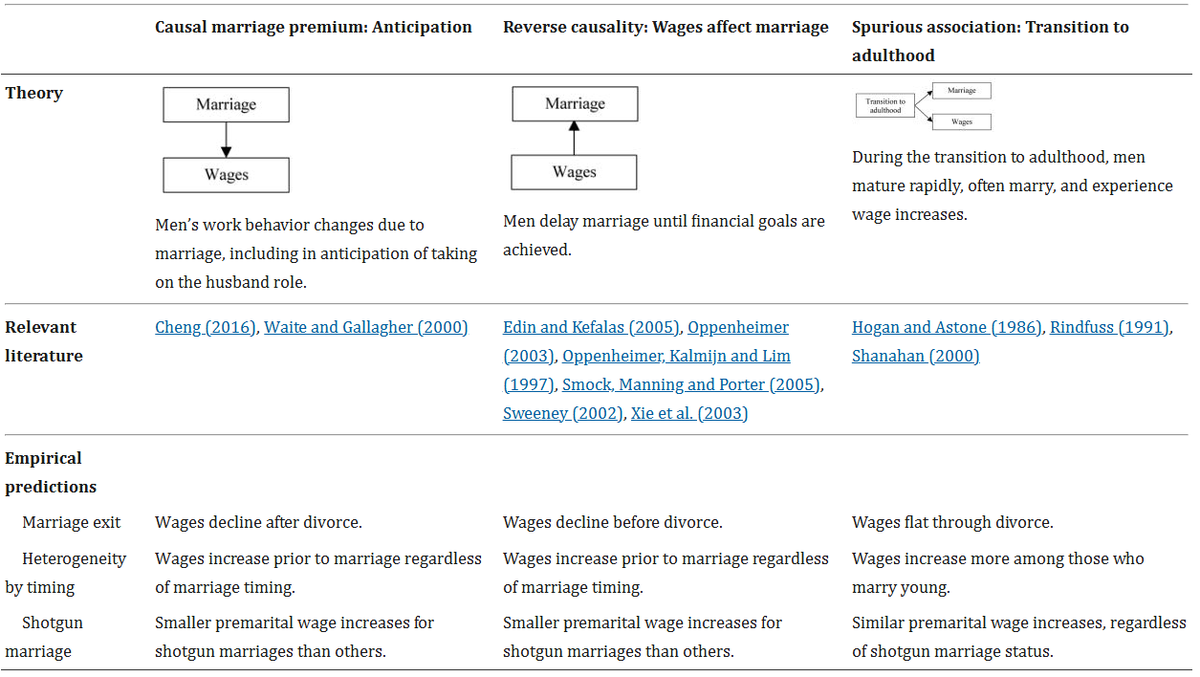
To answer this question, we have to work through the predictions of different theories. For example, one of my favorite papers on the subject looked into three different hypotheses to explain the "marriage premium" to wages, and they laid out a few testable predictions:
One of the first things they did in this paper was plot wage trajectories—growth or declines in how much people are earning over the years—around marriage. Take a look at this and see if you notice anything.
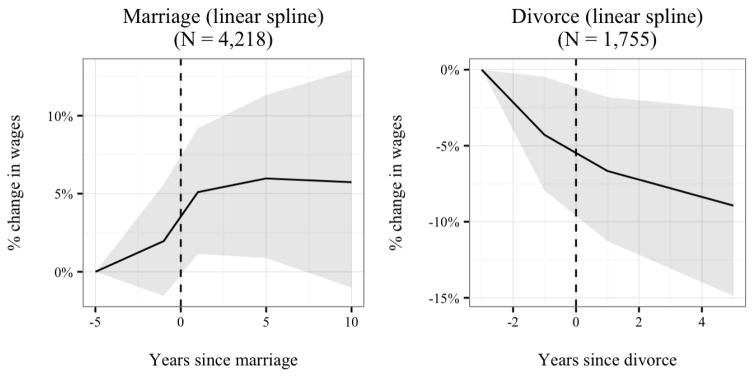
Now, I can download the data they used and replot their results with ease. I'm going to do this with more years, a larger sample, and with some added controls for childbearing. Give this chart a strong once-over:

These marriage charts raise a few questions. Firstly, what is the marriage premium? Is it the rise over time leading up to marriage? The apparent non-effect of marriage actually happening? The decline that sets in shortly after for women (and particularly those who have kids)?
If you look back at the hypotheses the paper outlined, you'll see that the "Anticipation hypothesis" predicts this result That theory holds that wages will rise prior to marriage, so long as marriage is predictable But that hypothesis also predicts a wage decline after divorce
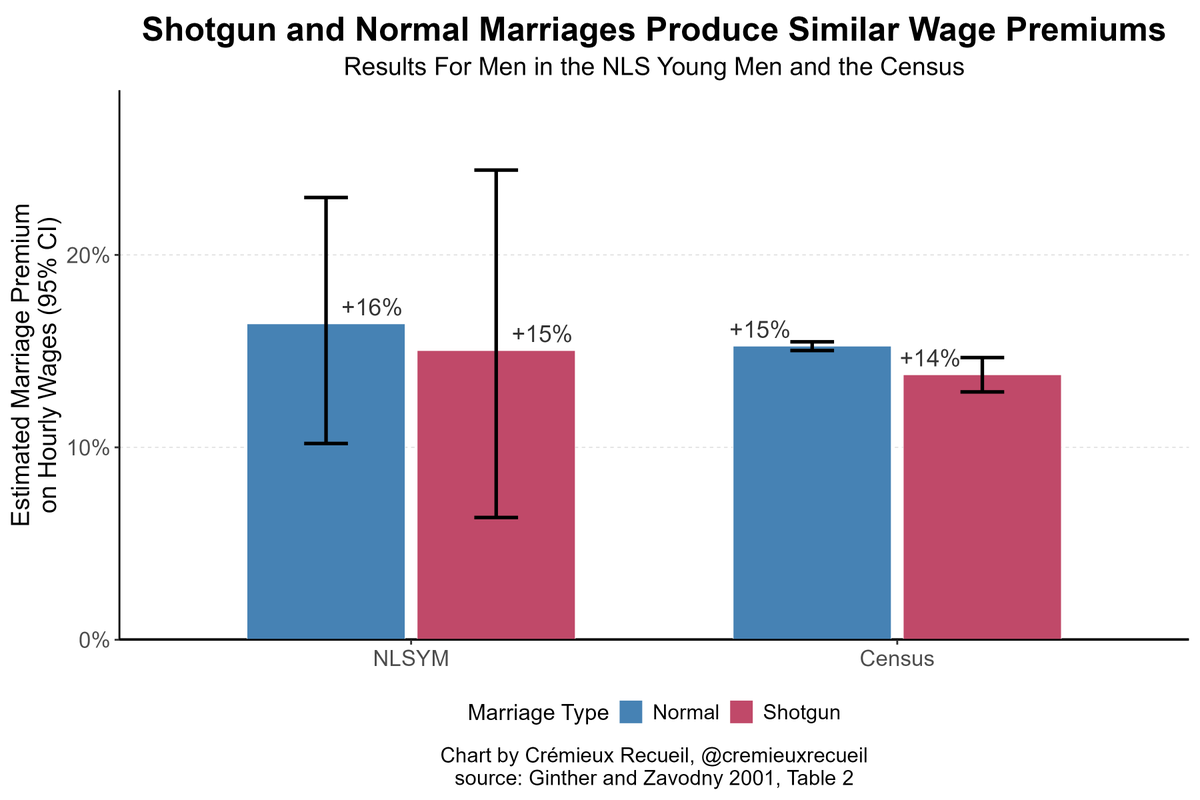
We see, instead, that divorce tends to follow a man's wages going down. Curious! We can test Anticipation further by using shotgun marriages to see if anticipating getting married is really explanatory. The answer seems to be "no". This also strikes against Reverse Causality.
Perhaps more interestingly, the authors of the paper looked at whether the marriage premium was related to the age at which people got married. The answer was a resounding "Yes!" (and I can replicate this with narrow CIs in their data)
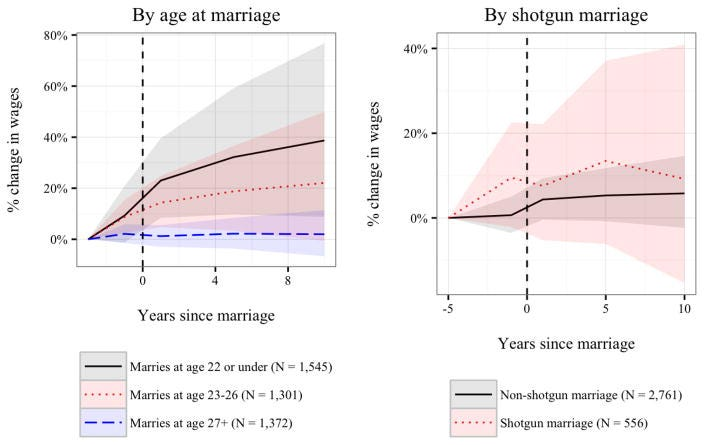
You might ask why that last finding, about age at marriage, seems to matter. The answer is that it means the marriage premium is about maturation. The people who get married were already on an upward wage trajectory, and being on that path increases the odds of marriage.
In short, the marriage wage premium is mostly not about marriage motivating men, discrimination in favor of the married, splitting the housework with a wife, or anything like that. It's about the selection of mature men and women into embracing marriage.

If you want to learn more about this subject, go check out my latest article. It includes a lot more data than what I've shown here! Link: https://www.cremieux.xyz/p/are...
@cremieuxrecueil Any data from more recent years?
@jason_wine Yeah, lots.



@cremieuxrecueil I like how everyone is responding to this thread with their statements of theories that are explicitly not borne out by this data 🥴
@amelapay It really makes me think I'm writing this all for nothing. Anecdotally, it seems this way on every subject where people already have a developed opinion, and they only follow the thread's conclusions when it's something out of their wheelhouse.
@cremieuxrecueil If divorce follows a man’s wages going down then the fact that married men earn more wages is not the result of being married but rather that they are married because of their higher wages — ie women marry men with resources, pretty straightforward I think.
@cremieuxrecueil The difference is married man automatically has an office manager living with him 24/7
@cremieuxrecueil Man spill it out. Do they get married because of money, or money making makes them more ambitious and easier for them to find a woman? Use simple words for simple men.
@cremieuxrecueil I read the whole thread. It comes down to "correlation is not causation" & the answer is selection effects. Social conservatives trying to promote marriage will continue to endlessly lie about this & preach to people that getting married will rain riches down upon them.
@cremieuxrecueil Having a wife and kids will motivate a man to earn more like nothing else.
@cremieuxrecueil Because women chase successful men?
@cremieuxrecueil Well it's confirmation biais. Married men are already top of the pack for health and beauty. Unmarried men are low value.
@cremieuxrecueil 100% I would be working about 50% less if I was single. I would not care about having a beautiful home, a beautiful room, or attending dates and events. I do it every day for the family, and they have my back in turn and let me rest when I need it.
@cremieuxrecueil @RayDalio put it in writing really well

@cremieuxrecueil Personally, I married at 33 after 16 years of debauchery. I was spiritually and financially bankrupt. In short order I became a model citizen and 2 years later when I first became a parent I became a workaholic. Worked 2 full time jobs for 20 years and currently own 3 homes on
@cremieuxrecueil Women following the resources. That also explains marriage rates declining.
@cremieuxrecueil Married men are the only people in the world who prioritize future time orientation
@cremieuxrecueil fantastic logic and work
@cremieuxrecueil As the income of married men goes or his family makes the wage gap completely irrelevant. Women consumes more even earning less this way. There are much more advertising targeting women. Youtube female audience chanel CPM is higher. Alain Soral hates capitalism for this reason.
@cremieuxrecueil because they have to?
@cremieuxrecueil yes, wanting a wife is a strong motivator for making money, as it has been made clear to men that is all we are good for -- it is our worth. and fear of wife leaving is a strong motivator to keep making money
@cremieuxrecueil ‘men work to increase wages because they expect to take on the husband role’? men delay marriage until they’re able to meet their financial goals’ Cremieux, marriage or no, young men work frantically to gain wealth to get access to babes they haven’t even met yet. For the sex.
@cremieuxrecueil Great analysis. Marriage is a selection proccess which correlate with a lot of good traits (height, conscientiousness, no dark triad). I would say the same about married men being happier. They were happier when single, teen, child and *their parents* are happier. It's hereditary
@cremieuxrecueil Divorced men and women? Give all the data