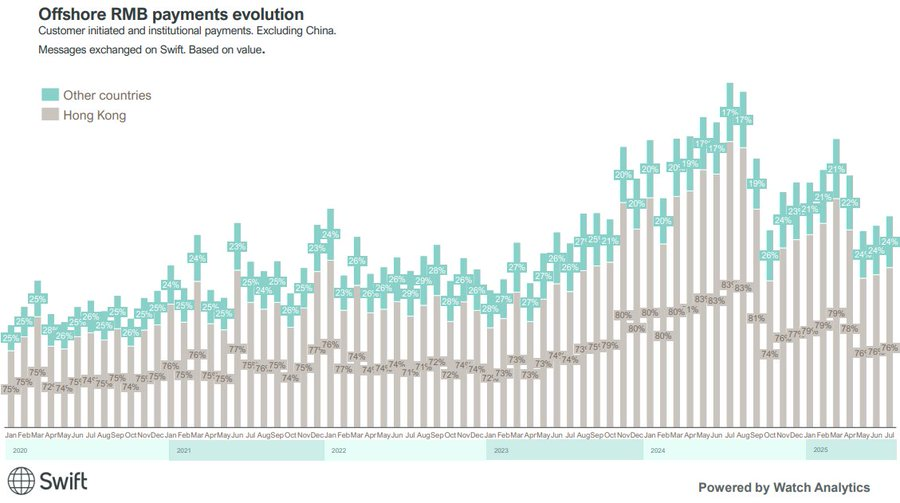
I agree with this overall, but I would like to add to the article's caveats. Examining the data, the surge in China's RMB-based settlement is likely more about foreign investors trading via the HK Connect programs than, say, Brazil's soybean exporters ditching the dollar. 🧵1/

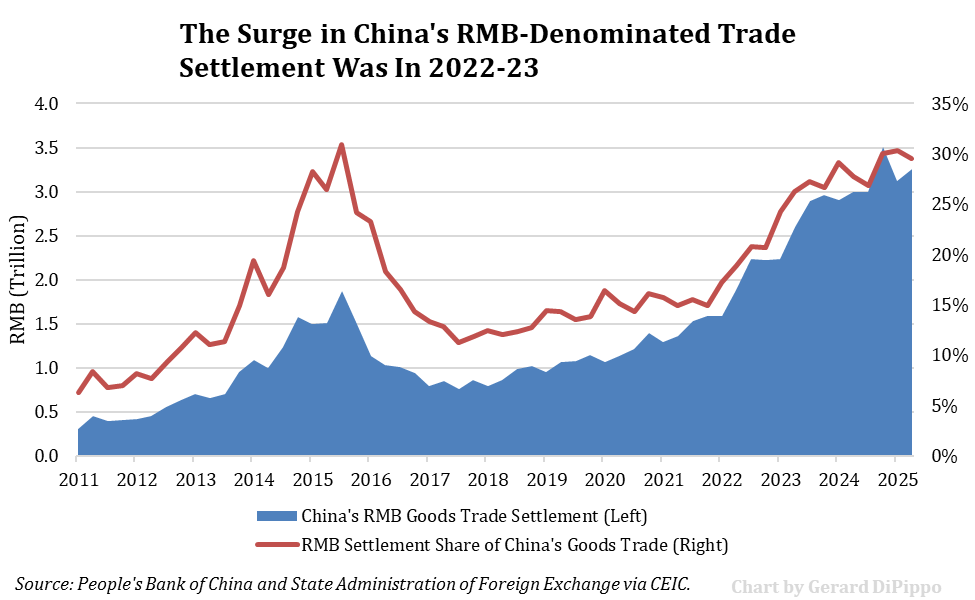
China's goods trade settled in RMB jumped in 2022-23, partly due to sanctions on Russia and because trade financing costs were lower in RMB than in USD. But since 2024, those trade volumes have slowed. Diversification away from the USD for trade isn't a 2025 story. 2/
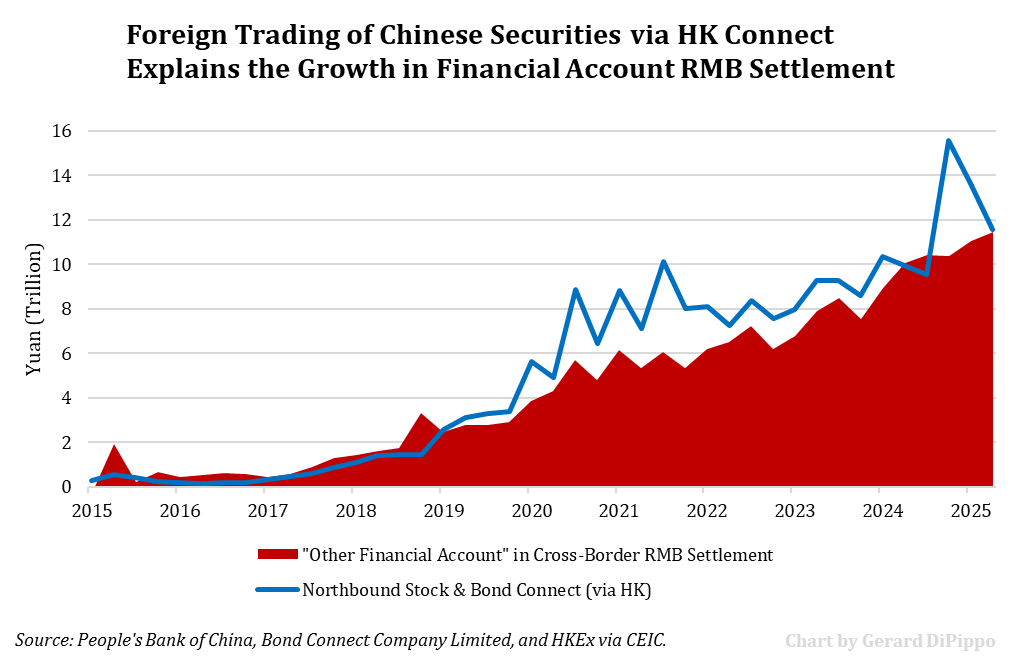
Zooming out to all of China's RMB cross-border settlement, it's clear that growth is driven by non-FDI financial account transactions. That category accounts for ~70% of the increase since 2021. 3/

If we compare that category of cross-border RMB settlement to HK Connect data, it's clear that foreign trading (Northbound, buying and selling) of Chinese securities explains the jump. (There are some accounting discrepancies between the BOP and HKEx data.) 4/
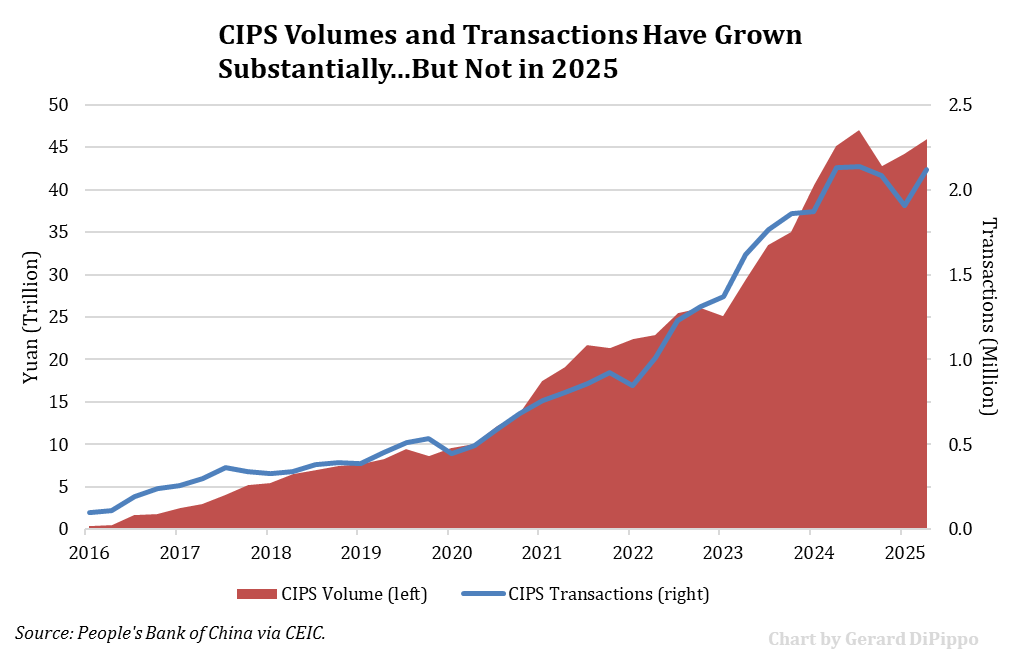
Finally, the article rightly notes the importance of CIPS as an indicator of China's global bank settlement reach, which (at least in theory) could insulate the network from USD sanctions. But it cites 2024 data. As @ChorzempaMartin has noted, CIPS volumes are flat in 2025. 5/
So, yes, half of China's foreign transactions are in RMB, but that's largely due to portfolio flows via HK. The data, however, does not (at least yet) align with a Trump-era de-dollarization narrative. Fin/
@gdp1985 Good thread. Informative . Thank you
@gdp1985 Agreed
@gdp1985 Thanks for clarifying this.
@gdp1985 Great dive into the data, thanks.