
Speaker 1: Samit Vartak, Founder SageOne Investment Managers @SamitVartak @sageone Equity market cycles and current small cap cycle: landmine or goldmine? In the last few years even 25% returns seems to be disappointing for most, yet one has to realise such returns don't come
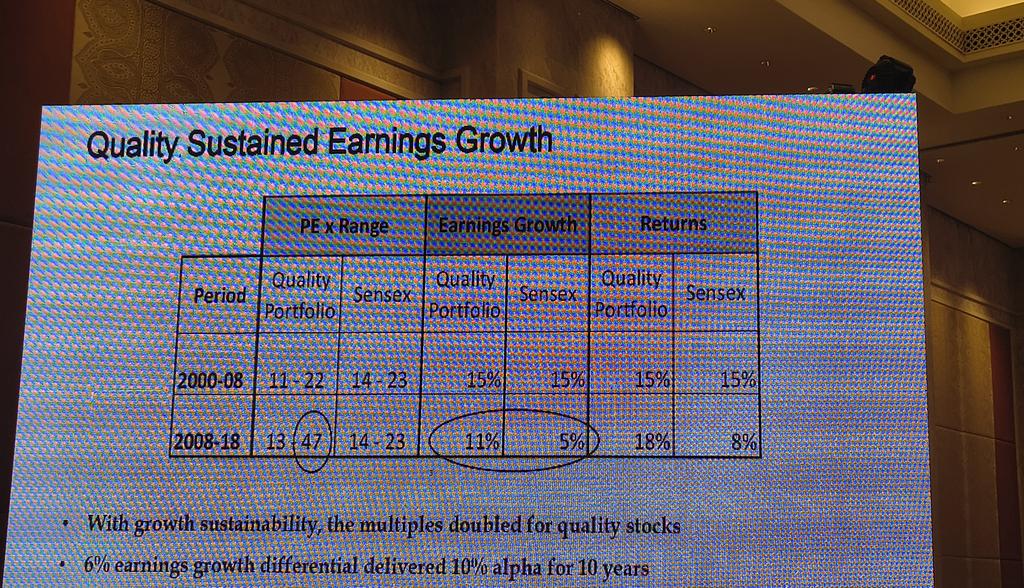
Take 2 buckets - quality portfolio and the Sensex. A quality stock is one which sustains high ROCE over a long time. In 2000-08, quality portfolio vs sensex had similar PE, earnings and returns. In 2008-18, quality portfolio PE jumped, sensex remained the same. However
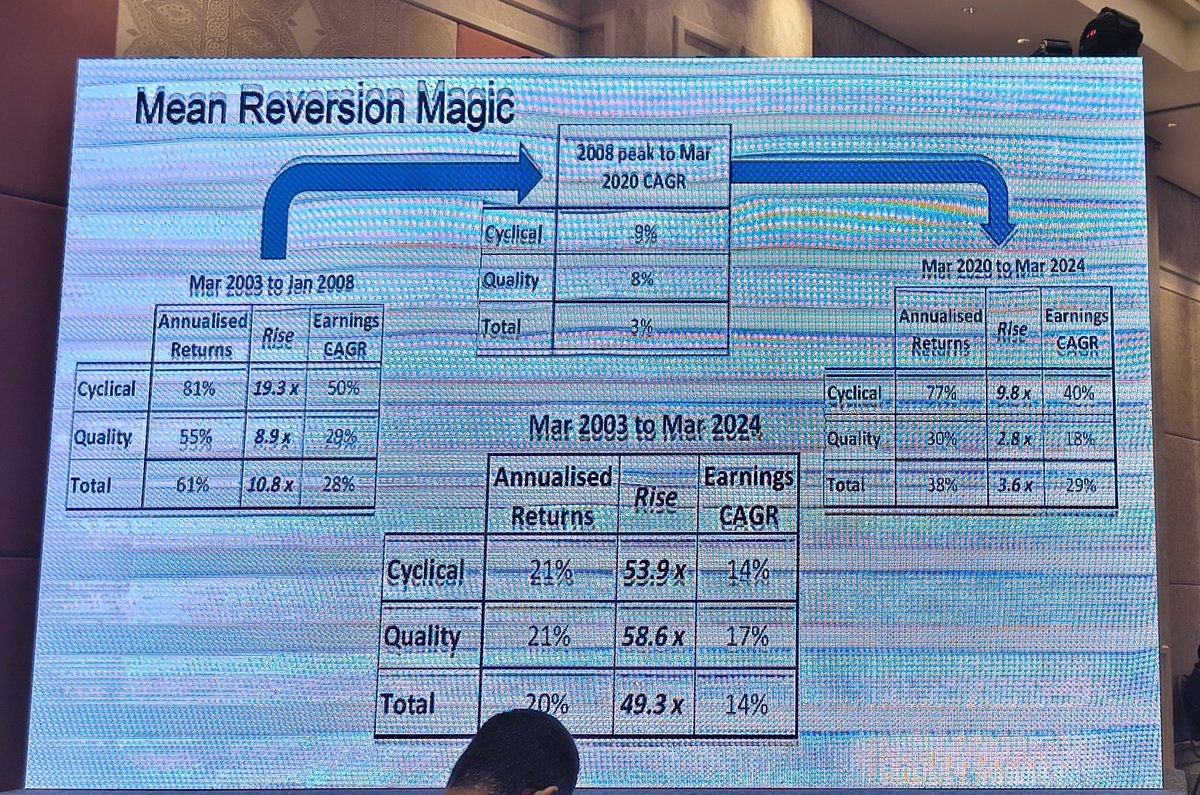
In each bull and bear market cycle, there is a difference in quality vs cyclicals. In one phase, cyclicals outperformed, in others quality outperformed. In the last 4 years, cyclicals are up 10x vs 3x for quality. Yet they revert to the mean over the long run. The issue is, the
Nifty Small 100 follows a boom and bust cycle. Past cycles have seen a 25-40% fall. Are you prepared to see such a fall today? Generally the fall is triggered at the economy, banking and market level. Last few falls has not been as bad as the 2008 and 2020 fall. The difference
Last 3 years, small caps have done better than sensex - 2021 to 2025 - extraordinary. However from 2005 to 2020, sensex outperformed the BSE Mid and Small index in 11 out of 15 years on a rolling basis. Even those 4 years has a marginal outperformance by Mid and Small Index.
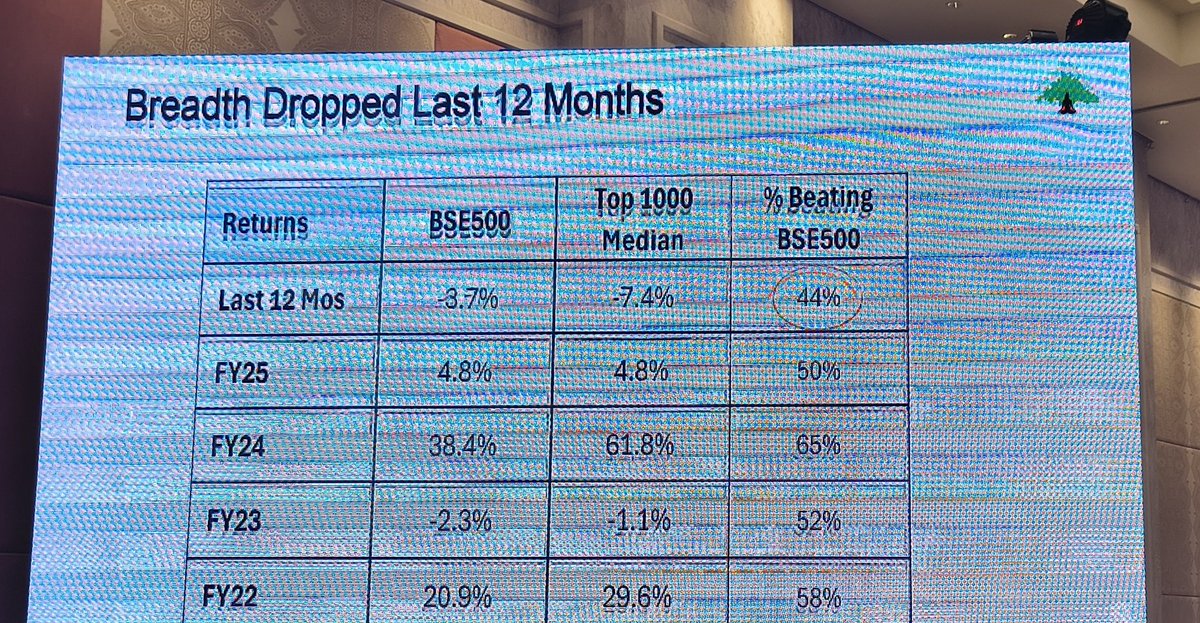
Breadth of successes has dropped in the last 12 months. % of stocks beating the sensex has been dropping. It was above 50% from 2021 to 2025. In the last 12 months, it's 44%. Surely the momentum that lasted in 5 years, we can't expect it to continue.
Small cap valuations have caught up with large caps. There is valuation discomfort hence Large cap has 3 buckets - PSU, Banking and rest of the universe. PSU make up for 35% profits of the large caps. Trade at 7-9x multiple. Banking makes 17%. Trade at 15x. Smallcaps don't

You may ask, why have small caps not corrected yet? Is there a structural shift? Median debt to equity ratio i.e leverage in small caps has vanished. It was 0.62 in 2008 - 0.26 in 2018 - 0.13 in September 2025. So the cashflow growth in mid and small cap space has been great -
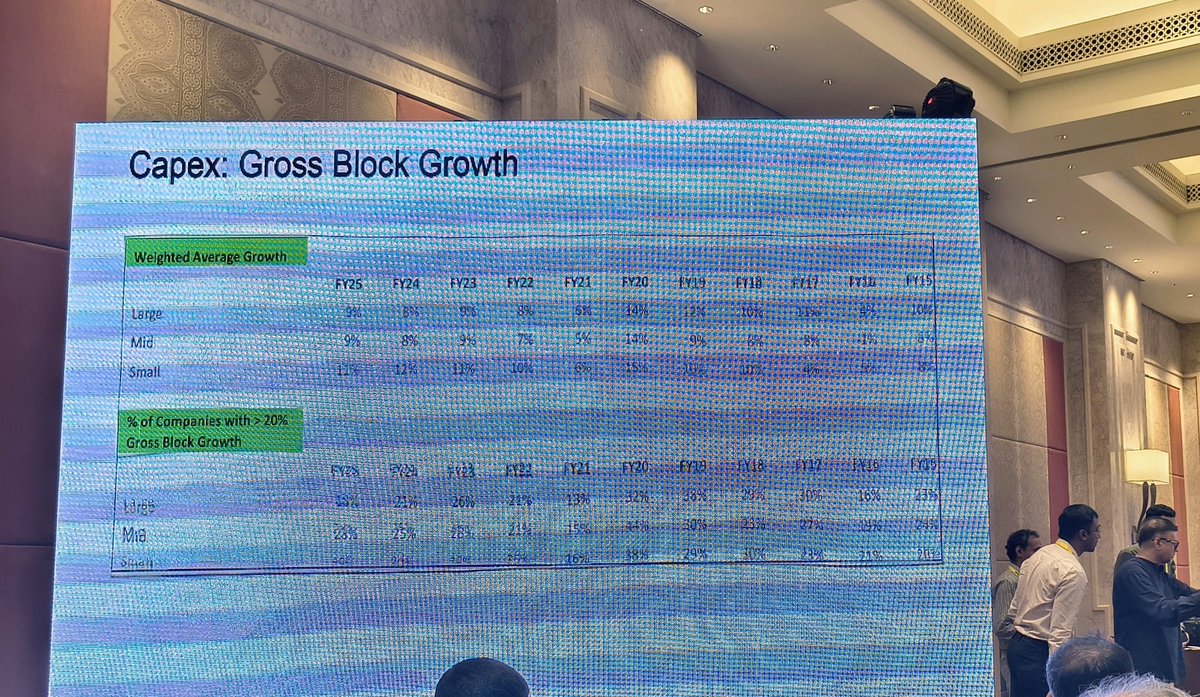
There is a structural reason for small caps doing well. There is a huge change in the quality of balance sheets for small caps. The best companies are those growing gross block by 20%+ - these will deliver growth. So % of companies growing gross block > 20%, large caps is lowest
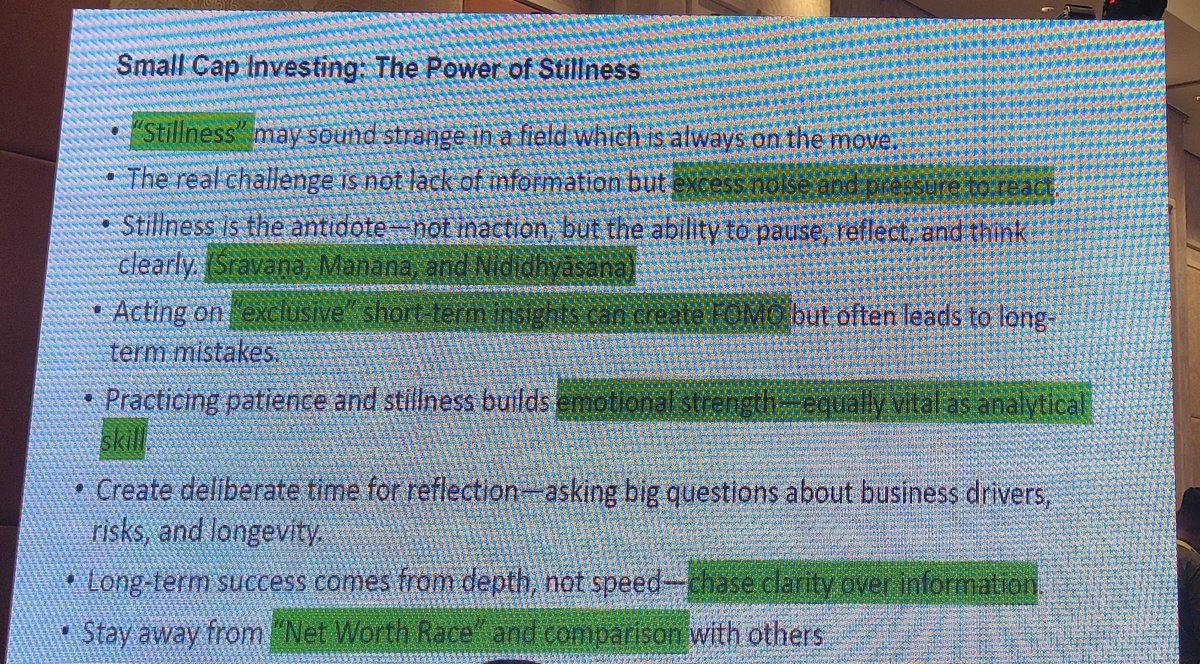
Stillness vs Speed As a fund manager, small caps are stressful. The level of data available is much lower for small caps. So one needs to be careful of operators, manipulators, FOMO. Mistake is to think smallcap requires fast action. The small cap universe is made for you to
In small caps - most of the time as soon as you act fast based on fomo or borrowed conviction, the stock becomes a dud in your portfolio. You need to act slow. Reflect on it. Sravana - gathering knowledge / data. Here the right data is also important: there is data overload.
Speaker 2: Pankaj Tibrewal @pankajtibre @Ikigai_fund Practitioners Insights: Forensic Accounting 3 years back, I was at this forum. At that time we discussed that over the last 24 years, broader markets - how to choose companies to compound your wealth? Today we'll see how not
@pankajtibre @Ikigai_fund There was a time, where I was under pressure for filtering companies having accounting, forensic issues.. 2017, skeletons started coming out.. ILFS DHFL etc. Teji mai paisa banata hai, mandi me fund manager ijjat banata hai. I see a similar phase today.
@pankajtibre @Ikigai_fund If you can get the beauty of the balance sheet - that is every debit has a credit, you can ask better questions. For every inflated profit, you'll see inflated assets soon.
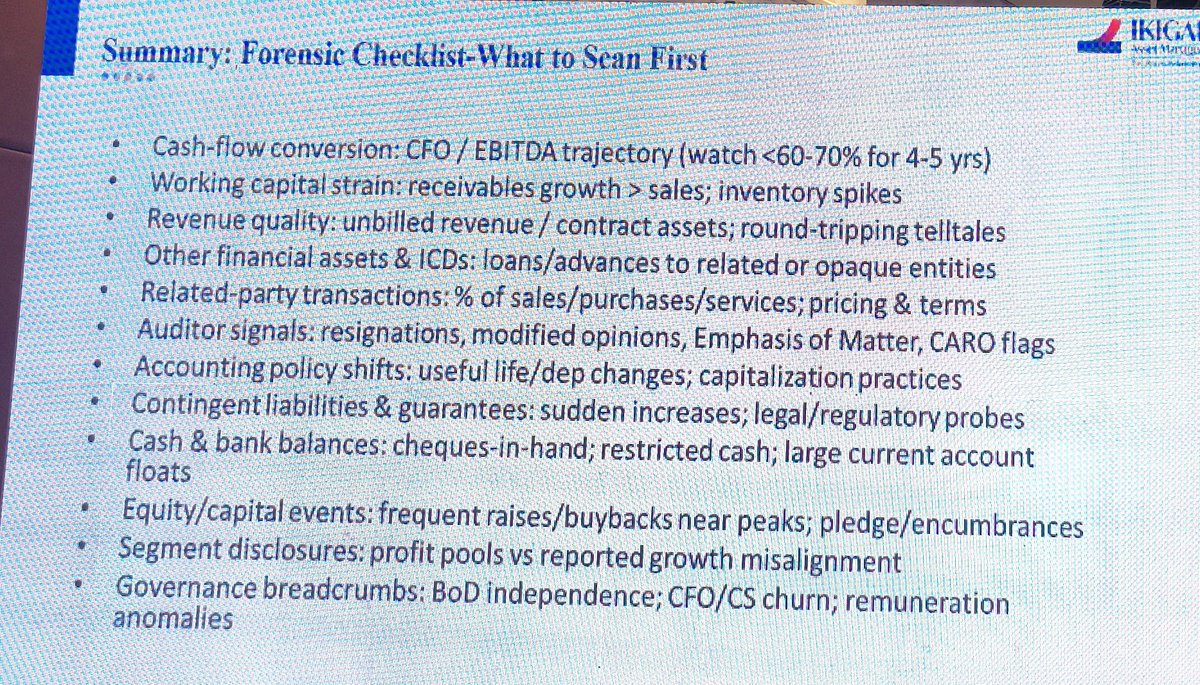
@pankajtibre @Ikigai_fund Create boundaries for yourself - define which metrics your companies have to pass on. For ikigai, cash flow is king. We want 60-70% ebitda to cashflow conversion.
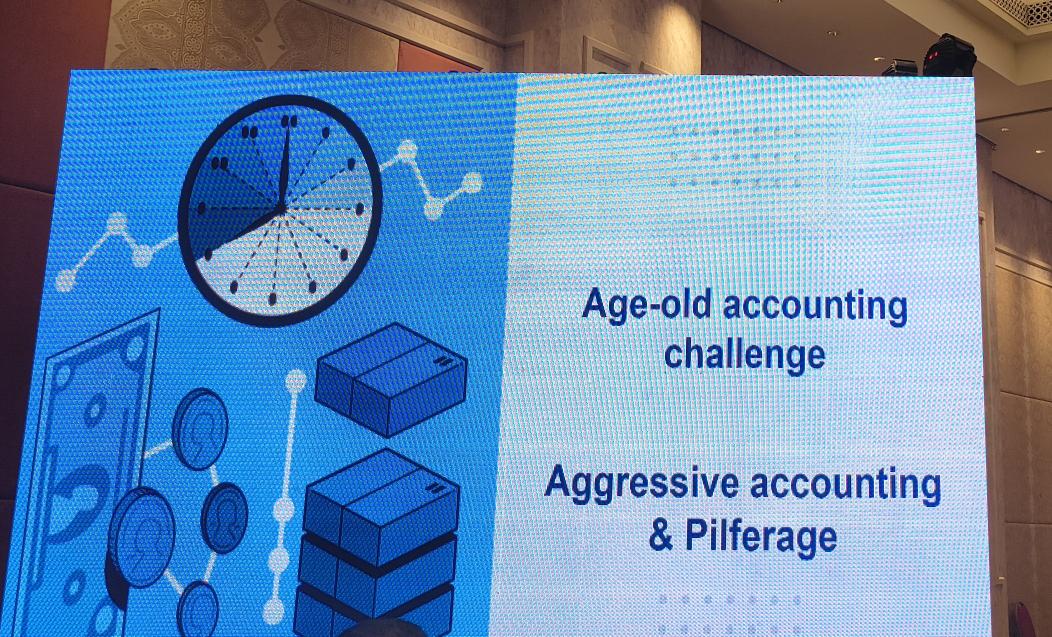
@pankajtibre @Ikigai_fund Aggressive accounting and pilferage Today's environment is of IPOs. Data points show that profits are rising before the IPO, but cash flow suffers. After listing, revenues and profits fall, but cash flow improves. Yet people get disappointed because what was promised in the
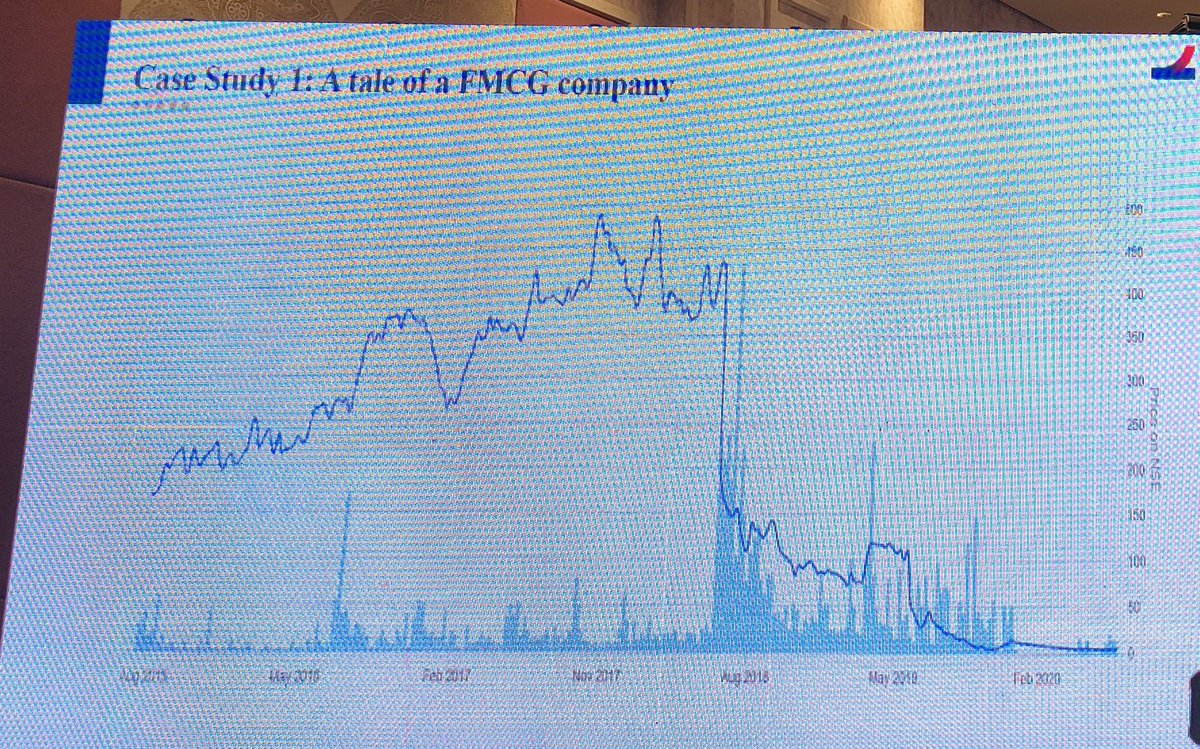
@pankajtibre @Ikigai_fund Case study: FMCG co Was called Coca Cola of India. Lot of investors went behind this stock. Profit grew from 6 crores to 100 crores. But cashflow conversion was just 36% over 7 years. Another metric was net sales to gross block was falling from 2.8 in 2014 to 0.7 in 2019.
@pankajtibre @Ikigai_fund Case study 2: Digital Company Darlings from Rs. 10 to Rs. 900. Smart investors bought in. But when we looked again the same issue. Profit went from 3.5 crores to 200 crores. But cash flow conversion was pathetic over many years. Approx 11-12% of expenses were unclassified.
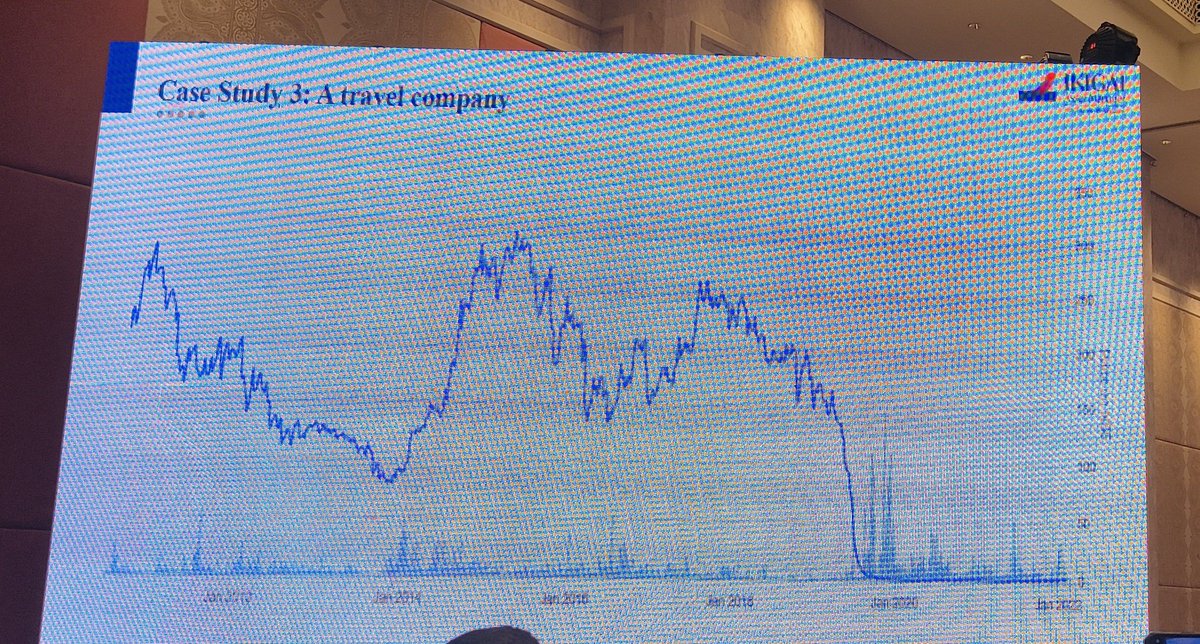
@pankajtibre @Ikigai_fund Case 3: Travel Company Revenue and profits jumped over 10 years. Cash flow conversion was just 20%. They were growing at the expense of working capital. Almost all incremental sales went into receivables. Slowdown happened, capital became scarce and result: co went into NCLT.
@pankajtibre @Ikigai_fund Case 4: Jewelry company Working capital as a % of net revenues went to 65%+. When such things happen, you have to ask stern questions. Identifying such problems early on helps to get out of the train early.
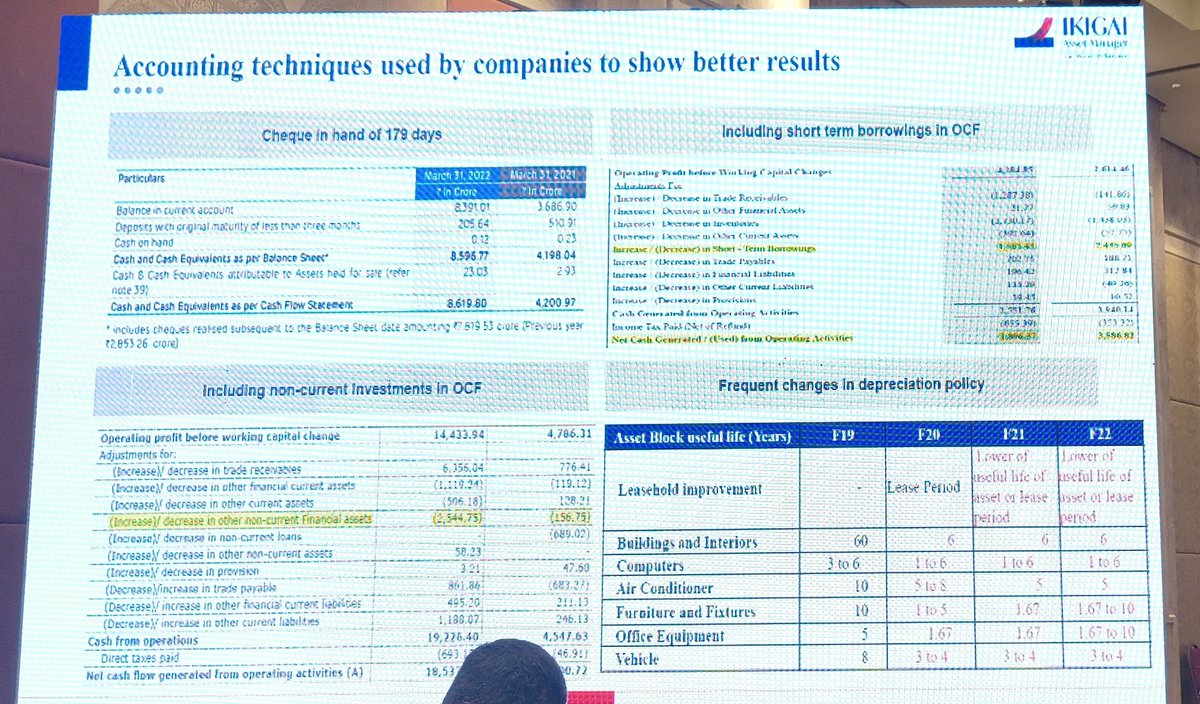
@pankajtibre @Ikigai_fund Companies are also becoming smart. They know investors open screener and see cashflow from operations. See this co, it has balance in current account of 8000+ crores and it is majorly cheques realised in next period! Many companies show increase in short term borrowings in
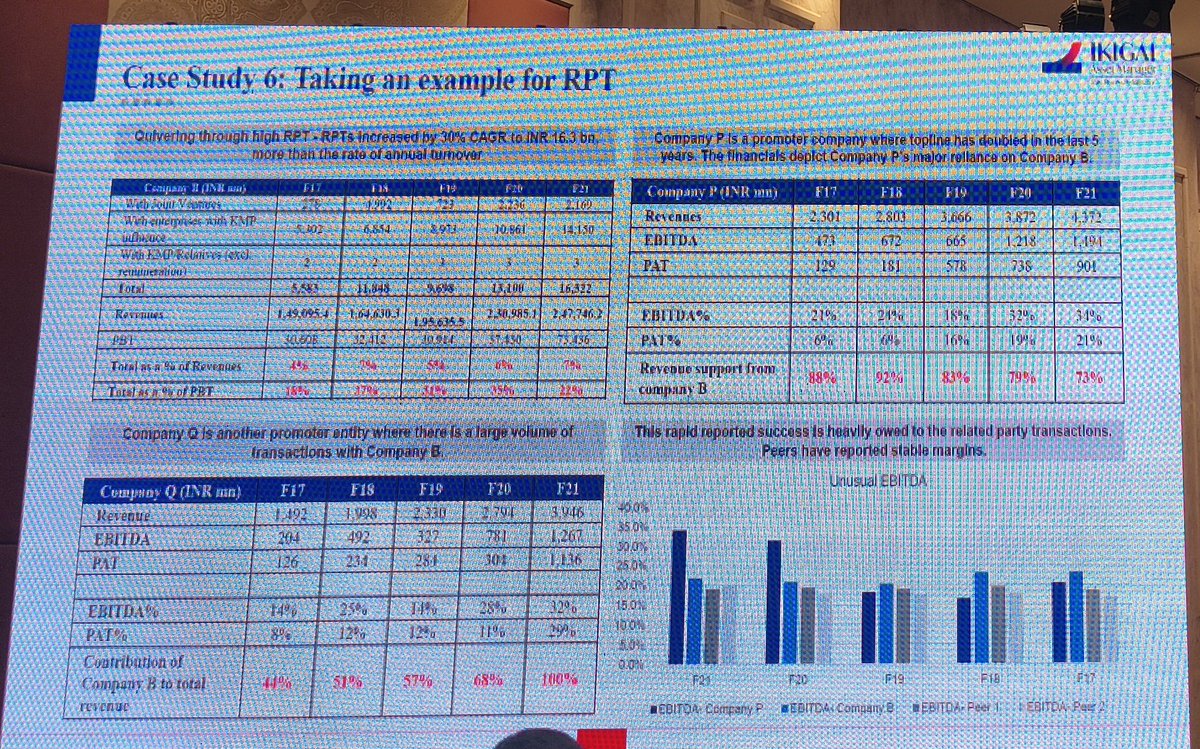
@pankajtibre @Ikigai_fund In IT cos, look at revenue recognition and see how much of revenue is unbilled. With JVs and KMPs, RPTs as a % of revenues is small but as a % of profits is 20%+. 1000s of crores of business is routed via promoter entities.
@pankajtibre @Ikigai_fund To get excess valuations, companies window dress before IPOs. Environment of excess capital motivates different accounting gimmicks. For example: 2 years back everyone was gung ho on DI Pipes because of Jal Jeevan Mission. DI pipe went from 30 per kg to 70 per kg. Suddenly
@pankajtibre @Ikigai_fund Triangulate between equity raise, sales, profits and cash flow. Many case studies of equity dilution and borrowing not flowing into sales growth and profits. When you look at these over a period of 5-7 years, you see a trend emerging... Hence investing is a art and science
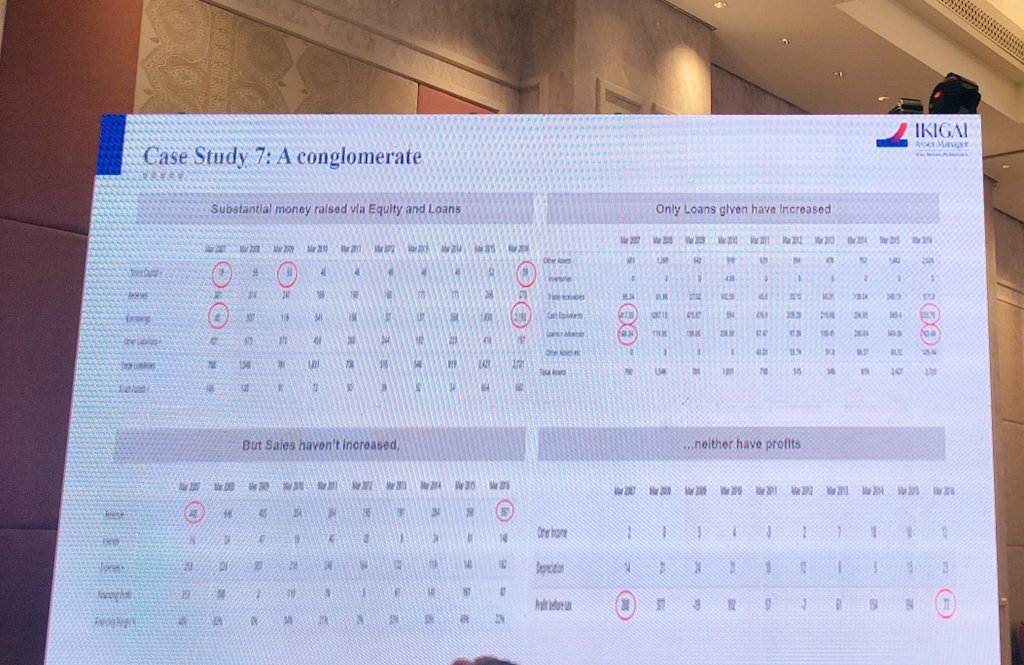
@pankajtibre @Ikigai_fund In Bullet Proof investing, the process of elimination is more important than the process of selection. Every bull cycle - the theme changes, the name changes but the characteristic of the promoter remains. Always ask this question - is the promoter part of the audit committee?
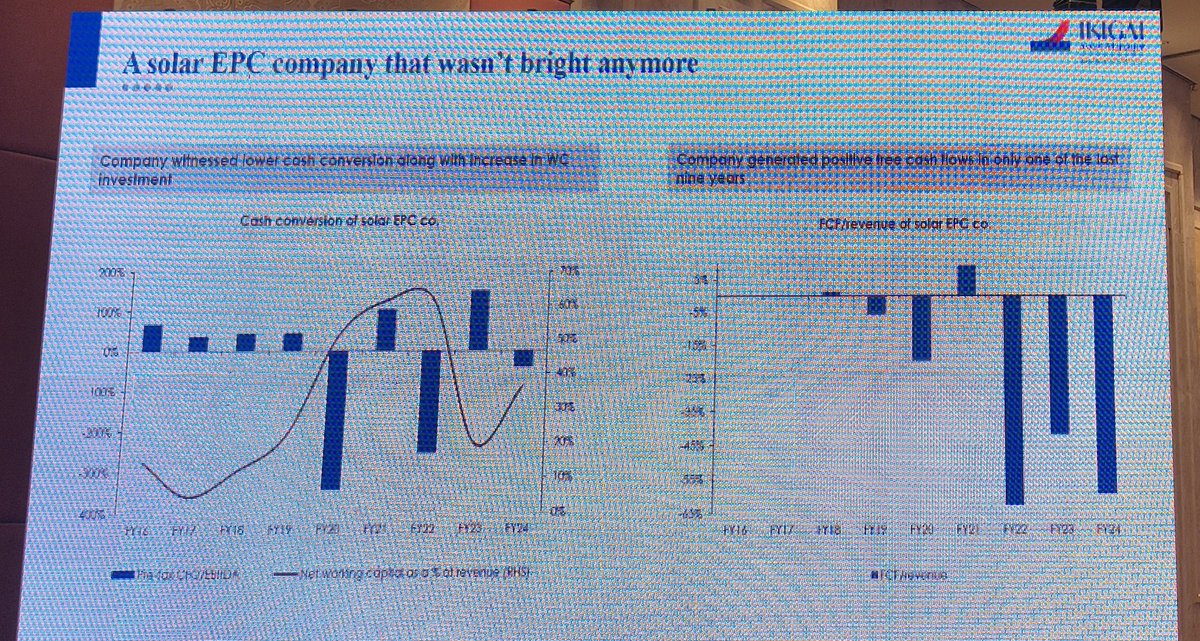
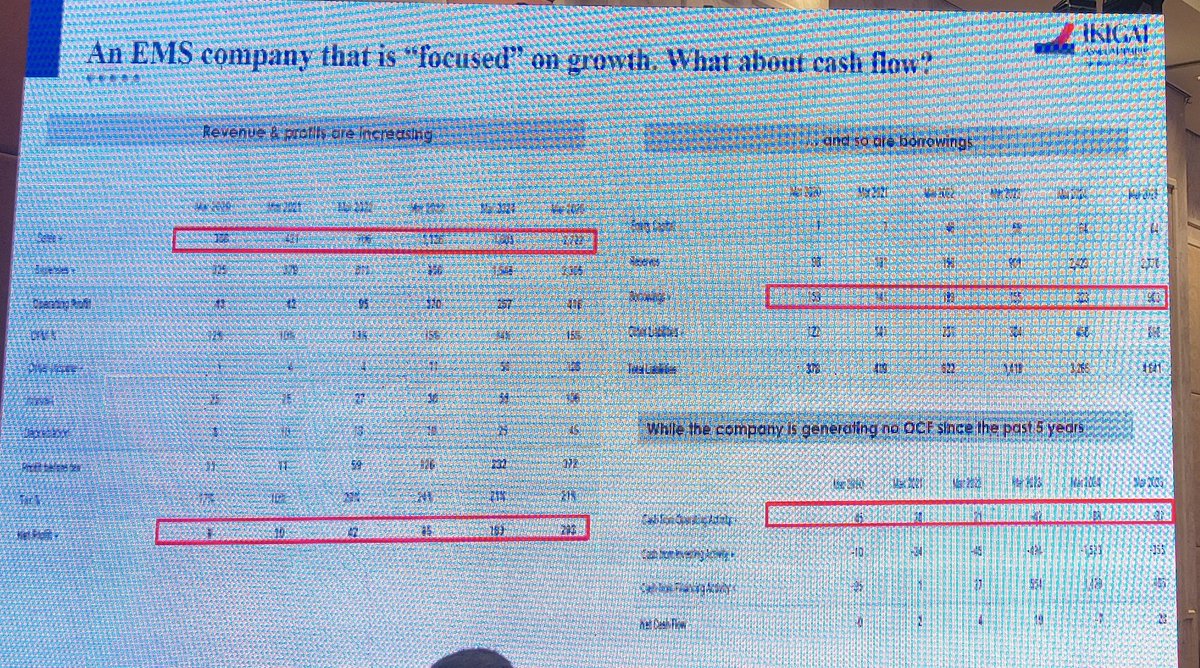
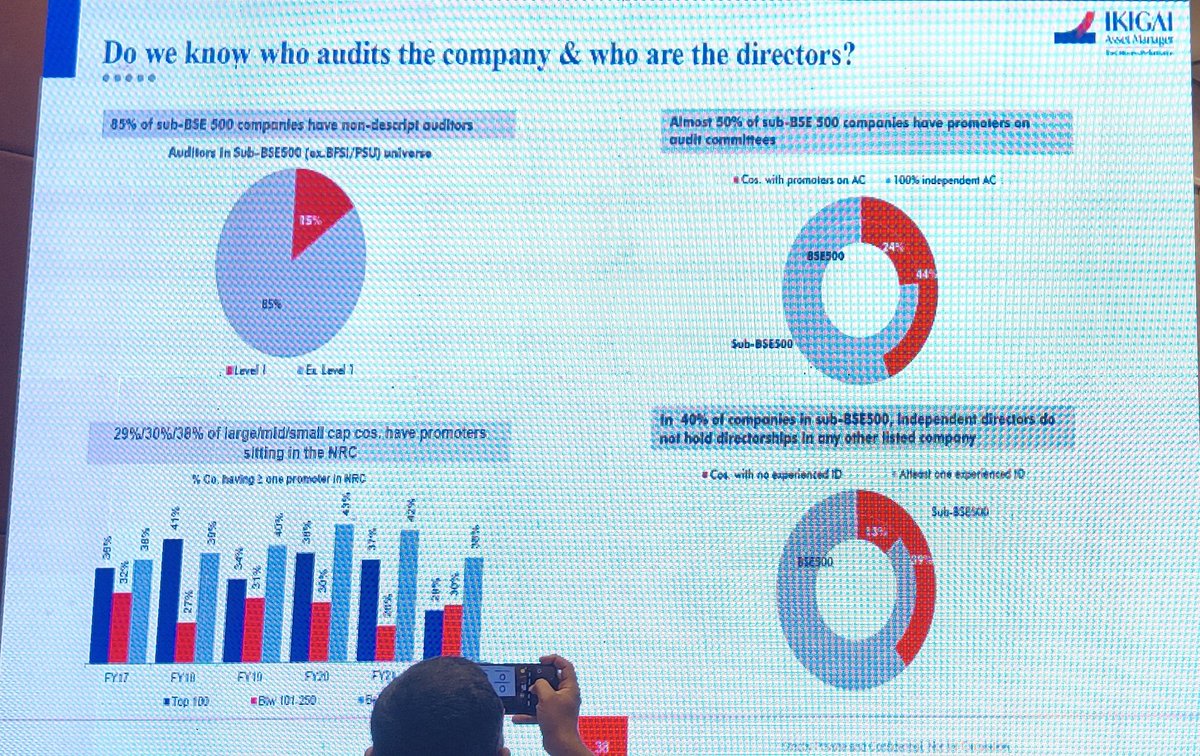
@pankajtibre @Ikigai_fund Don't deviate from the forensic checks in your investing journey.
Speaker 3: Sumeet Nagar of Malabar Investments
• Why long term matters? • What are rare breeds and how do you find them? • Lessons from the journey.
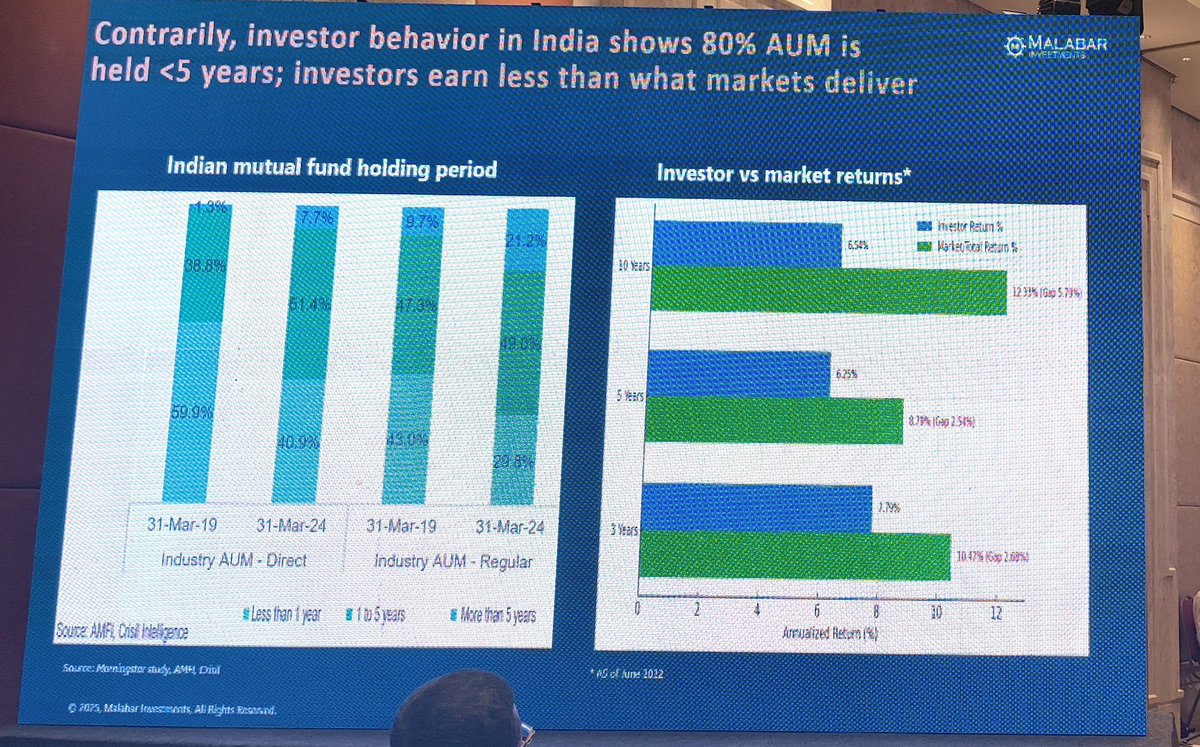
Greatness comes from nurturing, patience and time. Think trees, diamonds or raising a child. It takes years of hard work before you see greatness. However in India, investors do not exhibit this patient behavior. Even now only 21% of investors hold for 5 years. We're not
Rare breeds Power law says a small number of inputs cause a disproportionately large share of outcomes. For example - take a Redwood forest - thousands of saplings, but a handful become trees - these trees take most of the sunlight and grow taller.
Similarly in business, • 10% of UPI customers account for 60% of the transactions • 5% or zomato customers drive high frequency orders • 10% of sick people account for 64% of US healthcare costs In VC investments, 6% of deals where 5% of capital was deployed delivered 60%