
1/ Russians can no longer complain anonymously about corruption. A corruption-reporting option on the Kremlin website launched under Vladimir Putin's predecessor Dmitry Medvedev has quietly been removed for unknown reasons (seen here before and after). ⬇️
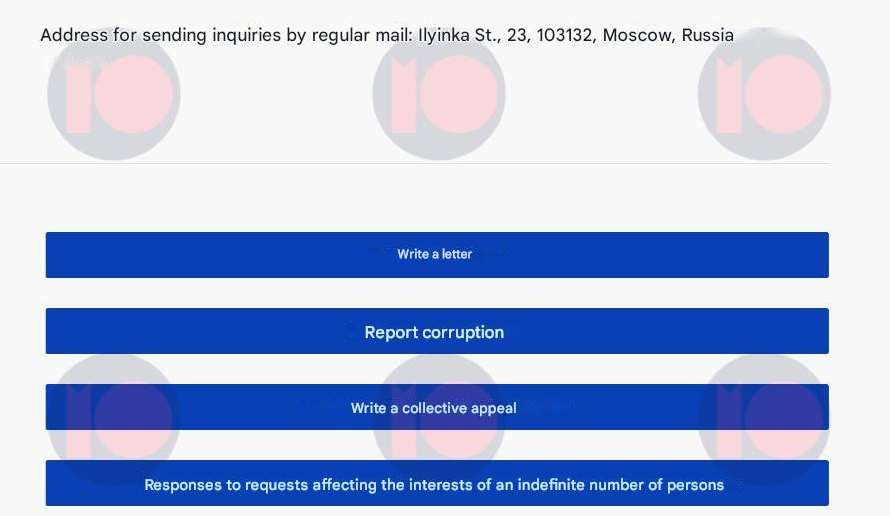

2/ The independent Russian news outlet 'We can explain' reports that the option to send a message to Putin via email has disappeared from the Kremlin website. To do so, you now need to register through the Russian government portal Gosuslugi.
3/ Anonymous complaints are now no longer allowed for any reason. Until recently, it was possible to send messages to Putin using only an email address, via the Kremlin website's public services portal. This is no longer permitted.
4/ The options for "reporting corruption" or "writing a collective letter" have also disappeared. They were established on 1 September 2009 after then-President Medvedev launched an anti-corruption drive, including giving citizens the ability to report corruption anonymously.
5/ According to Russia's Prosecutor General's Office, over 1,200 complaints about corruption were submitted in the second quarter of 2009 alone, targeting primarily regional and local officials. However, Medvedev later acknowledged making little progress in tackling corruption.
6/ Since 30 March 2025, it has been compulsory for any Russian citizen to identify themselves through the Unified Identification and Authentication System (ESIA) when contacting any government agency. Anonymous contacts are not being accepted.
7/ Only messages sent from Russian email addresses are accepted, and requests sent using foreign addresses (such as Google or Yahoo) are rejected unless they are changed to Russian ones.
8/ This has reduced the number of complaints, as people are now less willing to report corruption if they can be identified by the authorities. According to the Presidential Administration, the number of inquiries has fallen constantly between 2023 and 2025.
9/ The move comes against the background of a tightening of control over public communications in Russia, with Facebook and Instagram being declared to be 'extremist', and communications via WhatsApp and Telegram now being severely restricted. /end