
Longer thread about what we know and what we don’t know about the strange rocket/missile launch observed in Iran on September 18. 1/15
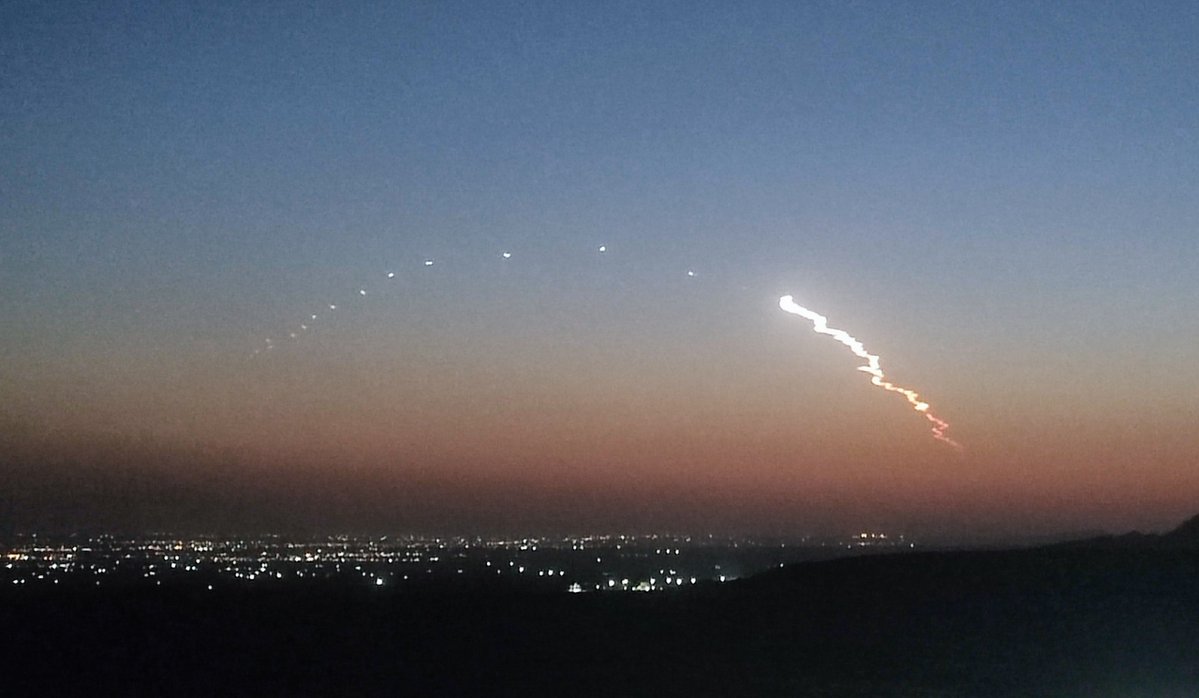
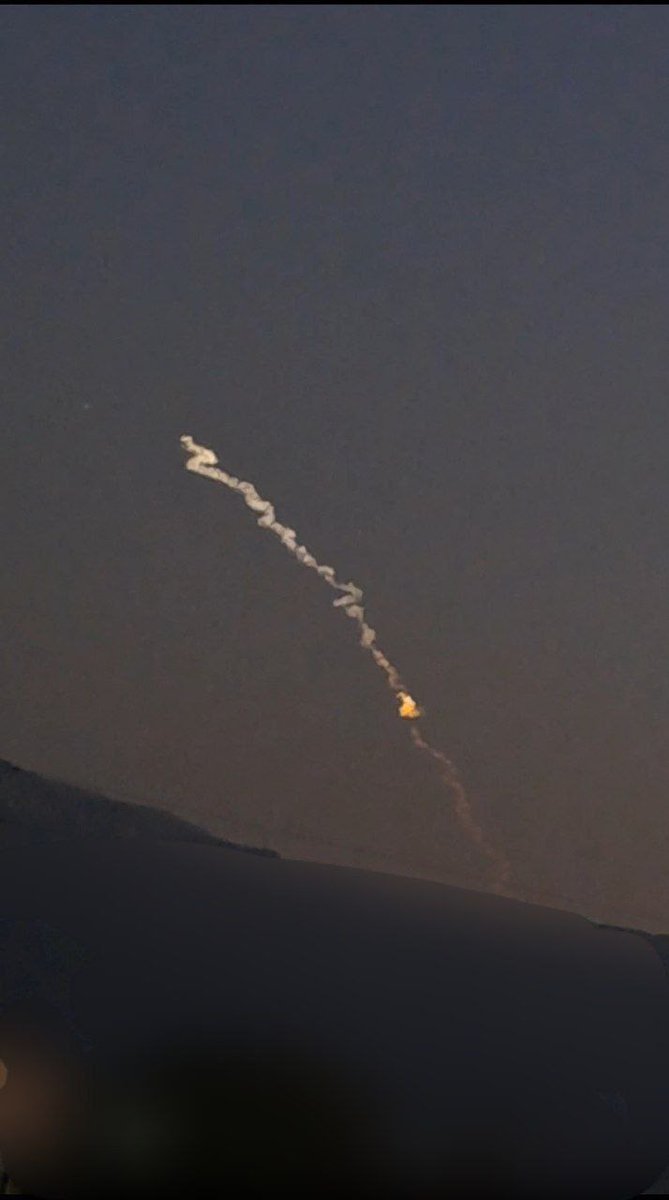
The launch's pattern was highly unusual with several evenly-spaced glowing dots seen in the sky initially sparking speculation about a test of multiple re-entry vehicles. 2/15
However, angles and lighting can be deceptive. From another perspective, it’s clear that the dots are little plumes of smoke. This ‘stuttering’ pattern followed by what appears to be uneven combustion might indicate some sort of technical malfunction. 3/15
Others have suggested the small plumes could be control thrusters firing to adjusting trajectory and attitude during the coast phase between stage burnout and the ignition of the next stage. I am undecided but lean more towards a technical issue at this point. 4/15
But what system was tested? The first clue is the thick white plume. While liquid-propellant missile create contrails at higher altitudes, a thick persistent white plume throughout the propelled flight is a giveaway for solid propellant. 5/15
RUMINT on Farsi social media, soon claimed that the launch was a test of Iran’s Zoljanah solid-propellant satellite launch vehicle. 6/15

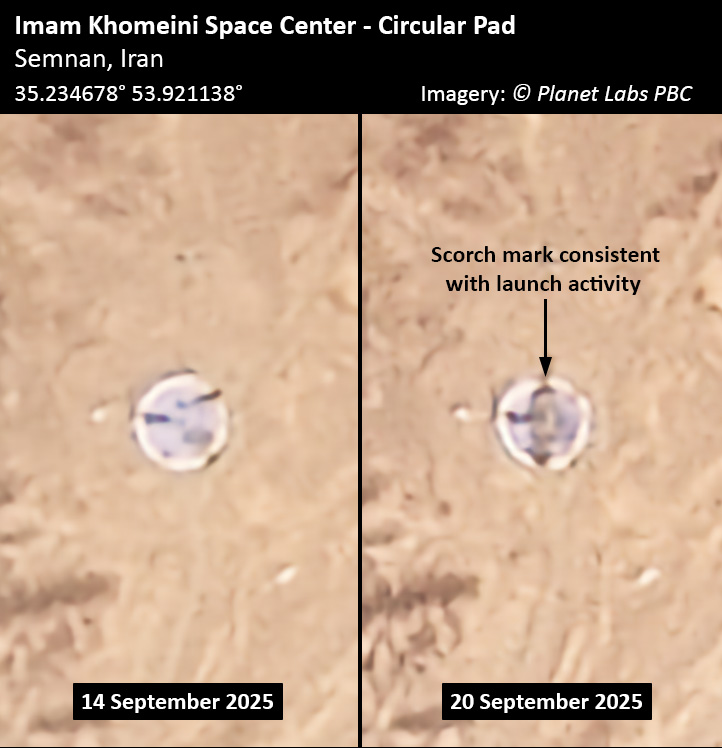
Previous Zoljanah launches took place from the circular pad at Imam Khomeini Space Center. Planet Labs imagery shows a very clear scorch mark appearing between September 14 and 20. 7/15

The circular pad (yes, the one Trump tweeted out) gets painted in bright colors. This makes scorch marks easy to spot, especially after a solid-propellant burn, where the exhaust throws out searing aluminum oxide particles. 8/15

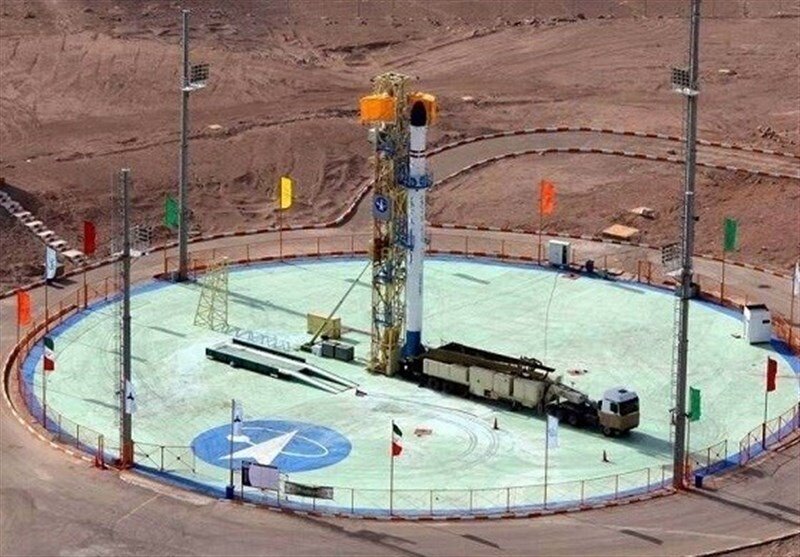
The pattern of these scorch marks extending sideways is caused by the use of a blast deflector which neatly parts the exhaust stream in two directions. 9/15

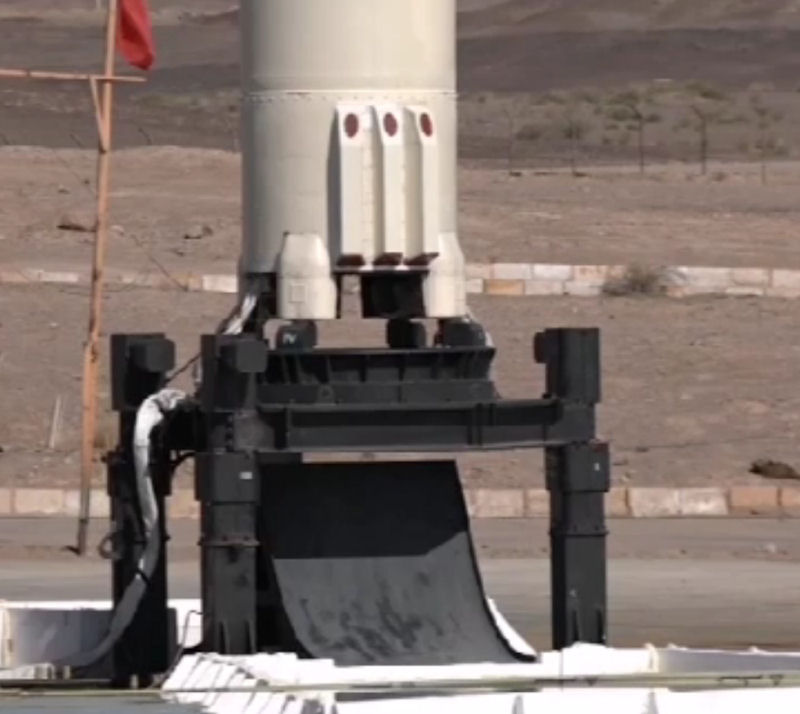
But if it was an SLV, what about these comments by an Iranian lawmaker that what they had tested was actually an ICBM? 10/15 https://x.com/hafezeh_tarikhi/...
Well, here where it gets a bit complicated. Not all SLVs are the same. Some of Iran’s designs are optimized for space launch. Others (like Zoljanah & Ghaem series) are designed in a way that makes them suitable for conversion to long-range missiles. 11/15
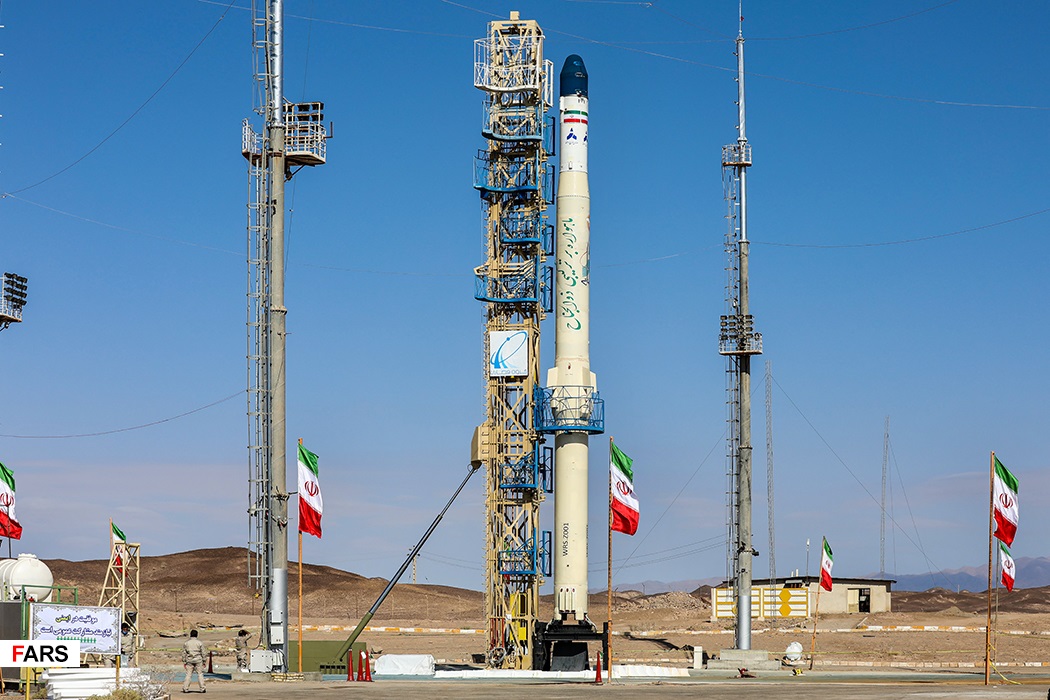
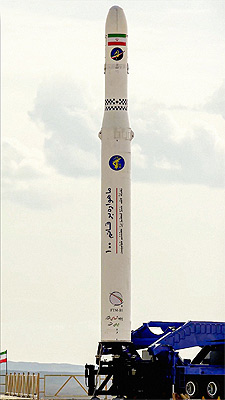
This appears to be a deliberate hedging strategy by Iran, where it officially respects its self-imposed 2000km range limit but develops ICBM technology under the cover of spaceflight. You can read more about this hedging strategy here. 12/15 https://www.iiss.org/online-an...
In a 2021 letter to the UN, the Israeli government assessed that the Zoljanah would have a 5,000km range if converted into a ballistic missile. Thus, an SLV launch from Semnan and brags about an ICBM test would not necessarily contradict each other. 13/15

Why test such a solid-propellant system now? Just a regular test, a show of defiance after the 12-Day War, or a signal to the Europeans? The E3 has activated snapback, and Iran previously warned that its range limit could be revised if Europeans adopt a hostile attitude. 14/15
There are other unresolved questions for now. Was the system the original Zoljanah, a new version, or a different design entirely? And what issue caused the odd patterns seen in the launch videos? 15/15
As always, any corrections or additions are welcome. END
@fab_hinz Wow, this is wild. I remember @AnthonyB_FL was tracking something similar a while back. Gonna need to read this whole thread.
@fab_hinz That was brilliant👏