
Upstream Thinking How to get ahead of behaviour in schools: ↓

First up, a quick parable (ht Irving Zola): You and a friend are relaxing by a river. Suddenly, there's a shout from the water—a child is drowning. Without thinking, you both dive in, grab the child, and swim to safety.
BUT... before you can recover, you hear another cry for help. You and your friend jump back into the river to rescue the next struggling child.
Then another drifts into sight... and another... and another...
The two of you can barely keep up. Suddenly, your friend wades out of the water, seemingly giving up. “WHERE ARE YOU GOING?” you yell. Your friend turns: “I’m going upstream to stop these kids falling in”.
There are times when we can get trapped in this kind of 'downstream' thinking. When we invest huge amounts of effort trying to deal with problems as they occur.
However, our efforts can sometimes be better directed at tackling problems before them occur… towards prevention. This is 'upstream thinking’. The further upstream we intervene, the closer we get to the cause, and the more leverage we gain over any outcome.
If we look, we can see upstream thinking in lots of places... → Hospitals save more lives when they focus on smoking cessation alongside cancer treatment. → Fire services reduce casualties when they invest in fitting smoke alarms alongside improving fire truck response times.
Behaviour for learning is no exception. When schools invest in upstream interventions—like culture, motivation, and systems—they are less likely to see undesirable behaviours manifest.
The most effective schools are those which take steps to influence behaviour BEFORE it happens, as well as putting in place strategies for addressing it AFTER it has occurred.
🎓 For more, check out this paper on how we can help students intervene upstream of themselves: https://onlinelibrary.wiley.co...
SUMMARY • Upstream thinking entails directing our efforts towards prevention as well as cure. • When it comes to behaviour, this often involves investing in culture, motivation, and systems. • The further upstream we intervene, the more leverage we typically have over
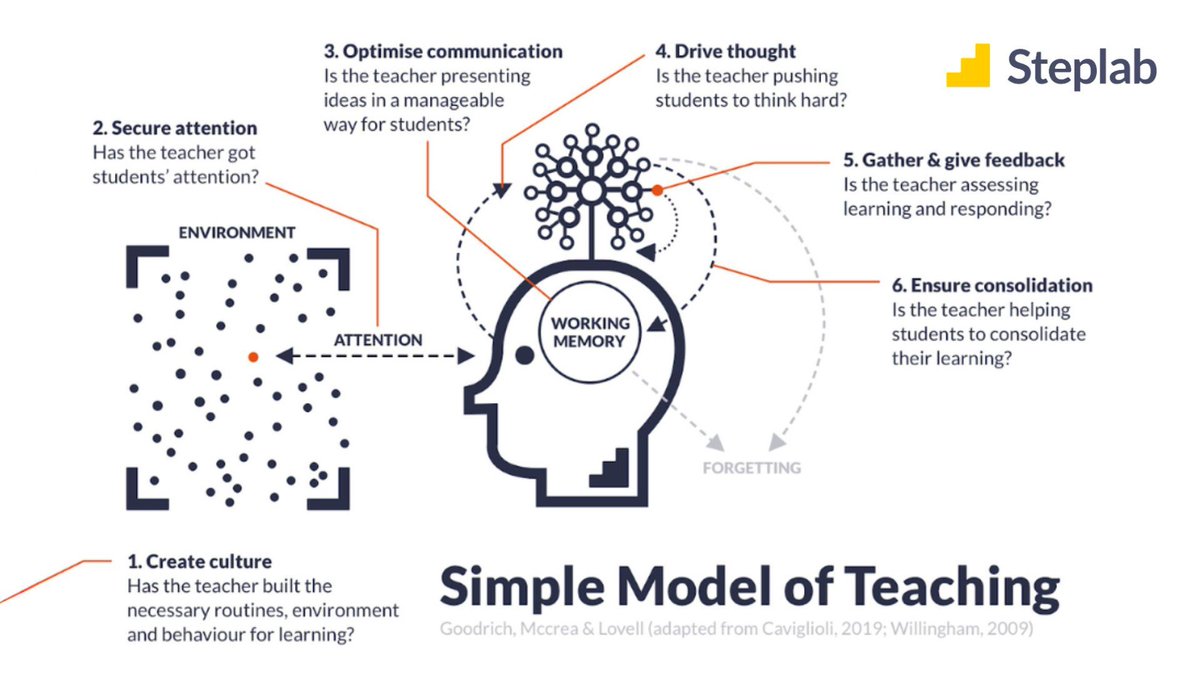
What really makes the difference in teaching? Recent research has highlighted six universal challenges at the heart of great teaching — and how effective PD helps teachers and leaders address them. 📩 Read our latest newsletter, for practical insights: https://www.linkedin.com/pulse...
The lens of this article is a common one, and one that ignores the fact that calm, safe, dignified environments disproportionately supports the wellbeing of students with SEN. All children need love AND they need boundaries, and they can’t thrive in chaos https://www.npr.org/2025/09/25...
We're delighted to welcome you to #ResearchEDCambridge! Join us at our Cambridge HQ on 25 October for a packed agenda on the future of assessment, teaching AI, the latest research and more! Book your ticket now - includes all sessions and lunch! https://ow.ly/wRIU50X0RqM

🔎 The government is being urged to 'examine more closely' the reasons pupils leave state schools after analysis found a surge in departures in London https://schoolsweek.co.uk/exam...