
1/ The Indian Ocean fostered the first advanced human civilisations. During the Ice Age, when ice covered the northern latitudes & sea levels were 120m lower, its temperate, monsoon climates birthed the first seafaring cultures from the Indian subcontinent to SE Asia. Thread🧵

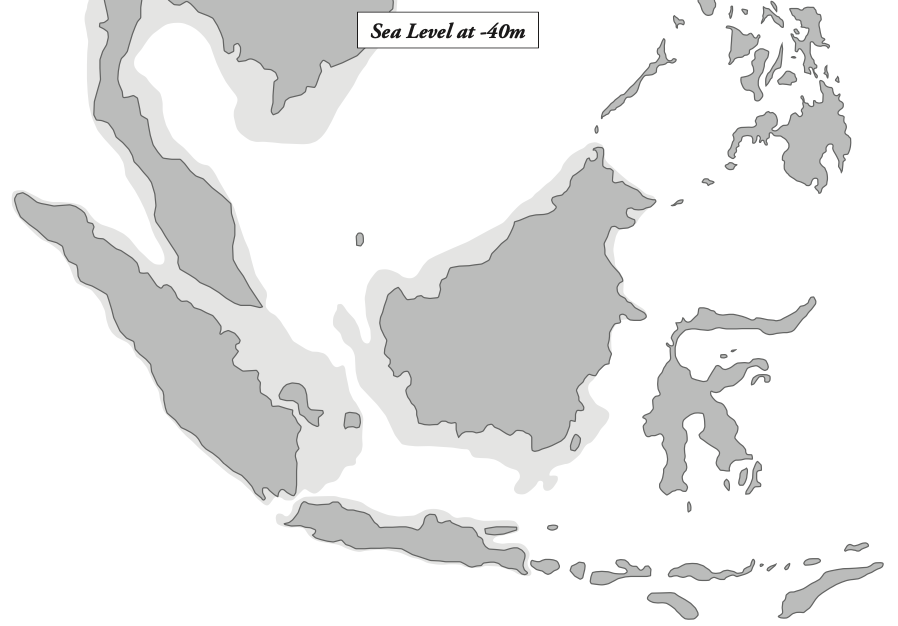
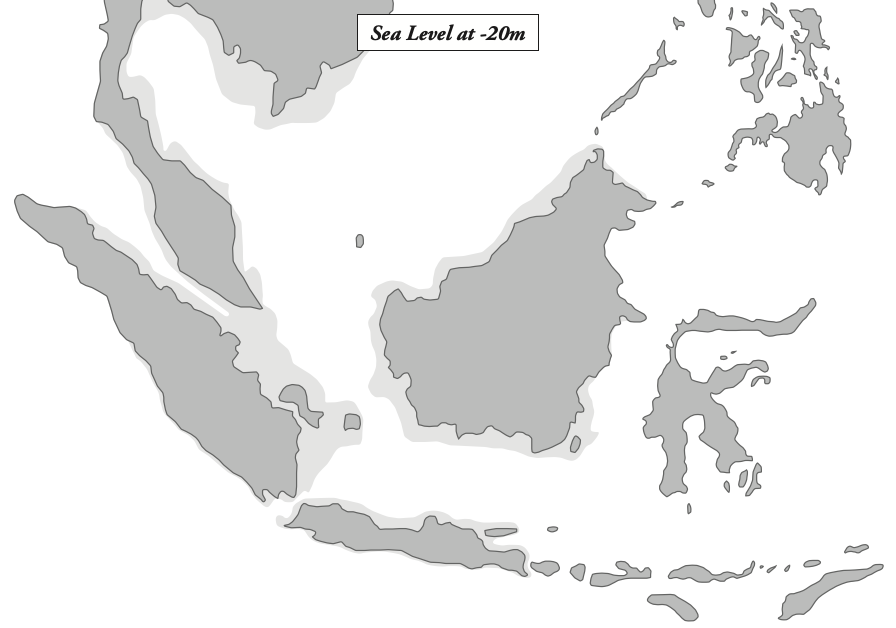
2/ Mega-melts around 9500 and 5600 BC, the latter the Biblical Flood, reshaped coasts. Submerged continental shelves drowned Sundaland (now Indonesia) and Mu (extended east Asia), but underwater structures reveal an early megalith-building culture.

3/ The legendary port of Dvarka, found offshore in the Gulf of Cambay (2012), showcases advanced maritime infrastructure, with commercial areas & ship slipways. Tamil tradition notes the relocation of their Sangam library twice, responding to these mega-melts.

4/ Seafaring from the Indian Ocean enabled human migration to Australia~60,000 years ago. Evidence now suggests Pacific crossings to the Americas~40,000 years ago via submerged ocean ridges from Easter Island, challenging the Bering Strait timeline, implying earlier occupation.

5/ Maritime trade demanded practical knowledge: buoyancy, hull design, navigation by stars, winds, and currents. Merchants developed literacy, numeracy, and cross-cultural skills - foundations of intellectual and economic progress.

6/ India produced sophisticated literature. The Vedas & Tamil Sangam texts covered history, science, medicine, astronomy, with Sanskrit used for precise communication. Indian manufacturing excelled in bronze casting, painting, & textiles, with dyes from Indian biodiversity.

7/ Post-Ice Age, Europe & E Asia trailed India which supplied Mesopotamia with foods, spices & luxury goods. Trade imbalances drove Uruk’s invasion of Egypt (which led to the 1st Pharaohs) to secure gold used to pay for Indian goods which fuelled Mesopotamian civilisation.

8/ Roman control of Egypt revealed voracious demand for Indian Ocean goods, multiplying trade volumes. Later, the English East India Company found Indian cotton textiles, made from the 7th-millennium BC or earlier, far superior to European equivalents.

9/ Eurocentric narratives have overshadowed the Indian Ocean’s role. Open-minded scholars now join Indian researchers to highlight its primacy in fostering civilisation, yet much remains to be explored.
10/ The Indian Ocean’s biodiverse resources and enterprising peoples, from the Ice Age onward, laid the groundwork for global cultural and economic development. For a more detailed exploration of the themes in this thread, read my article: https://open.substack.com/pub/...

Explore more in my book 'How Maritime Trade and the Indian Subcontinent Shaped the World'. http://maritimetradehistory.co...
@nickcollins1953 @penswordbooks Where have You been Professor? I have missed your column .
@SujeebunShyan @penswordbooks Have had eye surgery. On the mend now, thanks
@nickcollins1953 @penswordbooks Seems to be the kind of book we should be reading. But how ?Not available in India
@Vikram_Sood @penswordbooks My publisher is negotiating with an Indian publisher at the moment. There should be something to announce shortly, I hope.
@nickcollins1953 @penswordbooks You the Man Nick. Love what you are doing.
@kavel_vaja @penswordbooks Thank you
@nickcollins1953 @penswordbooks Great thread 🥃
@CourageIsC57112 @penswordbooks Thank you
@nickcollins1953 @penswordbooks Love the thread, Nick! Very informative.
@vajravyuha @penswordbooks Thank you
@nickcollins1953 @penswordbooks Great thread. Nice work. 🙏
@vonbrauckmann @penswordbooks Thank you, sir.
@nickcollins1953 @penswordbooks The oldest fossils park in Salkhan, District Sonbhadr Uttar Pradesh India is the proof .
@nickcollins1953 @penswordbooks This came out in 2016

@nickcollins1953 @penswordbooks Pre-melt coastline should be a subject of in-depth research !but it’s considered waste of resources ! Black Sea, Caspian Sea ( which were sweet water lake), Indian Ocean, Indonesia & Persian gulf ( which wasn’t there at all) are all very interesting places from that perspective
@nickcollins1953 @penswordbooks Why do we need these foreigners to acknowledge our heritage and knowledge, please listen to Nilesh Oakji or read his research @mountain_rats
@nickcollins1953 @penswordbooks Interesting @Susmit_999 @bali208
@nickcollins1953 @penswordbooks I think you missed that ridge from the peninsula to Chagos which was above sea level during the ice age. Srilanka, actually Sinhala(Ceylon) correctly shown as part of mainland.
@s_bijji @penswordbooks How we reached the Americas, the exact route, is open for discussion. It seems that the two ocean ridges from Easter Island to Peru which would have been atolls and islands seem the most likely. In my first book I talk more about the Lapita Thrust which is post-Flood but the