
1. I have been encouraging others to find out about China, and 'Islam in China' - James D. Frankel, is a book I very much recommend. It's very useful as an accessible and short introduction to a tradition of Islam that I knew very little about; A short thread and posts🧵


2. Why Muslims should learn about China: a) China–Muslim ties are increasingly reshaping global affairs b) Asia is new geopolitical hub; China and Muslim world already share centuries of relations c) Muslims have been in China over 1,200 shows profound and exchange between them


3. One of the surprising thing - for me at least - was how long Muslims have been established there; here is an example of three generations of Muslims since the Abbasids.
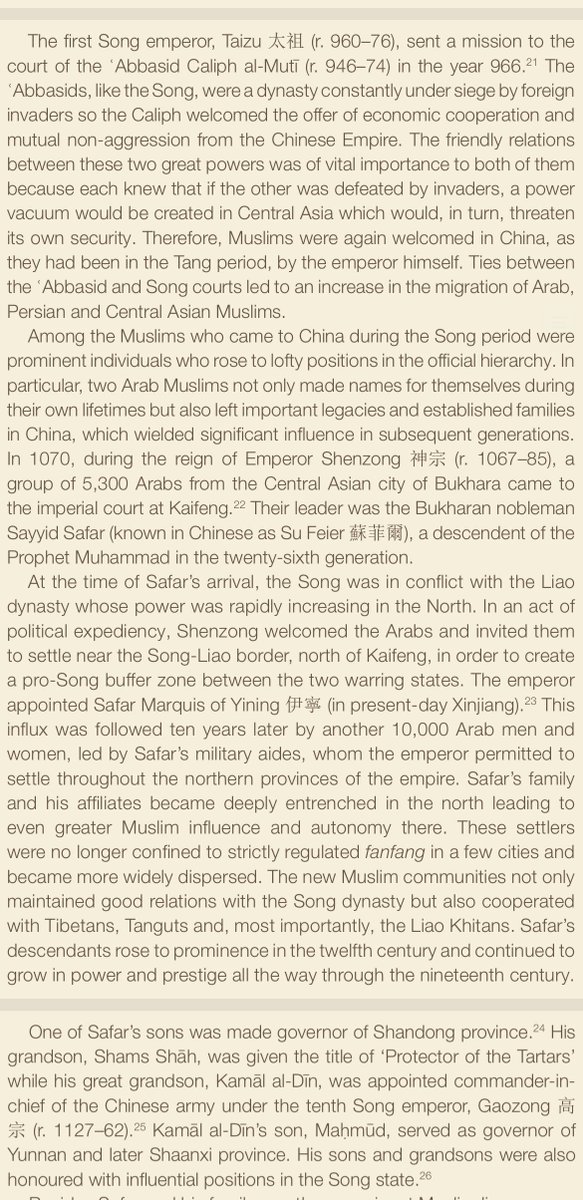
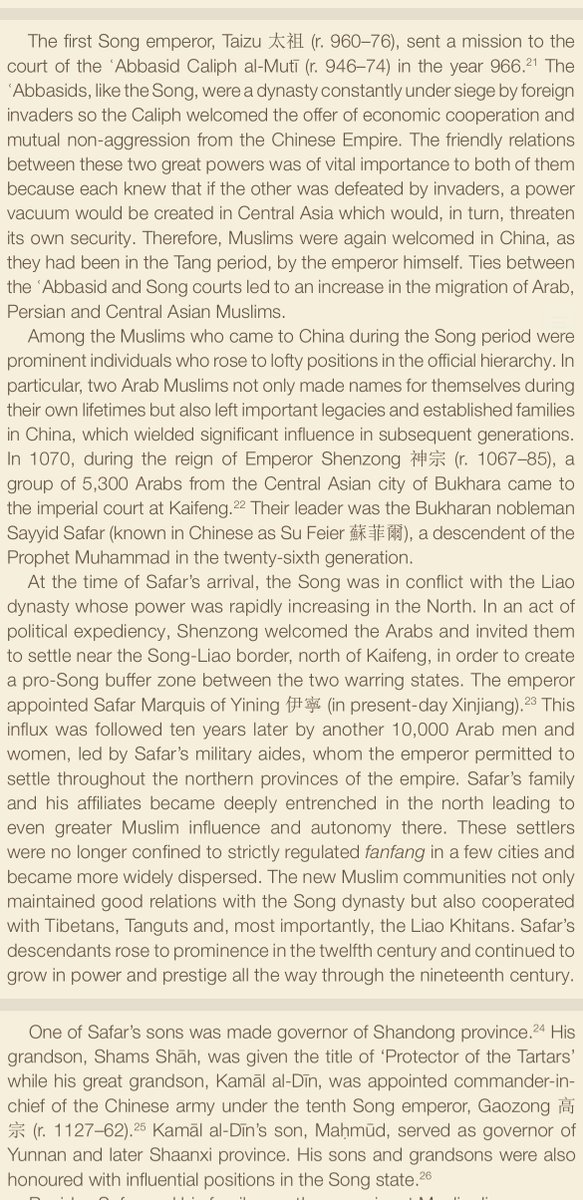
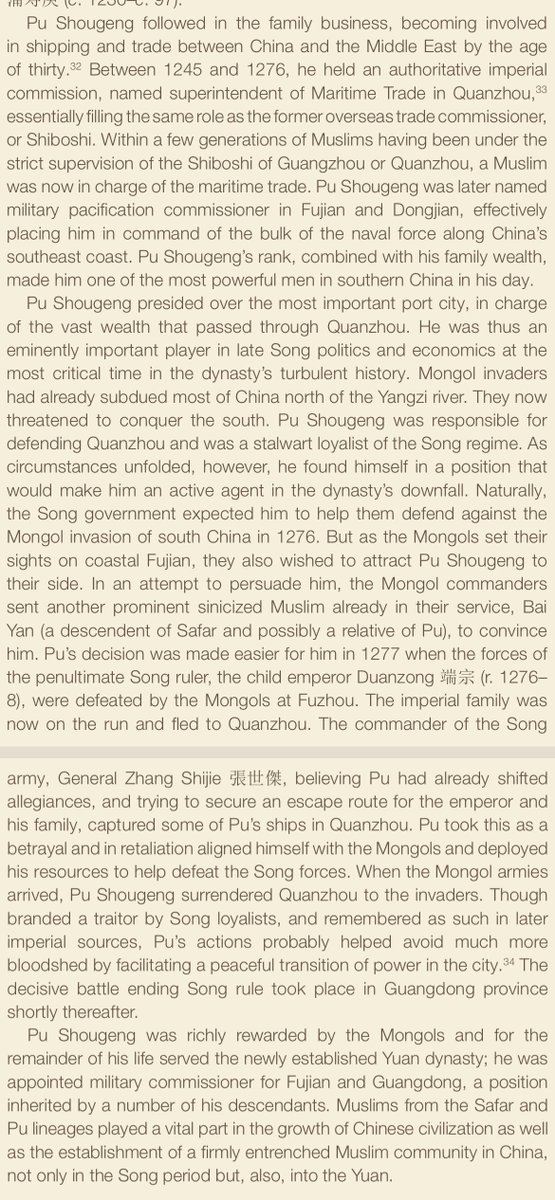
4. 'All the while, Muslim fortunes ascended and declined with the vicissitudes of the Mandate of Heaven.'

5. Individual Muslims were very prominent in the Yuan dynasty, Mongol empire that came to rule China


6. Baba Hu - a scholar amongst scholars. A reviver of a deen if ever there was one. How many scholars like these exist and we don't know them let alone celebrate them. (rahimullah)


7. A generation of scholars - whole 'tabaqat of scholars that preserved their religion and tradition and allowed Muslims to keep their identity - the Han Kitab school. 1. Wang Daiyu Fi (c. 1570-c. 1660), 2. Ma Zhu (c. 1640- c. 1711), 3. Liu Zhi (c.1660 – c. 1739)

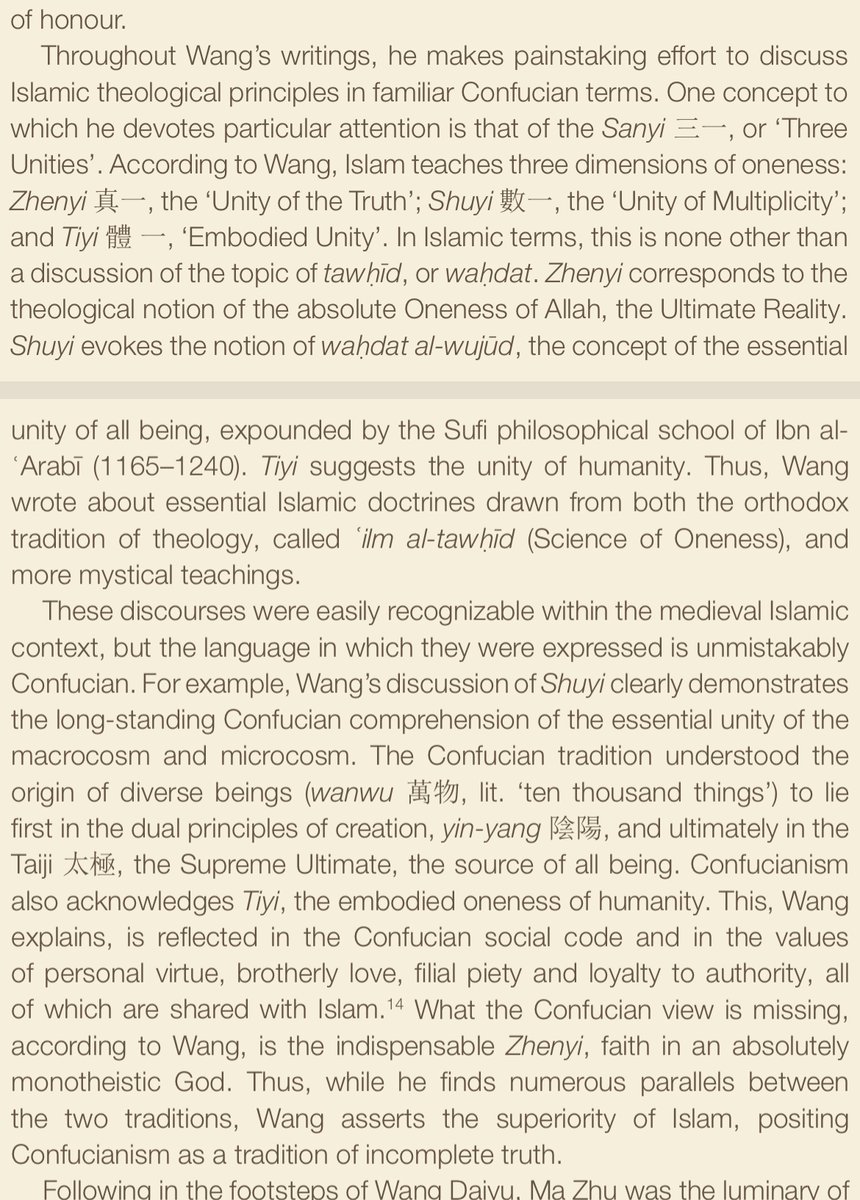

8. After the post-Empire China Muslims continued to be considered an integral part of China Here is the Philosopher-Founder-President Sun Yat-Sen that Muslims was part of one body - the Chinese nation.

9. Chinese Muslims played prominent roles in the warlord era in the chaotic 1920-30s - one example if Ma Fuxiang.

10. Unsurprisingly the CCP had a very different relationship with the Muslims - see the Shadian incident ‘The ‘Shadian Incident’ is recorded as the only ethnic uprising during the Cultural Revolution.’

11. As Deng Xiaoping opened China up; many Muslims became open to global and therefore Arab influences, as can be seen in the style of the mosques built.


12. Post-9/11 things changed however, as China allied themselves with global war on terror. The treatment of 'good' Muslims minorities like Hui became distinctly different from 'troubled' Uyghurs.


13. Hui minority is a long standing history and has a long history of sinicised Islam with peculiar characteristics in these Gedmu ('qadeem' tr: ancient )communities incl. the han kitab tradition but also woman's mosques.


14. There is also longstanding relationship between sufi orders; Qadriyaa, Kubrawiyya, and Naqshabandiyaa amongst others.


15. Modern movements include the Yihewani; once Salafi, now increasingly Sinicised; as well newer Wahhabi-influenced groups shaped by Gulf ties. As is often the case the division between Muslims is often greater than between Muslims and majority Han population.


/fin I suspect if you were to read only book about Islam and China this is the one I'd recommend. If you want to delve deeper; perhaps this list would be useful as well as some of the recommendations in the replies. https://x.com/FaheemAMHussain/...
These are all very idiosyncratic takes and are only what has caught my eyes; the book has a lot more, but didn't want to bore you all.