
This is a thread on why Britain is likely to lose the Falkland Islands, probably within the next 25 years, but by 2065 at the latest. We could theoretically avoid this, but will probably not take the necessary steps, so lose them we will. 🧵 1/n


First things first: it is unlikely we will be faced (on a strategically relevant time frame) with the prospect of losing the islands militarily. We might be militarily weak, but since the 1982 war, we have bolstered defences of the islands, centred on RAF Mount Pleasant. 2/m

These defences involve four permanently stationed Typhoon fighter jets, plus an aerial refuelling tanker; strategic airlift; remote radar heads; Sky Sabre medium range AD missiles; a RN River class patrol boat, as well as destroyers/frigates coming on station as and when. 3/n


An infantry battalion is also stationed there. Below is the officer commanding 2 RIFLES talking over as the roulement company from a typically lithe 2 PARA officer. A battalion might not seem much, but British soldiers are elite; they outmatch Argentinian infantrymen. 3/n

Buenos Aires is decades away from matching this, especially given that any Argentinian military build-up could be countered by bolstering the British presence on and around the Islands—even without the additional military spending we apparently have planned. But what if... 4/n
...Argentina got its act together economically. What if it bought the sort of full suite 5th gen fighter jet plus AWACS product from China that was apparently within the reach of Pakistan? What if it significantly expanded its army and bought modern kit for it? What if it... 5/n
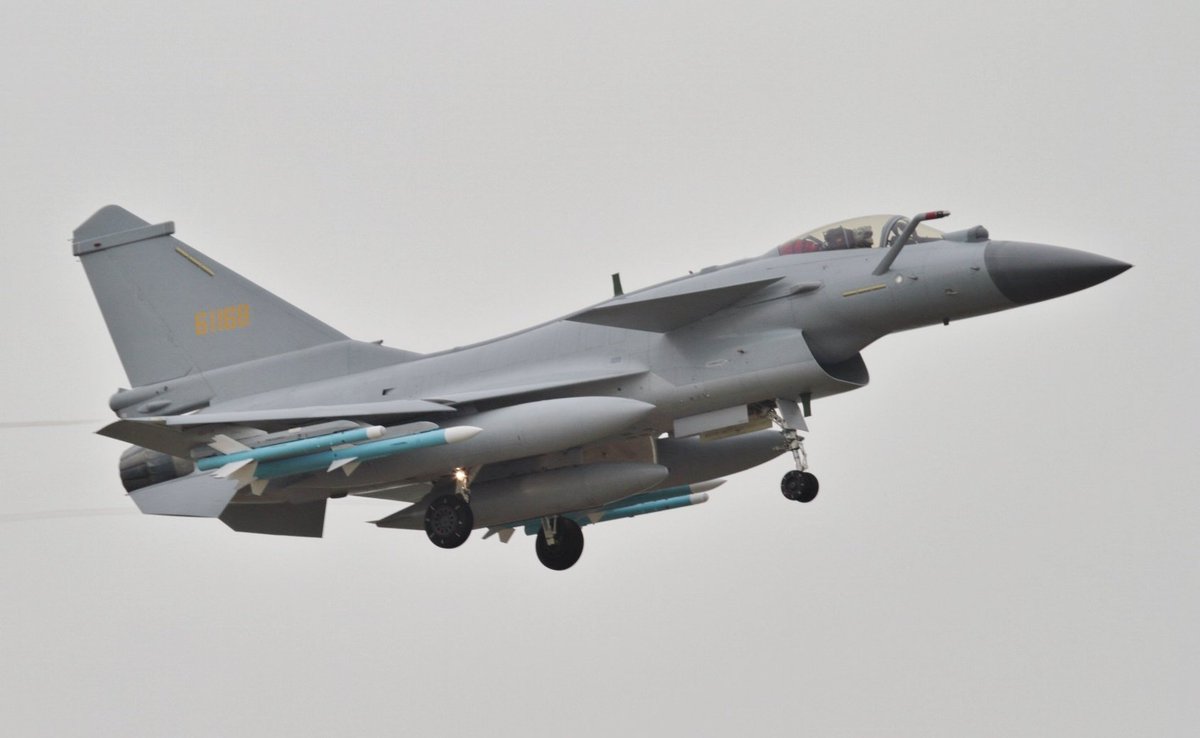


...took advantage of the democratisation of precision strike and surveillance made possible through missiles and drones of various types? If the Houthis can get such missiles, and the Ukrainians make such drones at home, so could the Argentinians, in theory. 6/n


The British state is not taking this risk nearly seriously enough. Massive use of missiles and drones would rapidly degrade the position at Mount Pleasant and ultimately overwhelm the RAF's ability to contest the air, opening the way for AAF fighter-bombers to start roaming. 7/n


Nevertheless, if Argentina started developing such an arsenal, Britain could respond by stationing more defensive assets there, as well as newly developed point defence against drones, and distributing assets around the Islands. Finally, it could deploy systems capable of... 8/n


...suppressing Argentinian fires on the mainland. Furthermore, a contested marine landing is about the most difficult thing a military can attempt. The Argentineans could develop all the drone and missile tech they wanted, but getting soldiers across 300 miles of open water? 9/n

This would be impossible without air superiority, but even if it was gained, surpessing UK ground based anti ship fire would not be a given. Furthermore, it is doubtful Argentina will be able to detect RN hunter-killer nuclear submarines, which are the best in the... 10/n

...world after the most advanced US Navy subs, anytime soon. As long as they cannot, getting a maritime force to the Islands is a big ask (as long as Britain has time to sally assets to the islands before D-Day). So how could we possibly lose the Falklands? 11/n

Since probably 2014, the world order has shifted from being Unipolar (which it had been since 1991 at latest) to Multipolar. The great powers in this system are Russia (by far the weakest of the three), China and the United States of America (the last two bring peers). 12/n
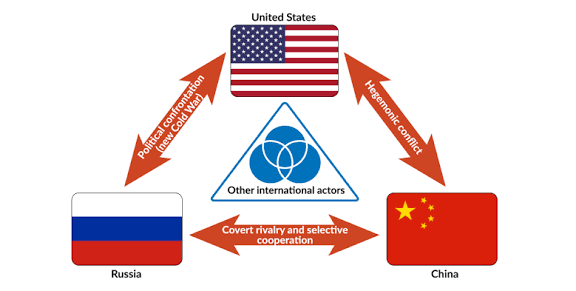
That means a return of ruthless great power security competition. South America will not be immune from this competition. If you do not know who Admiral Alvin Holsey (below) is, you should. He is commander of US SOUTHCOM, responsible for all Latin America. 13/n


The power of the United States of course relies on its tremendous natural resources, awesome economic size, strength and depth, and its powerful military. It also, however, relies on the fact it is free from closeby rivals. It has always understood the importance of this. 14/n
That is why it proclaimed the Monroe Doctrine—which said that outside powers could not interfere in the Western Hemisphere—in 1823, long before it had the ability to enforce it. And, since then, it has fought wars, annexed lands, fomented coups, supported revolutions... 15/n

...and dictators, funded guerrillas, run drugs, and blockaded nations to ensure Latin America plays ball. Nothing has changed, and nor has Washington's desire to control South America's critical natural resources, such as oil, iron ore, copper, lithium, niobium and uranium. 16/n
But there's a problem. China is now the largest trading partner for the majority of South American countries. It is also building 5G networks, ports, logistics corridors and, worst of all, investing in all those natural resources, sending them to China, not the USA. 17/n

With all this investment, trading, and provision of equipment, comes influence. If one country is your biggest trade partner, and provides your national telecoms network, and is building and running crucial infrastructure, that gives them some leverage, no? 18/n
It should not need to be said that Washington hates this, and has decided to compete—as ruthlessly and mercilessly as always. Most prominently, the US is trying to foment a coup d'etat against the Venezuelan government right now. Or perhaps it is preparing to invade. 19/n

It is battering Brazil with sanctions because the pinko, BRICS/global south leaning president Lula has prosecuted the right wing, US-leaning former president Jiar Bolsonaro. It is pressuring Mexico, helped install a super pro US administration in Ecuador and Peru. 20/n


Argentina is an important piece of the jigsaw. It exports agricultural produce, oil and gas, and, crucially, is part of the Lithium Triangle. Argentina also controls the exits of the Parana-Paraguay river system through which a large volume of the region's exports travel 21/n

The recent $20bln bailout of Argentina shows how important the country is to Washington. President Javier Milei is hugely pro-US. He has sought to tie Argentina into the US orbit through the purchase of F-16s and military cooperation in the River Parana. 22/n
Clearly, Washington wants to maintain a pro US regime in Argentina; clearly, it will continue to compete for influence in South America more broadly. At this stage, it should have started to become apparent how Britain might lose the Falklands 'diplomatically.' 23/n
The year is 2045. The Argentinian economy has been growing strongly for more than 15yrs—thanks to Tierra del Fuego gas, lithium, and a government that knew not only how to manage the economy, but how to play the US and China off each other, securing investment from both. 24/n
With this economic growth came military reform. The country focused on a large and varied drone and missile force, complemented by a small number of Chinese 5th Gen fighters and a modern expeditionary capable army. The UK has followed these developments with alarm. 25/n
It has had to buy and deploy more A2/AD and point defence systems, build austere runways on the island the distribute its fighter jets, and deploy far more assets. The balance of power remains with the defender, but the expenses of keeping the Falklands are mounting. 26/n
At this point, Argentina makes a big push to open negotiations on the sovereignty of the 'Malvinas'. The Global South countries support this 'anti colonial' effort. So do the Chinese, now the biggest economy in the world and a powerful diplomatic player. Beijing sees an... 27/n
...opportunity to score an easy win against the US, which will naturally be torn on the matter (as Washington was in. 1982 until Galtieri played the diplomatic game idiotically). Somebody else who sees an opportunity to score a win is Spain, which lobbies hard win the... 28/n
...EU to support Argentina's case. Madrid hopes the precedent will lead to gaining sovereignty over Gibraltar. Publicly, Washington is neutral on the matter. In private, though, it tells Buenos Aires that it will use its special relationship with London to argue... 29/n
...Argentina's case. In London, it tells an ashen faced Prime Minister that the US will not support the UK; the strategic cost to America would be simply too great, and that it is the opinion of the Administration that the time had come for a transfer of sovereignty. 30/n
@admcollingwood Great thread… I’d like to know what you think we could do to prevent this outcome. You mention above that we could avoid this? What do you think that looks like?
@elloydowen I think I'll write something (shorter) on that today.