
1/10 I just finished reading Sven Beckert's history of the development of the global cotton industry. It's a bit repetitive in its main theses, and sometimes a bit of a slog, but well worth reading for those interested in the history of trade and industrial policy.
2/10 One of the interesting aspects of these economic histories – and something which mainstream academic economists have so much trouble understanding – is the extent to which trade patterns and comparative advantage are not "natural" but emerge directly out of policies and
3/10 Cotton merchants, Beckert writes "understood early that their trade was embedded deeply within local, national and global politics. They understood instinctively that the state does not intervene in the market, but constitutes it."
4/10 He shows that except in the actual growing of cotton fibers (and even there, not as much as you might think), there was nothing "natural" about comparative advantage in cotton production. It, and the associated productivity gains, were a creation of policy and institutions.
5/10 More to the point, comparative advantage could be shifted (most notably from India) by policies that constrained or encouraged the shift to more powerful states that wanted to benefit from the much faster productivity growth associated with cotton spinning and weaving.
6/10 Economists used to be obsessed with economic history as fundamental to their understanding of the subject. They no longer are, and seem to avoid it as much as possible, probably because you cannot read history without finding mainstream economic models to be questionable...
7/10 and, at best, far too limited, especially when it comes to trade. It's not because these models require simplified assumptions to work, but rather because they can only work with assumptions designed to make them work, and these assumptions are far too often wrong.
8/10 Trade is embedded in political, legal, financial and structural institutions, and in a world in which different countries choose different positions in the tradeoff between global integration and national sovereignty, the predictive and analytical value of these models is
9/10 India, for example, "chose" global integration (i/.e its colonial masters chose it for them) while England (and, later, France and Germany) chose very hard forms of economic sovereignty. It's not hard to guess which way the great prize of cotton spinning and weaving shifted.
10/10 At any rate, for those who would like to see how trade patterns, trade imbalances, comparative advantage, and productivity gains are determined in a world of powerful states, large global actors, and weak workers, this book is quite illuminating.
@michaelxpettis Another book I recommend is this 👇 Excellent economic history about how Geography and Geopolitics influenced trade in the second millennium

@Peri_ScopeX Thanks. It looks very interesting.
@michaelxpettis Enjoyed this book, you have an interesting angle. There was nothing “natural” about Britain - an island in the North Atlantic - becoming a global cotton/textile powerhouse. It was a series of deliberate geopolitical policy choices.
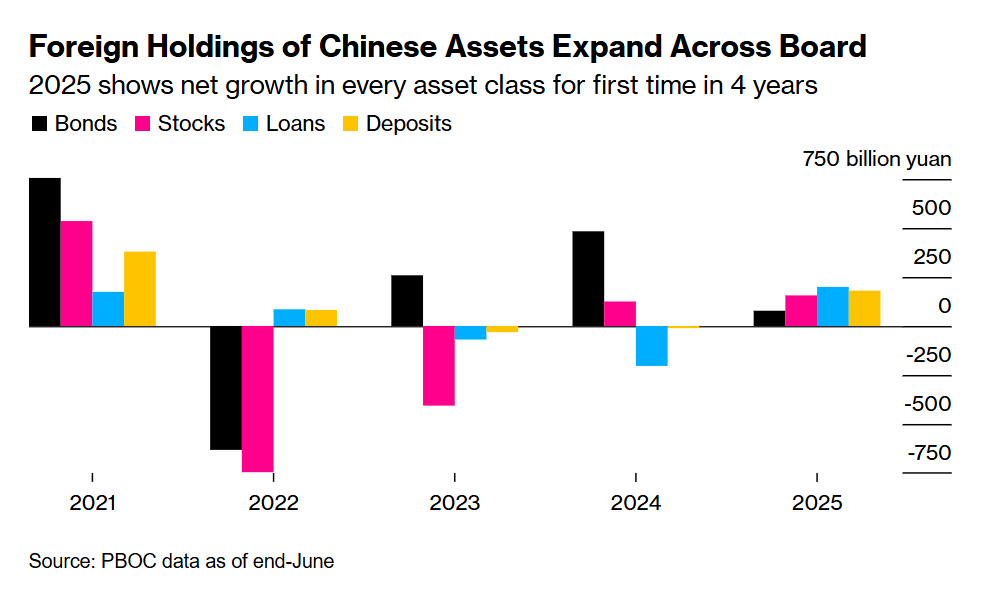
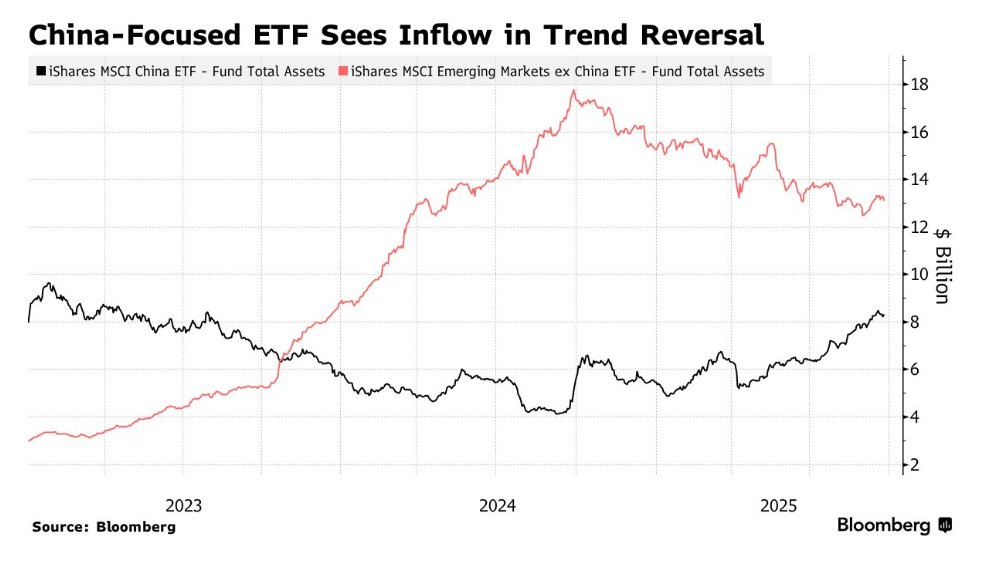
Investors around the world are pouring money into China for the first time in years https://www.bloomberg.com/news...
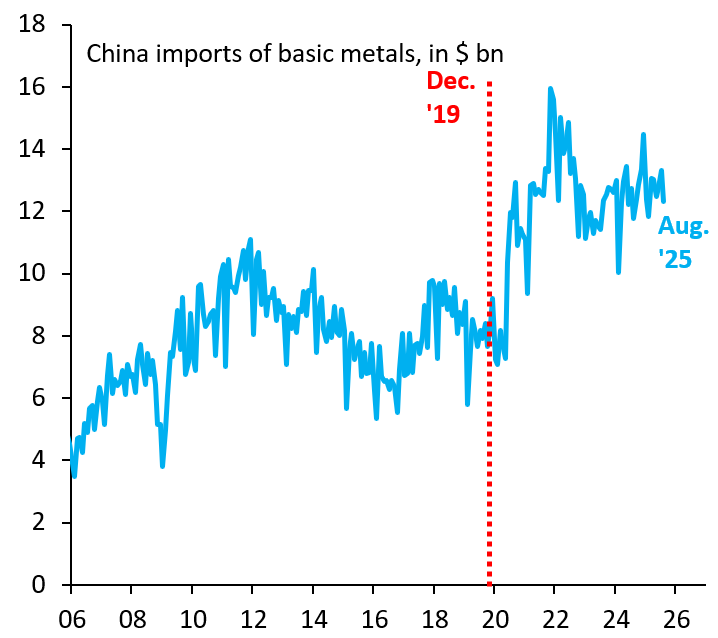
China runs massive current account surpluses. It pegs its currency to USD, so it has to buy lots of Dollars to stop its currency from rising. China used to put those Dollars into Treasuries, but that isn't a good idea any more. So China builds huge inventories in basic metals...
Good Morning from Germany, where outspoken entrepreneur Alex Karp has laid out a rescue plan. He warns that Europe risks losing its industrial heart. Years of wrong decisions in energy, immigration, and technology now demand courage, toughness, and honesty. Karp offers Germany 5

This is really bad.
