One of my favorite inscriptions of the Hellenistic period comes from the Red Sea port of Adulis in modern Eritrea, where King Ptolemy III Euergetes (r. 246-222 BC) established his own “res gestae” known simply as the Adulis Inscription (OGIS 54)


This inscription lists the achievements of Ptolemy III in the Third Syrian/Laodicean War (246-241) against the rival Seleucid Empire, in which Ptolemy managed to march as far as Mesopotamia and lay siege to Babylon. No other Ptolemaic king had as much success.

The inscription itself is lost, and we only know of it due to the writings of Cosmas Indicopleustes, an Alexandrian merchant and traveller who visited Adulis and the Kingdom of Aksum in the sixth century AD , thankfully recording much of what he saw and read.

Adulis is located nearly 3,000 km from Alexandria, the capital of the Ptolemaic Empire. Why would he bother to have his message carved in stone at great expense where very few people could actually read it? Simple: it fits the ideology of universal kingship
Since the days of Alexander the Great, Hellenistic kings frequently articulated claims (baseless or otherwise) of a near-limitless empire. In this case, Ptolemy boasts of his current dominions in Asia Minor, North Africa, and the Aegean, but also his recent conquests
Most of those conquests were ephemeral, and he retreated from most of Seleucid Asia immediately afterwards due to internal revolts. It is extremely unlikely he ever reached Susa or Bactria (modern Afghanistan), but who really was going to challenge his claims?
While written in Greek and articulating Greek notions of kingship, he also committed to the Egyptian Pharaonic model by claiming he returned the Egyptian idols stolen by the Achaemenid Persians during Chambyses’ time in the sixth century BC

Making reference to the Persians was also useful for Hellenistic propaganda: Alexander conquered the Persian Empire, now Ptolemy has replicated the feat. It also insultingly painted the Asia-bound Seleucids (their fiercest rivals) as the new Persia, a win in multiple dimensions!
But placing such a large monument at (in Greek eyes at least) the end of the inhabited world was intended to be an achievement in of itself, like the Altars of Alexander the Great at the Hyphasis River in India to commemorate the extent of “civilization”
@HellenisticPod @threadreaderapp unroll
@HellenisticPod What was even going on in these ports

@HellenisticPod Adulla Sea Port should be studied only by the Map of the Periplus. The port was close to the Port of Barygaza. It is in ancient India.
@HellenisticPod I do not understand
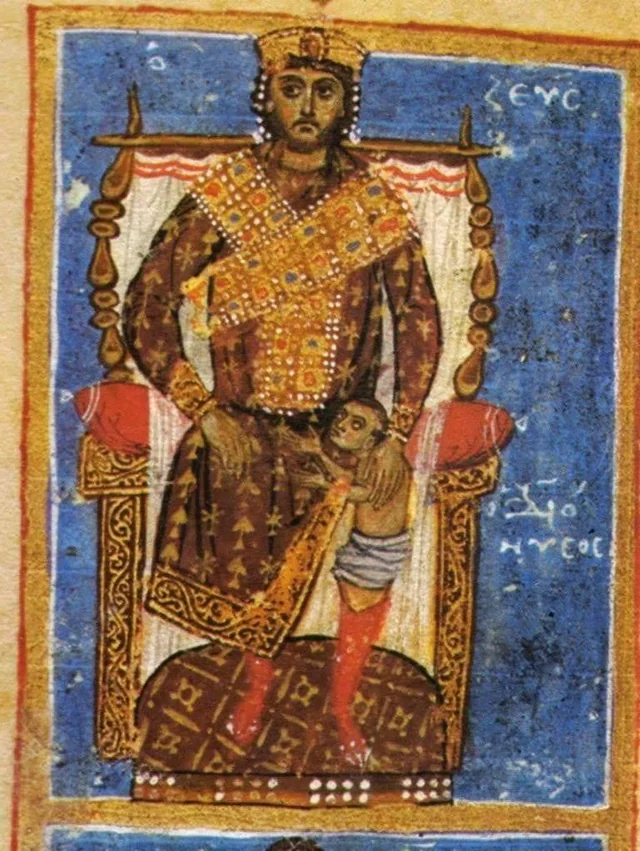
Zeus as Christ in a Byzantine manuscript? Yes, really. In a 12th-c. codex from Mount Athos, Zeus sits enthroned like Christ. From his thigh emerges the infant Dionysus, arms outstretched to the almighty father. Pious medieval Romans were well aware of their Classical heritage⬇️
Tribes of Europe. "This vast map covers just about all possible tribes which were documented in the first centuries BC and AD, mostly by the Romans and Greeks."

Which had the more impressive civilisation? Ancient Rome or Medieval Europe?


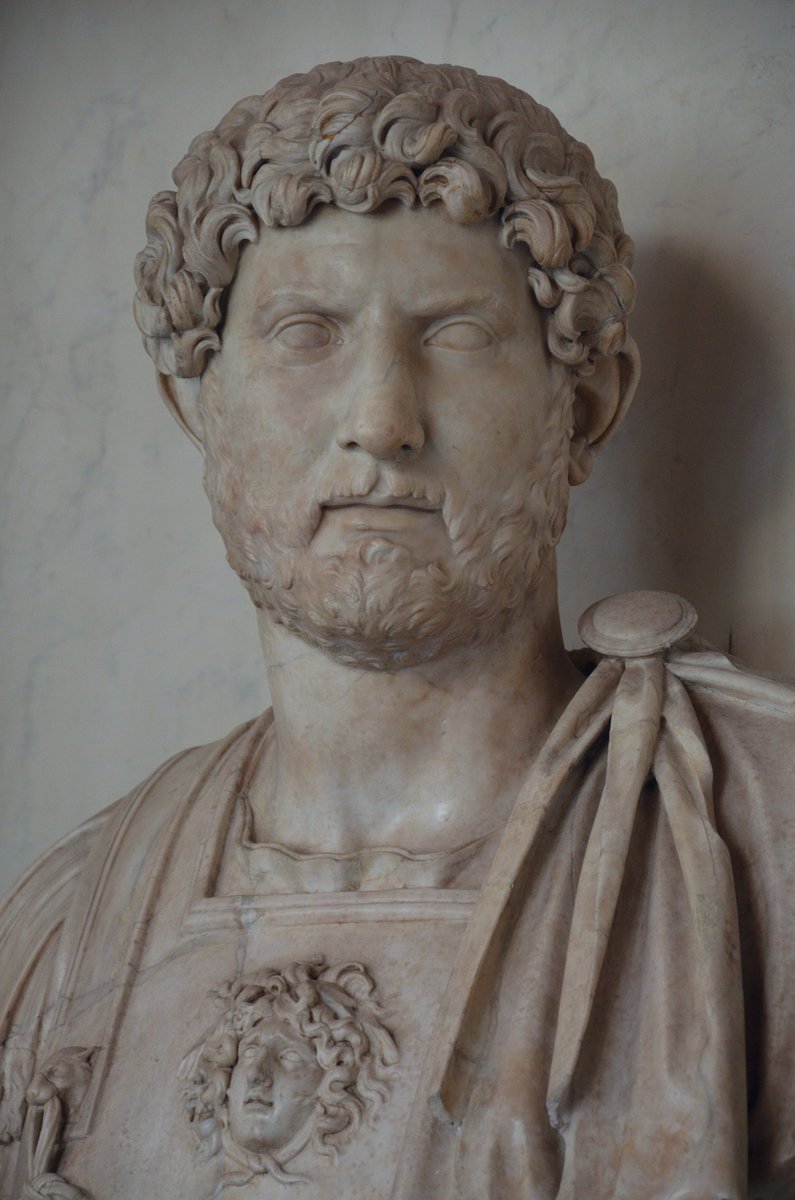
Bust of Hadrian from Italy, wearing a breastplate decorated with a Gorgon's head and a paludamentum draped over his left shoulder. The emperor is depicted according to the first official model, the so-called “Termini" portrait type, created after his accession in AD 117.