
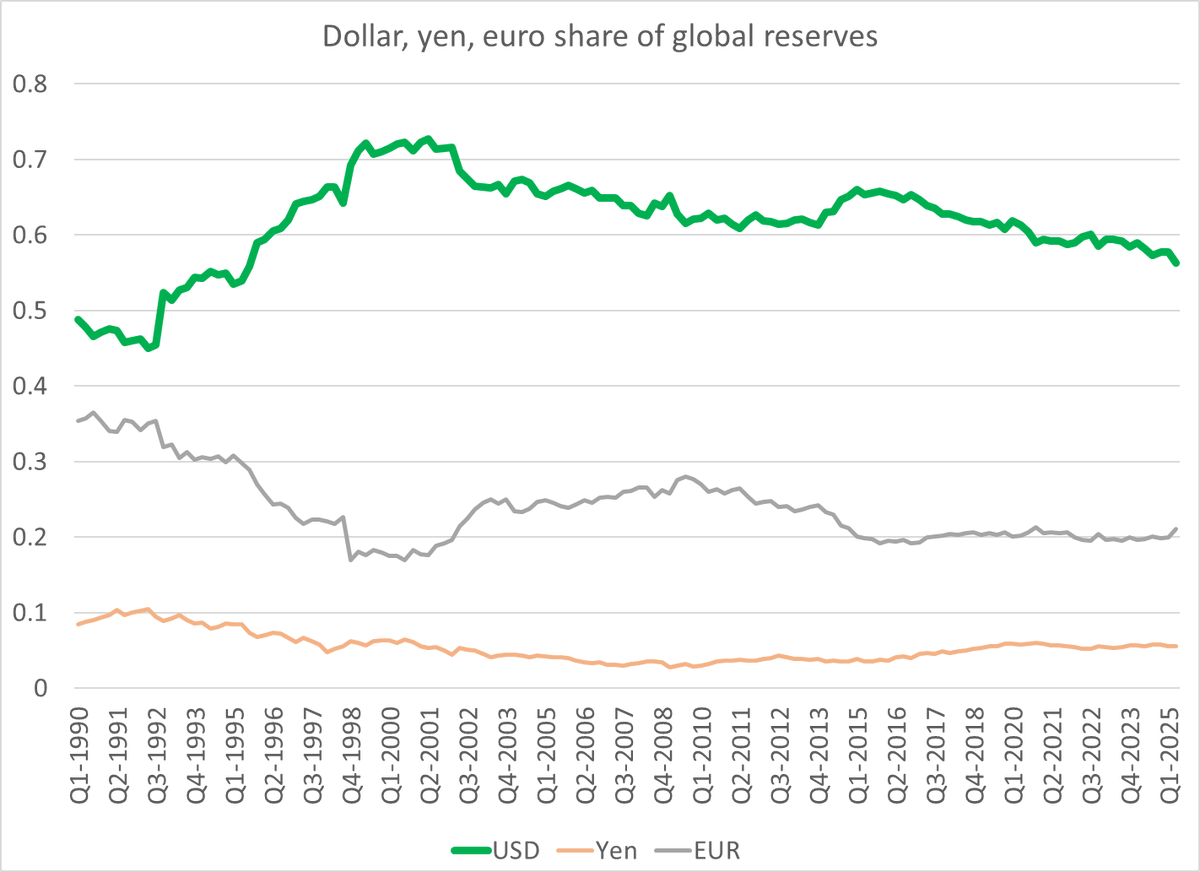
One of the arguments I made at last week's Federal Reserve (Board +FRBNY) Conference on the international role of the dollar is that the dollar's share of reserves gets too much attention, and the absolute stock of reserve holdings gets too little ... 1/many

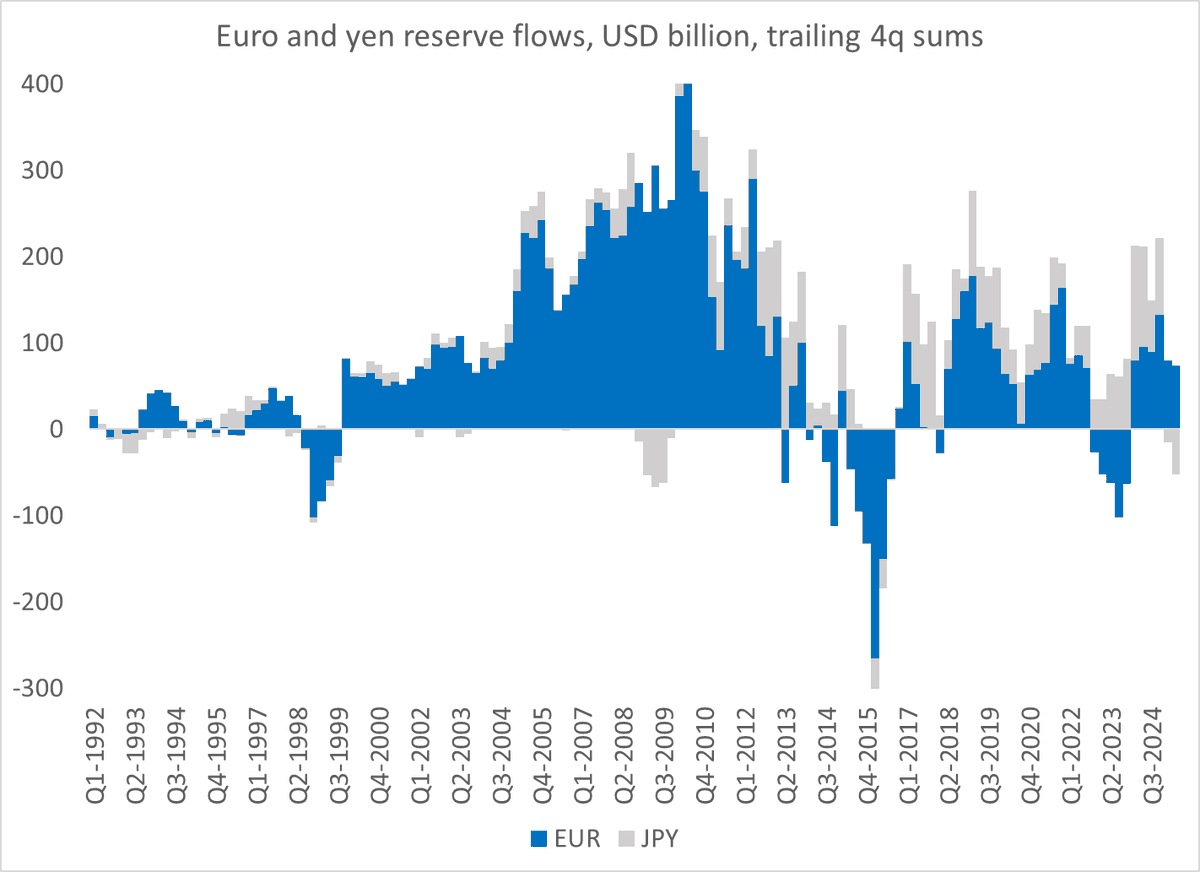
Central banks did add a bit to their Euro holdings in dollar terms (or rather, they didn't sell euros just because the euro rose against the dollar in q2). But the bigger story is that dollar holdings are basically constant ... 2/

There has been essentially no flow from foreign central banks/ reserve managers into dollars in the last year plus -- and global reserve growth has also stalled ... 3/

Flows into the euro have actually been a bit stronger, best I can tell, than flows into the dollar -- Europeans worried about the impact of freezing all of Russia's euro reserves should be able to breathe a bit easier ... 4/
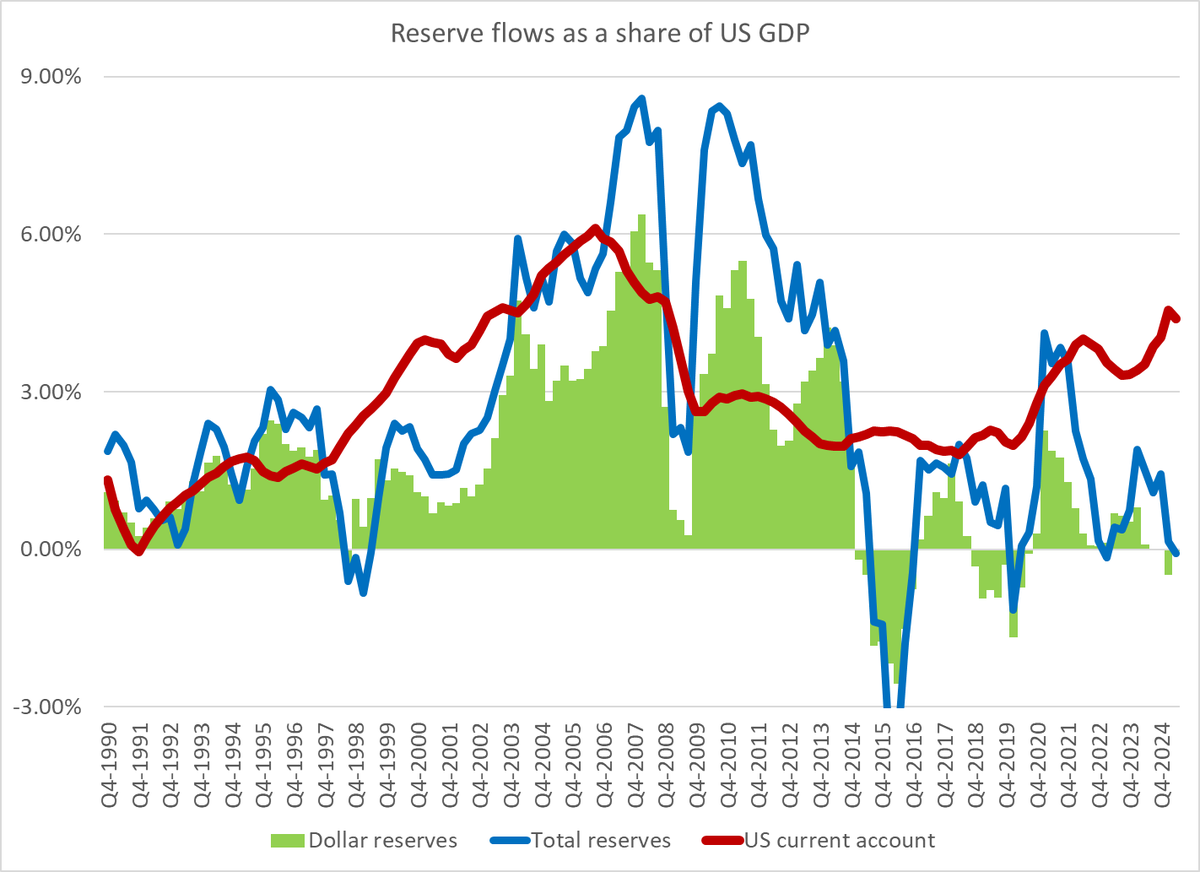
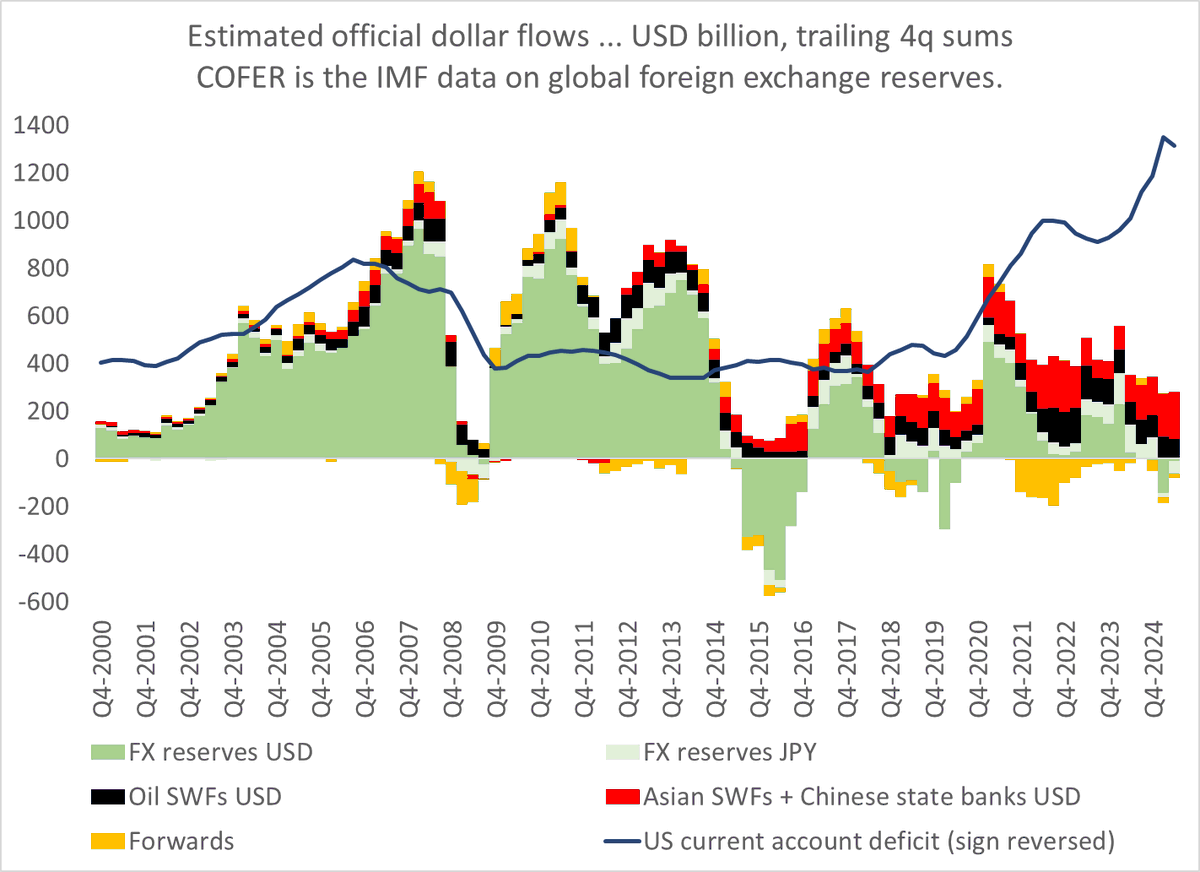
And reserve related inflows simply haven't been a big factor in the rise in the US current account deficit since 2020 (unlike the period before the GFC). Reserve growth has also been modest v the growth in Treasury supply, again, unlike the period before the GFC 5/
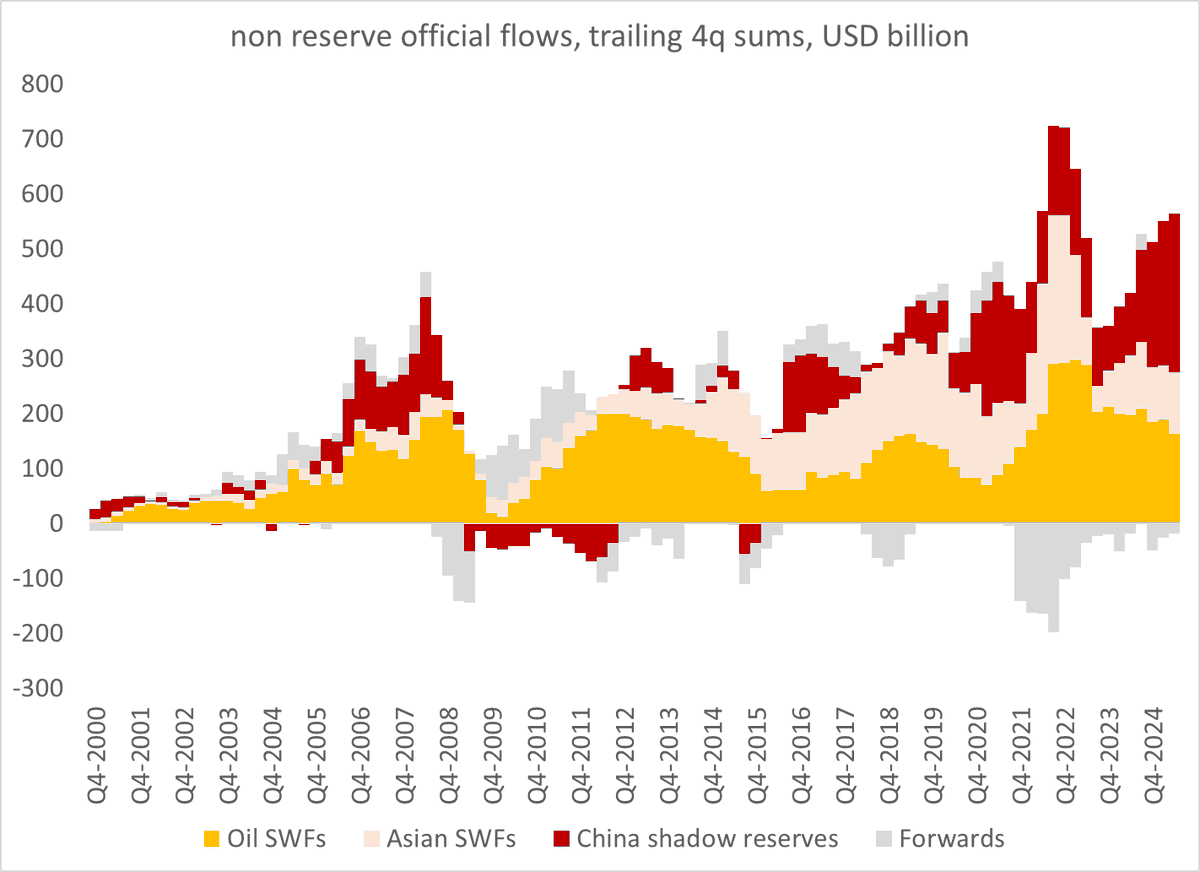
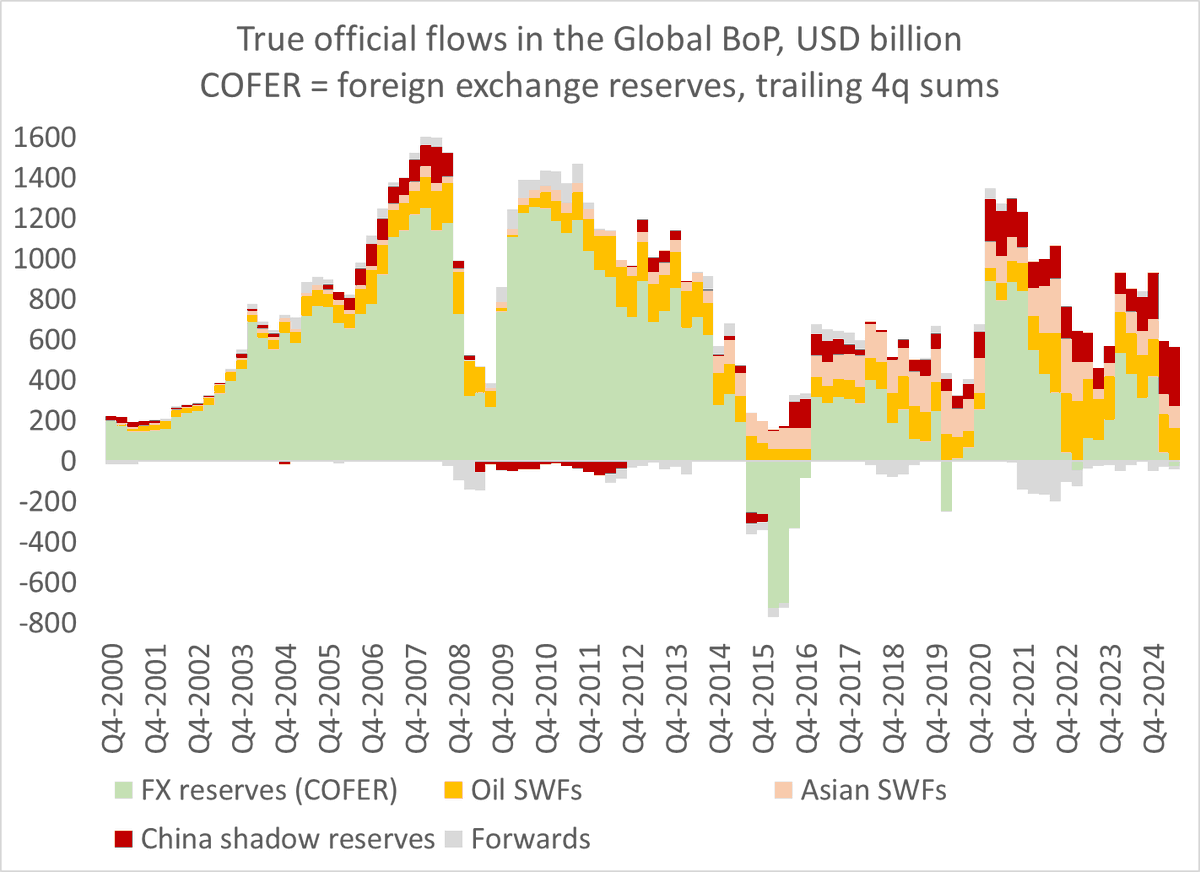
I have extended this analysis in a couple of ways that I think are interesting (this tweet previews a forthcoming blog) -- notably by tracking sovereign wealth fund flows as well as Chinese policy bank flows (those are up recently) 6/
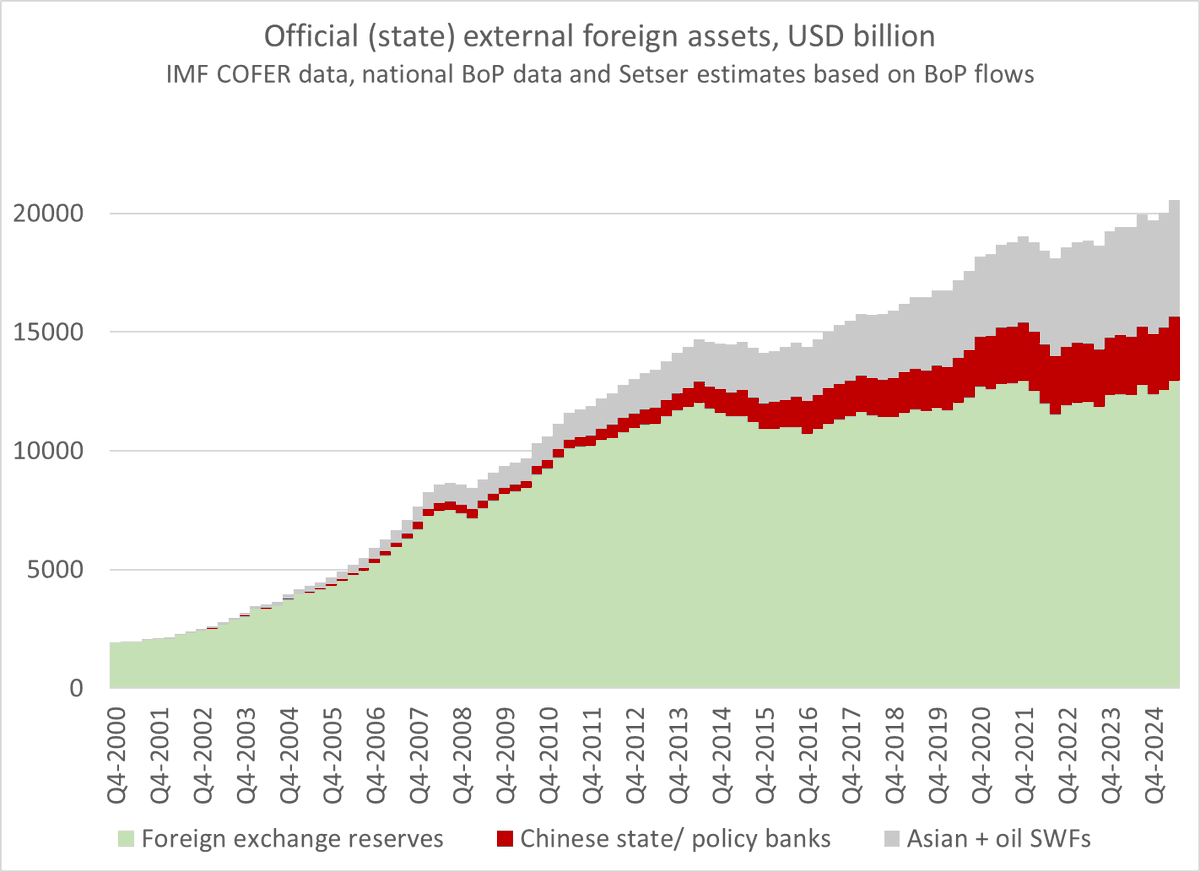
A low end estimate of these assets (leaving aside domestic assets, this is all BoP based) would put them at circa $8 trillion or 2/3rds of the world's $12 trillion in reserves. Not small (this leaves out capital gains on the assets incidentally) 7/
So does adding in the growth of SWFs and the increase in the foreign portfolio of China's state banks change the flow picture? A bit, but there still has been a fall off in total official flows over the last few quarters 8/
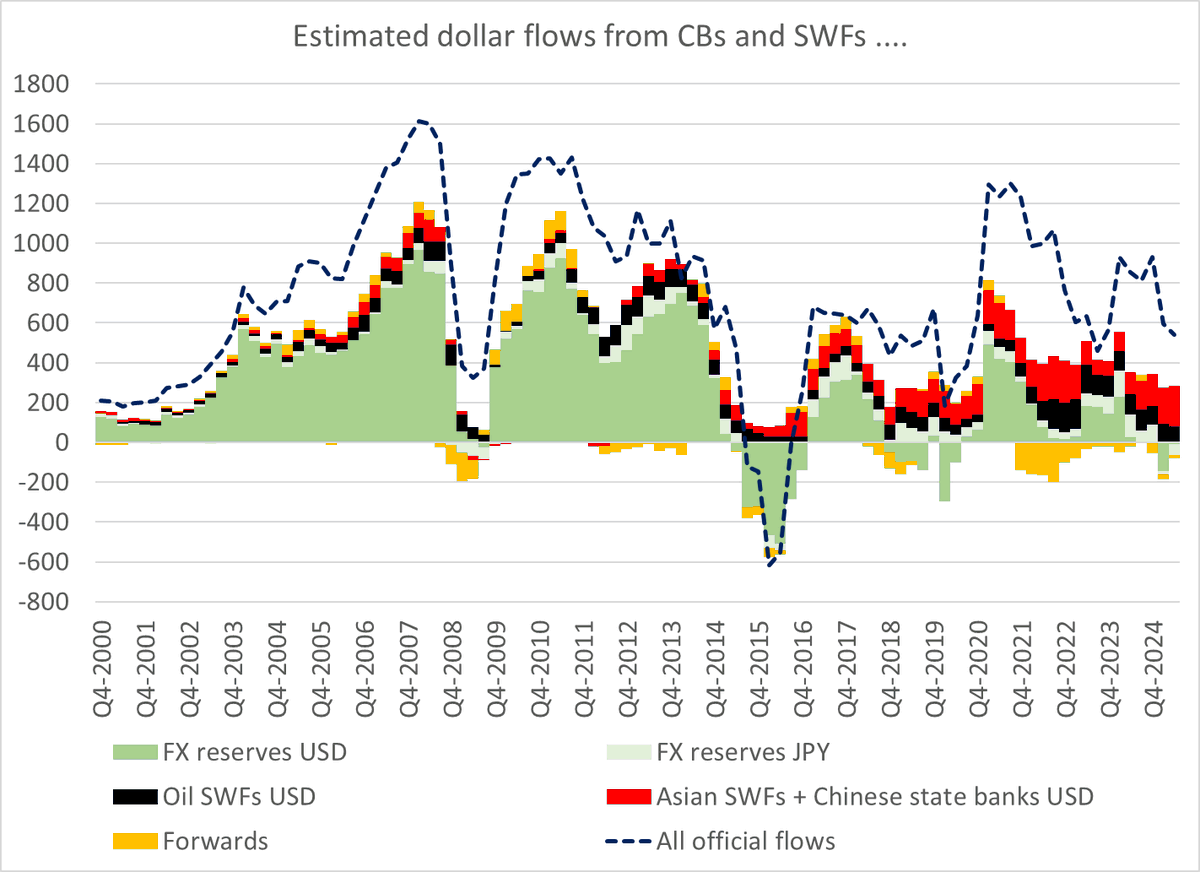
And my model for broader flows into the dollar from all official actors shows a fall off as well -- with total flows down to around 1 pp of US GDP/ $300b (mostly from Asian state investors such as the NPS, the GIC and the Chinese SCBs) 9/
So I don't find broad official flows a significant factor in the rise in the US current account deficit either -- again, quite unlike 2002-2007. 10/
ps I am happy to share this work with others interested in the topic; I want to encourage folks to move beyond analysis of the dollar share of reserves at a time when reserves and dollar holdings are flat! 11/
And I very much hope the Treasury's revised FX report methodology picks up on some of this work and some of these insights; the Treasury has recognized (correctly) that they need to look beyond formal reserve accumulation 12/12
@Brad_Setser Share of holdings does matter - your chart is nominal.....Inflation adjusted levels are down what, 40%. Maybe I should be at one of these meetings.
@Brad_Setser This guy is pretty accurate ⬇️⬇️⬇️ @SamLPrice⭐️🌟✨