
Threaded fasteners are among the most commonly manufactured components in world history. Yet almost nobody understands how they actually work. This makes you look retarded and incompetent, an abysmal failure, and kills people who trust you. So listen up: 🧵

The first thing to understand is this: A bolt is a spring. It applies force by being stretched. That means it needs to stay within the linear elastic regime of the stress-strain diagram. "wow" you think. "I never knew that." Of course you didn't. Its not even 1% of

The effective spring constant of a bolt comes from the part of the bolt that is not engaged with any threads. The clamping force of a bolt is generated by stretching this un-engaged part. This is why some bolts have an unthreaded shank portion that bypasses threads.


There is an 'ideal' effective spring constant: Too low and its like a sponge, soft, and doesn't provide much additional tension against a separating force. Too high and its 'brittle', small rotations (e.g. from vibrations) will massively reduce the clamping force
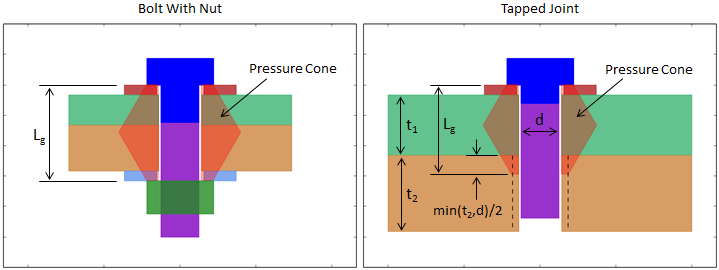
But there is also the material being clamped which acts like a spring. This is why you use washers - to increase the effective volume of material under load. Stop killing your loved ones by skipping washers. Washers save lives. Stiff material, elastic bolt. But why?
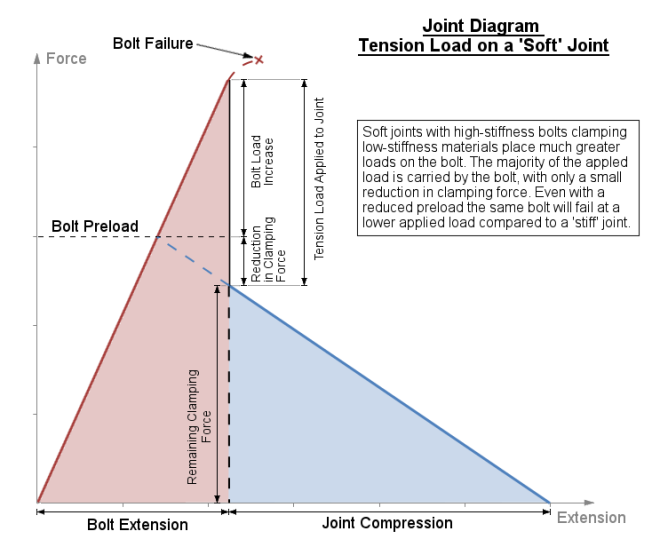
The clamped material and bolt act like springs in parallel. Stiff material means less of the load cycling acts on the bolt. Meaning the bolt pre-tension can be higher without it failing. Not knowing about bolt pretension is like not understanding a stop light, you child.

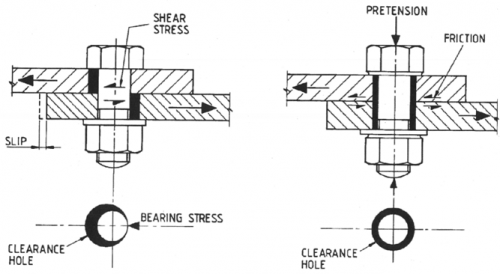
Bolt pre-load or pre-tension is how tight the bolt is initially, and generates the constant clamping force. It's this clamp force between the surfaces of a material, and the friction it produces, that resists shear. High pretension means less shear taken up by the bolt itself
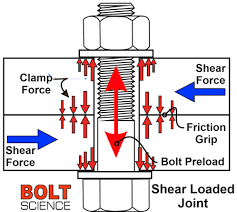
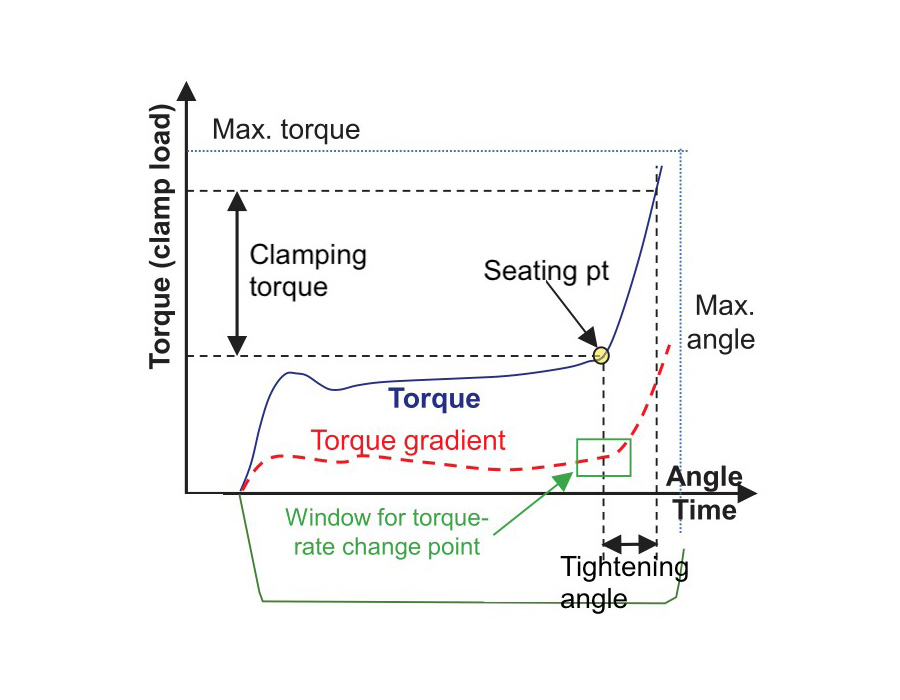
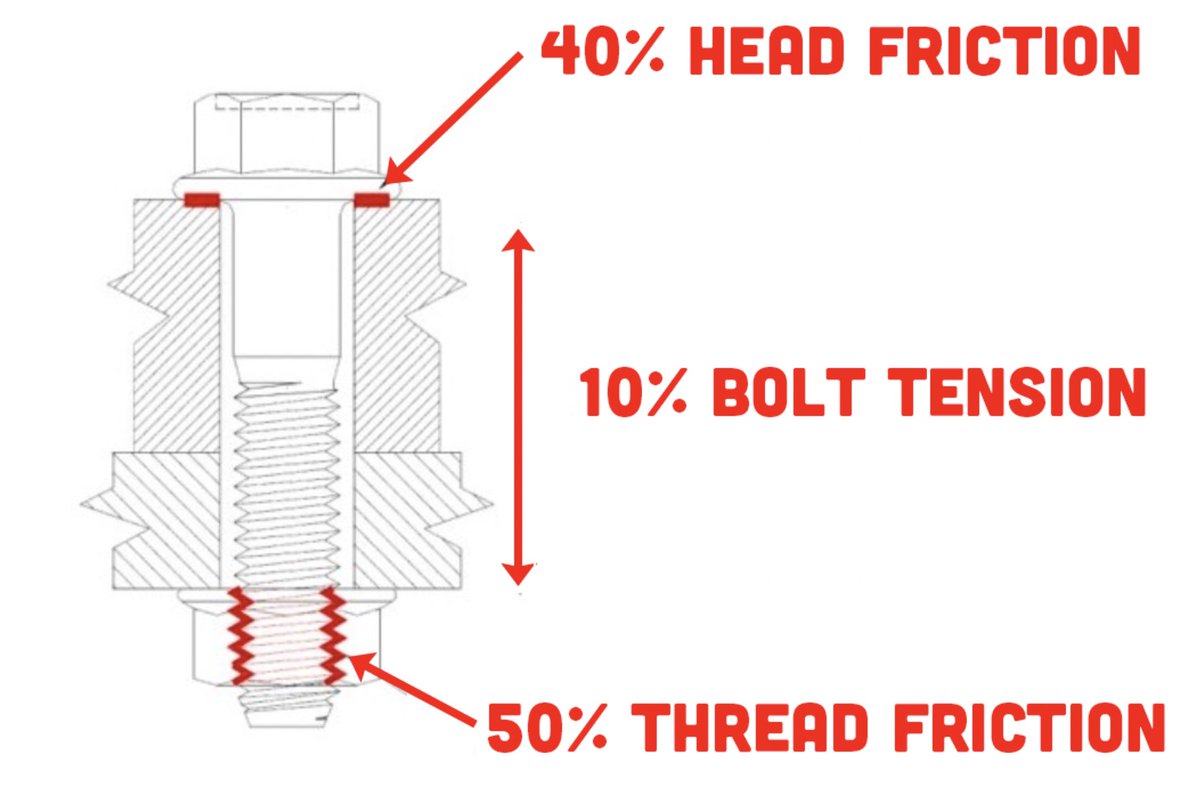
But most of the torque you apply to the bolt doesn't even go to the clamping force, it goes into thread and head friction. This is good - it prevents the threads from 'unwinding' on their own, maintaining bolt pre-tension, off-loading axial and shear stresses to material
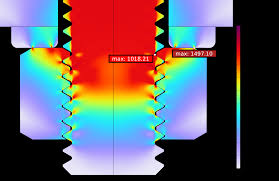
"So I'll just use tons of engaged threads so it never unlocks" you say - also retarded. Almost all the forces on are taken up by the first few threads. Finer threads are almost always better for generating tension, preventing failure, etc. 10 engaged threads is plenty.
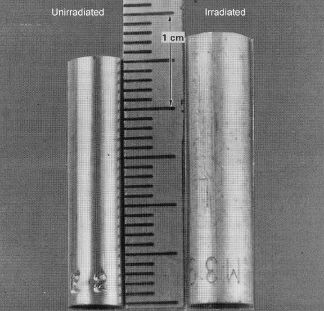
This is just barely the beginning of introductory bolt physics. Once you get into vacuum conditions you need to worry about trapped air in threads, off-gassing, start machining stuff out of tantalum. Or nuclear reactors where neutrons make your bolts swell up
Sum up: - Bolts are springs, they generate clamping forces by being stretched - Washers help take axial loads off bolts and place them on materials - Pre-tension means shear forces act on the clamped materials, not the bolt shafts - Fine threads better almost always - Neutrons

@Andercot I was fortunate enough to work and design some sophisticated tools for the aerospace industry, measuring the clamp up force on a bolt. If you know the coefficient of friction, and you know the torque on the nut, you can approximate this. However, what I chose to do was to send a
@JKRobotics ok that is pretty badass
@Andercot high-octane Shigley's thanks for the refresher
@SkidmoreDavid my curse is remembering everything i learned in shigleys
@Andercot @threadreaderapp unroll
@Andercot We have a guy on our team named Justin who get so so so excited to talk about bolts!
@Andercot They were first standardized in 1841, less than 190 years ago.
@Andercot So listen up 🧵… I mean🔩
@Andercot Wait, now do concrete drop in anchors !
@Andercot They're such an underappreciated technology. Looking back at the process of installing structural steel rivets makes you realise how lucky we are to have mass produced bolts at near zero cost.
@Andercot > when your bolts are waterlogged from neutron irradiance 😭
@Andercot bolts........yes
@Andercot You knew it was coming.

@Andercot Besides the shank being loaded in tension, the threads are loaded in shear. You can strip the threads if you over tighten.
@Andercot One of the mantras in our mechanical engineering course I helped teach was “A thread is not a seal”. Junior engineers always think you can plug a hole with a bolt. You just cannot. A separate seal is needed that is put under pressure by the bolting force.
@Andercot Sadly, GM engineers who designed the 2000 Northstar engine failed this class. Too few threads engaged to keep the heads on tight.
@Andercot Idk who tf you are but you are my favorite twitter person.
@Andercot I spent a good portion of my life in the threaded fastener business. It’s very interesting stuff. Hydrogen embrittlement anyone, anyone……. Plus a bolt is really a spring…..What! Who knew? Great thread!
@Andercot I never once thought about the machinery's handbook on my desk being the source of engagement here.
@Andercot Great thread. Thank you
@Andercot "This makes you look retarded and incompetent, an abysmal failure, and kills people who trust you." Hahaha, wow.
@Andercot Cool! More physics magic to a humble bolt than I thought
@Andercot I learned all of this in ME-101
@Andercot Coily be praised. https://youtu.be/4ttYlcrA7ys
@Andercot casually getting an engineering class in an X thread the internet is a wild place (and I'm here for it)