📕 The Magnificent Diwan: The Life and Times of Sir Salar Jung I, By Bakhtiar K. Dadabhoy This book brings to life one of the most compelling figures of 19th-century India, Sir Salar Jung I, the visionary Diwan of Hyderabad, whose statesmanship bridged two worlds, 1/9
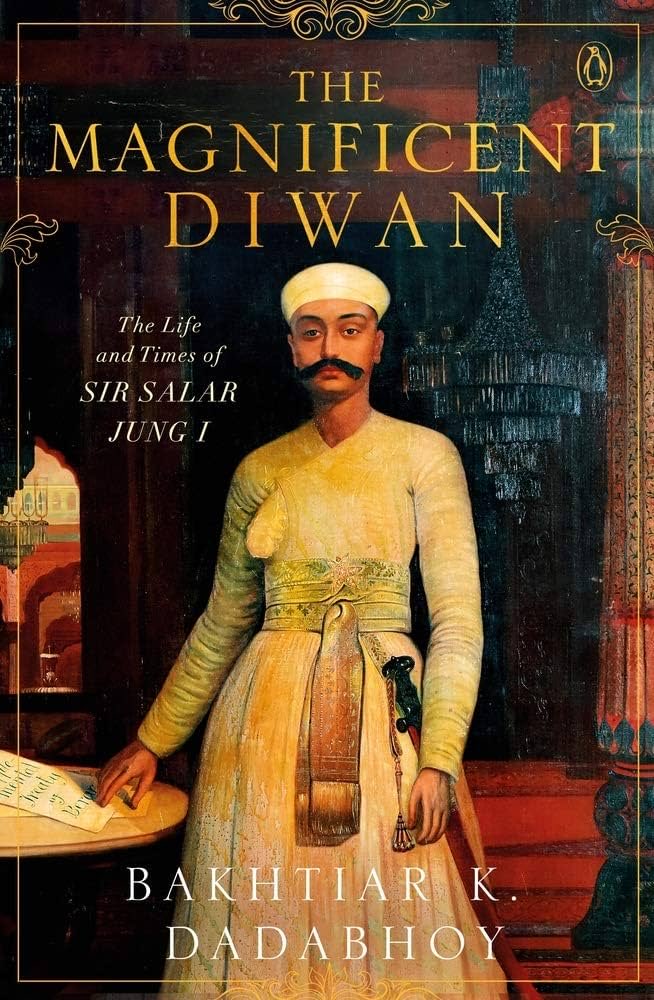
the fading grandeur of Indo-Islamic courts and the encroaching power of the Colonial British Raj. The author opens a window into a period when Hyderabad stood as one of the most sophisticated princely states in India. 2/9
Under Salar Jung I (Mir Turab Ali Khan), the state underwent a remarkable transformation. Serving as Diwan from 1853 to 1883, he reformed the administration, judiciary, finance, and military, and sought to modernize Hyderabad, 3/9
while maintaining its distinct cultural and political identity. What makes Salar Jung’s story so fascinating is his ability to balance loyalty and autonomy, remaining faithful to the Nizam while deftly negotiating with the British Resident. 4/9
In a time when princely rulers across India were losing ground to British Raj, Salar Jung stood out for his diplomatic skill and vision. His reforms introduced new revenue systems, codified laws, improved infrastructure, and laid the foundations of a more centralized and 5/9
efficient governance model. The author doesn’t confine his narrative to politics alone. He paints a vivid picture of Hyderabad’s intellectual and cultural vibrancy, its Persianate courtly culture, architectural ambitions, and cosmopolitan spirit. 6/9
Salar Jung’s tenure also coincided with a cultural awakening, where art, literature, and scholarship flourished alongside statecraft. Through extensive archival research and fluent storytelling, the author portrays Salar Jung as both a reformer and a traditionalist, 7/9
a man who sought to modernize without erasing the legacy he inherited. His life reflects the larger dilemma of 19th-century Indian statesmen, how to embrace progress without surrendering sovereignty. This book isn’t merely a biography, it’s like a portrait of an era 8/9
caught between an encroaching empire and autonomy faith and reform, grandeur and uncertainty For readers of Indo-Islamic history it offers a rare humanized view of a statesman who helped shape one of India’s most important princely state at a moment of immense radical change 9/9
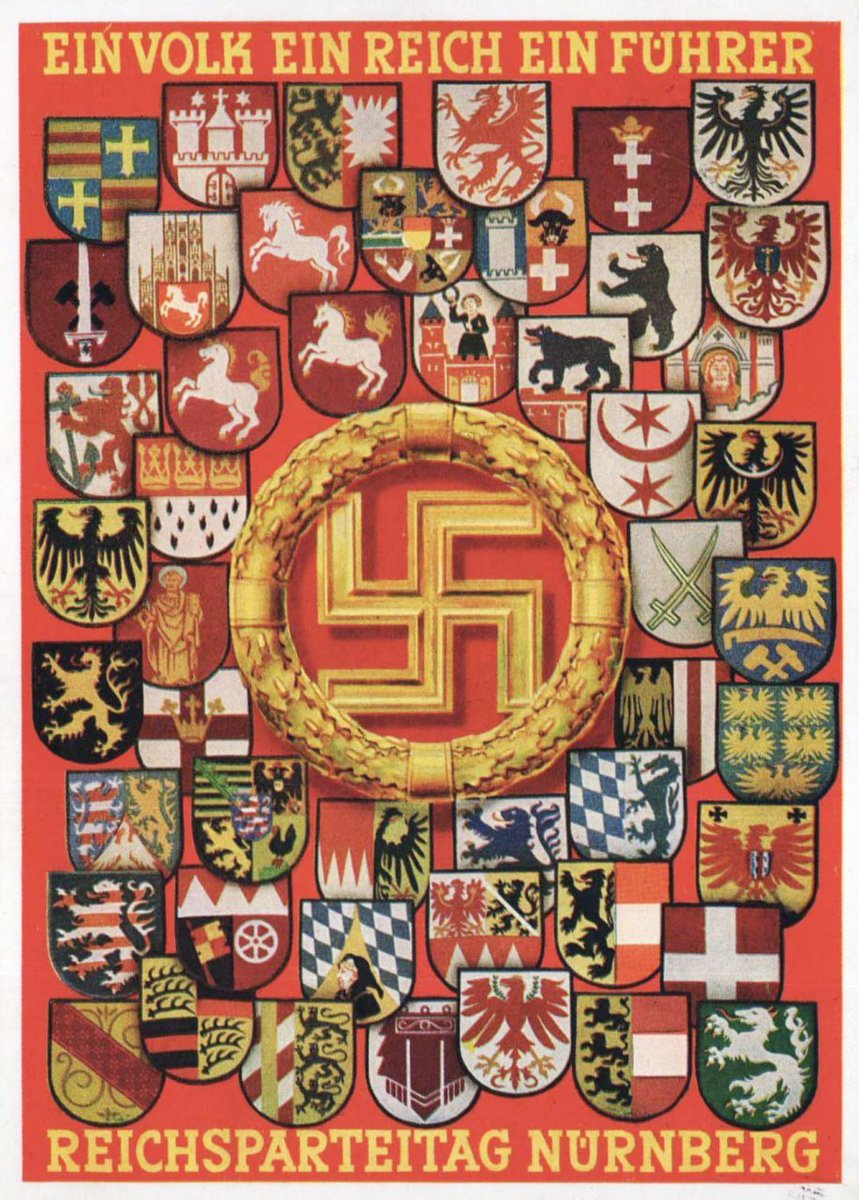
'One People, One Reich, One Führer' — Nazi postcard from the 1938 Nuremberg Rally.
📕 Forgotten Muslim Empires Of South India: Bahmani Empire, Madurai, Bijapur, Ahmadnagar, Golconda & Mysore Sultanates, By Syed Ubaidur Rahman South India’s Islamic past is rarely given the same space as of North India, yet it produced some of the most vibrant kingdoms in 1/7

Loading camels. I scanned the photo from the book The Danish Expedition to Qatar, 1959

For Abbasid scholars and poets of Qahtani origin, Abbasid culture appeared to be an extension of the pre-Islamic Yemeni lifestyle. For them, everything that characterised Abbasid culture (nobility, kingship, settled luxury) was a continuation of their South Arabian heritage.