People's Assembly elections take place tomorrow — a historic moment for Syria. Grateful to everyone who spoke w/ me: Dr Muhammad Taha Al-Ahmad (chair Higher Committee); another Higher Committee member; Inas Al-Najjar (Damascus subcomm.) & others [link to my article: tweet below]

Here’s my article: https://www.ispionline.it/en/p...
As stated in Article 26 of the Constitutional Declaration from last March, the People’s Assembly assumes “legislative authority until a permanent constitution is adopted and new legislative elections are held in accordance to it” and it is elected for a renewable 30-month term
Its main tasks (Art. 30 Constitutional Decl.) include: proposing & approving laws; amending or repealing previous laws; ratifying international treaties; approving state’s general budget; approving general amnesty; accepting or rejecting resignation of one of its members, or
The upcoming elections are not direct — they follow an indirect or hybrid system involving electoral colleges (الهيئات الناخبة). The temporary electoral system is enshrined in Decree 143/2025, issued on 19 August
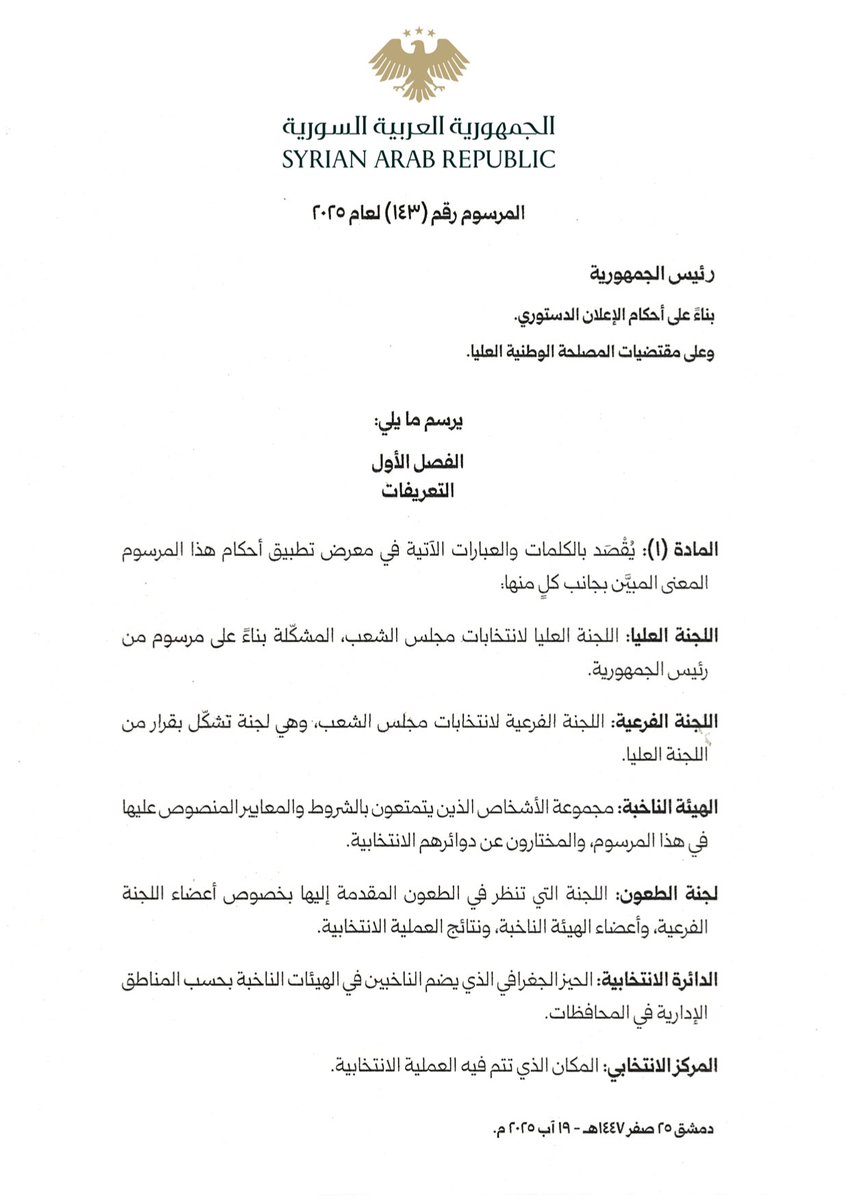
Decree 143 sets People’s Assembly at 210 members: two-thirds (140 members) are elected via the new electoral system, while one-third (70 members) are appointed by the President
Locally, electoral districts (دوائر انتخابية) have been formed at the level of مناطق i.e., administrative ‘districts,’ below governorates. Each electoral district comprises one or more administrative district(s) or مناطق, for a total of 60 electoral districts nationwide
A Higher Committee member told me that decision to form electoral districts at scale of administrative districts مناطق (instead of governorates), was made to capture population diversity at a more fine-grained level
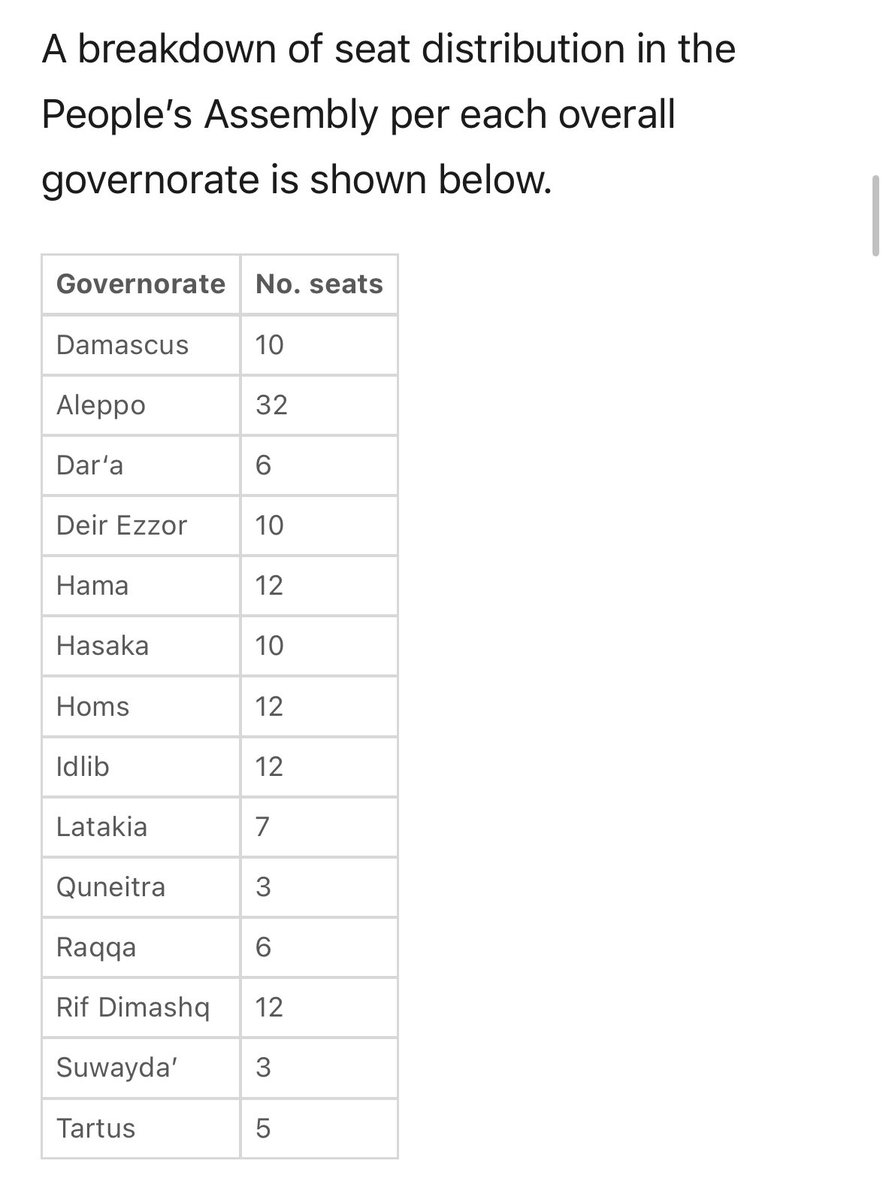
Seats that are elected (two-thirds): distributed across elect. districts based on admin divis. & populat., cf Ministry Local Admin Resol. 1378/2011 ∀ elect. district: ≥ 1 People’s Assembly seats; No. members elect. college ∀ district = No. seats allocated to that district x 50
Overview of People’s Assembly seat distribution across governorates👇
In the electoral system, key role has been played by اللجنة العليا the Higher Committee (appointed on 13 June per Decree 66/2025). Composed of 11 members with different political backgrounds, it was tasked with forming subcommittees at the local level (اللجان الفرعية)

Legal advice/support to Higher Committee provided by a Legal Committee composed of 5 members — if I remember correctly (I should double-check) including 2 members from Syria’s Bar Association. Bar Association expected to appoint lawyers to each elect. district as legal observers
Let’s go back to subcommittees at local level اللجان الفرعية. Higher Committee tasked with forming them in each electoral district, in consultation w/ local official & community figures. Subcommittee members required to meet a number of conditions (see Art. 10 Decree 143):


Subcommittees’ roles included formation local elect. colleges الهيئات الناخبة. Formation elect. colleges as crucial: it’s members of elect. colleges who elect two-thirds People’s Assembly (Conversely, they also constituted pool of those eligible to present candidacy for Assembly)
It was originally envisioned that subcommittees (in consult. w/ local official & community figures) would select elect. colleges’ candidates. However, to broaden participation, it was later decided to open candidacy for membership in the elect. colleges to all Syrian citizens
Subcommittees reviewed nominations ⏩️ drew preliminary lists of electoral colleges’ candidates (with 2 categories: professionals & community notables, expected to respectively account for 70% and 30%) ⏩️ Higher Committee reviewed preliminary lists ⏩️ final lists
+ Appeals committee (لجان الطعون) set up at all levels to take into account potential objections about appointed or elected figures
+ Similarly to subcommittee members, also electoral colleges members required to meet specific conditions (Art. 21 Decree 143):


On 27-28 September, members of electoral colleges who chose to seek a seat in the People’s Assembly put forward their nominations. The official electoral campaign period opened on 29 September and closed on 3 October, followed by (pre-)electoral silence

On 27-28 Sept, an overall 1,578 candidates, with 14% women, put forward their nominations, according to stats shared by Higher Committee chair Dr Muhammad Taha al-Ahmad
Figures directly involved in the elections’ workings have discussed w/ me constraints arising from post-war circumstances — illuminating the challenges Syria is confronting & the inevitable trade-offs that the government & bodies involved in the elections are facing
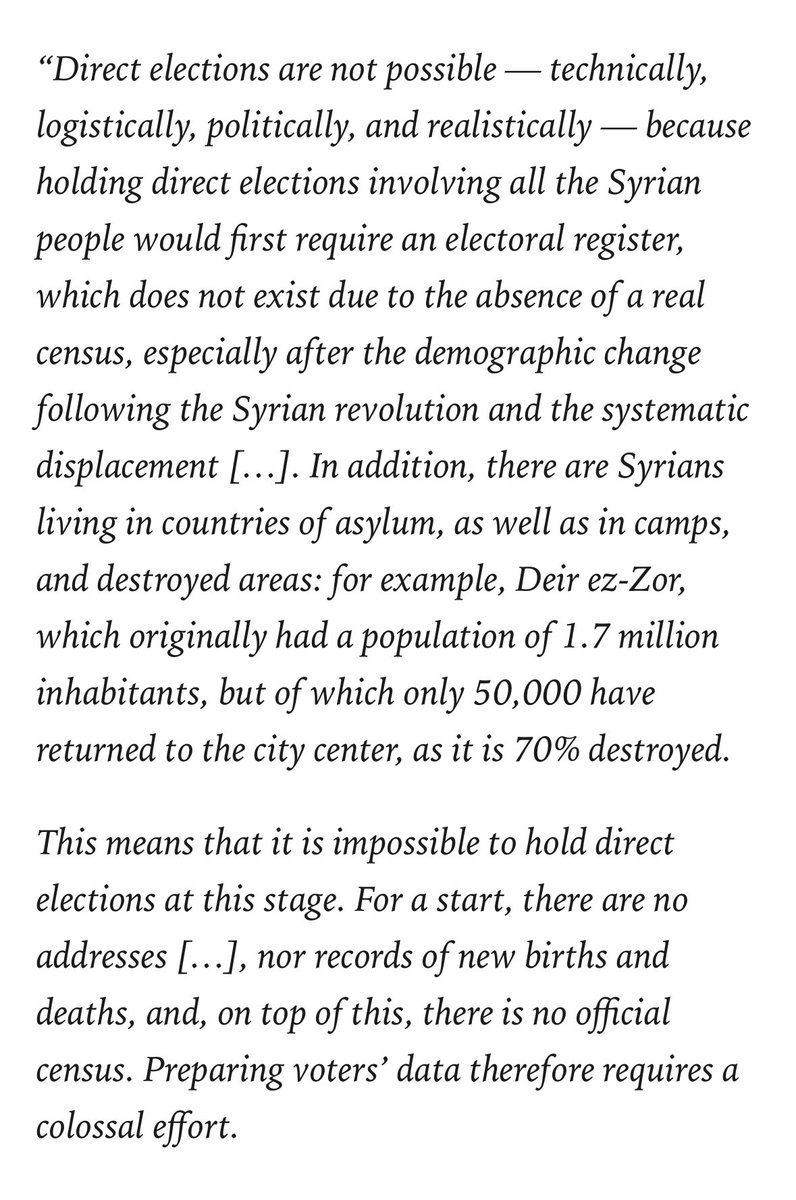
Direct elections are impossible at the time being due to practical conditions (after years of war & displacement). This is what a Higher Committee member told me:
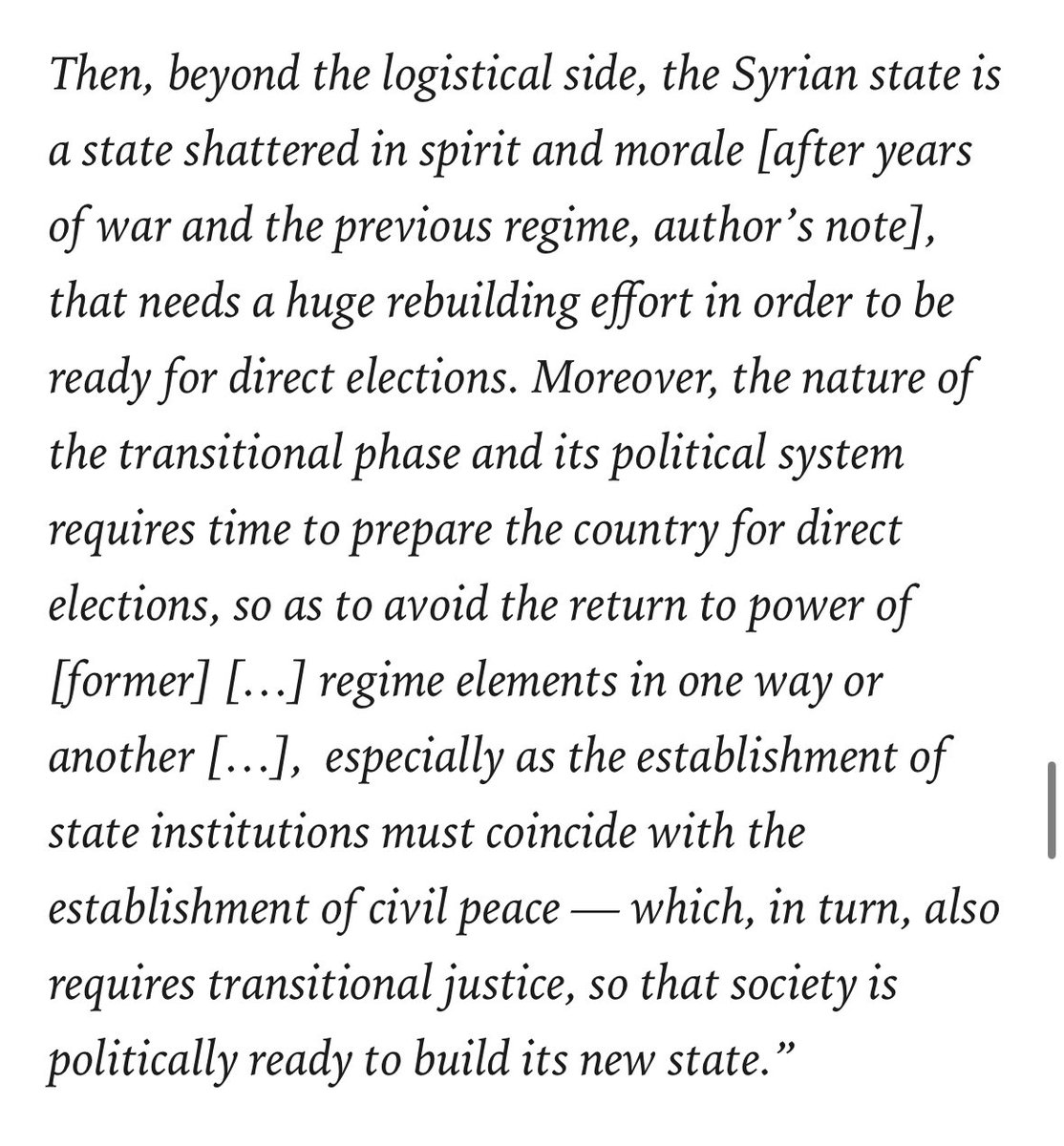
In his interview w/ SyriaNow, Dr Al-Ahmad noted that taking care of a population census will take years. While postponement of elections is an option that (despite potential drawbacks) may be explored in post-war settings, interlocutors that spoke w/ me stressed need for timely
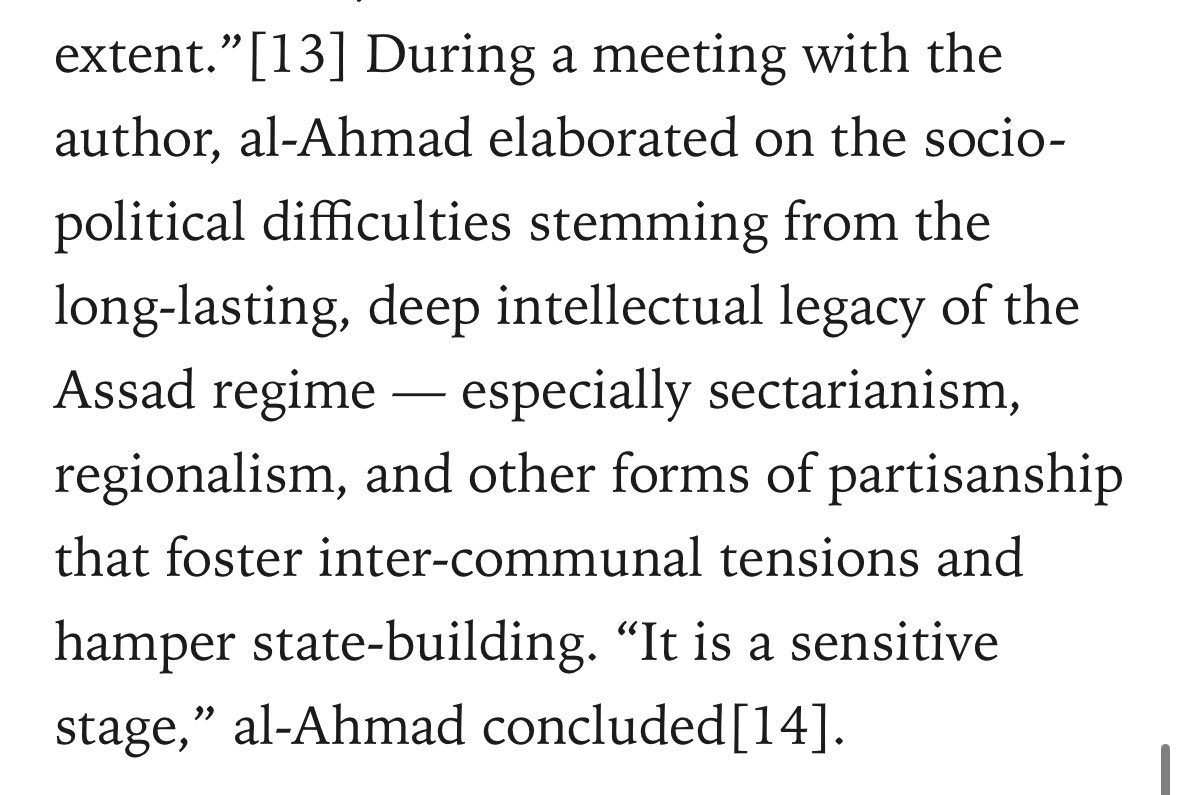
During a conversation with me, Higher Committee chair Dr Al-Ahmad elaborated on the heavy legacy of the Assad regime: