
Dr. Glen Jeffery spent over a decade studying how light affects mitochondria. Blue LEDs impair them so severely, he won't get ethical approval to test it on humans. Red & infrared do the opposite—improving vision & significantly lowering blood glucose. Here's what he found: 🧵


1/ For millions of years, humans lived under sunlight & firelight—both full of red & infrared light Even old incandescent bulbs gave off the same warm spectrum. Then 20 years ago, we switched to blue LEDs. The blue red balance we evolved with? Gone. What are the consequences?
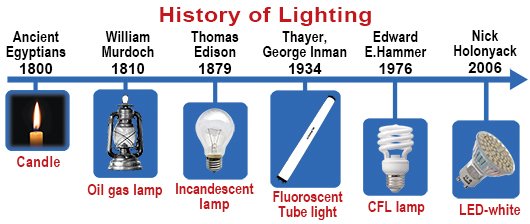
2/ Sunlight spans 280–3000nm — from UV to infrared. Blue: 400–500nm Red: 600–700nm Infrared: 700–3000nm+ (invisible) Modern LEDs? Mostly 420-450nm blue. Almost nothing above 650nm. Half of sunlight’s energy is infrared. LEDs erased it.

3/ Infrared light passes through your body. Jeffery tracked sunlight through human tissue. Blue & green scattered near the surface. Near-infrared (NIR) (800–870nm) went deepest—through skin, muscle, even clothing. It reached the blood, the organs, the water inside your cells.
4/ Red & NIR charge your mitochondria Wavelengths 650-900 nm are absorbed by an enzyme inside them. This boosts their charge (membrane potential) & energy output (ATP) while lowering oxidative stress. Jeffery’s research shows Red & NIR light recharges your cellular batteries.
5/ Red light lowered blood sugar by 27% Jeffery exposed people to 670 nm light for 15 min before a glucose test. Their glucose spike was smaller & shorter — total levels down 27% over 2 hours. The placebo group? No change. Red light makes mitochondria burn glucose for energy.
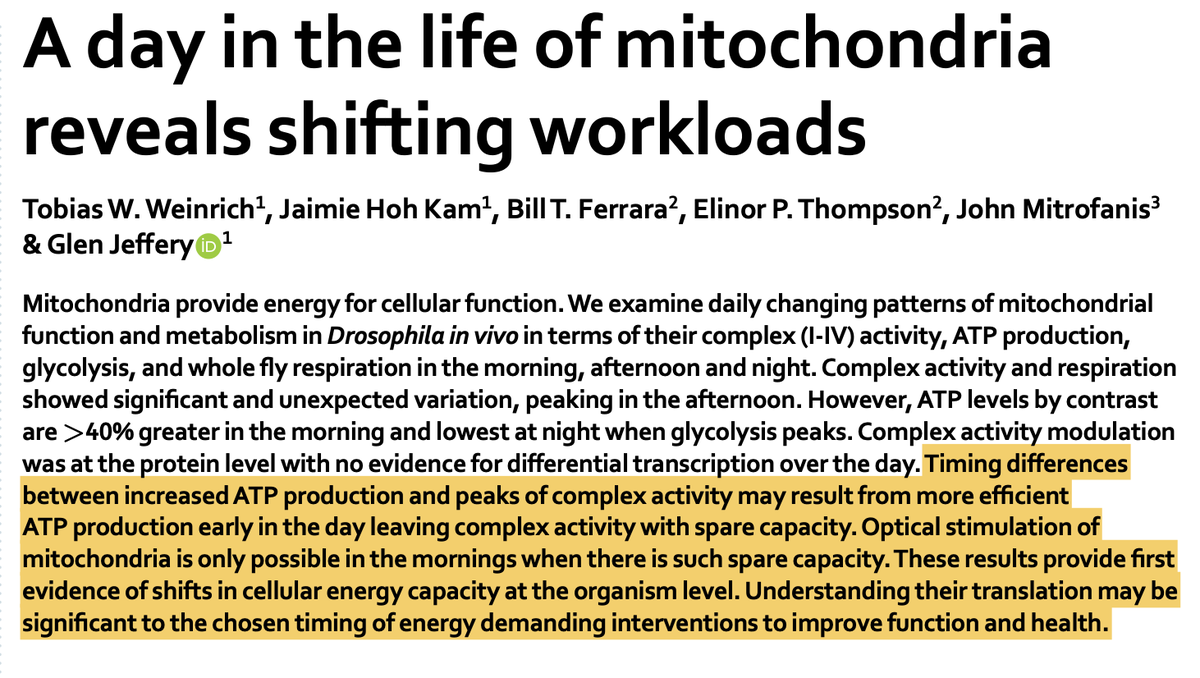
6/ Red light only works in the morning. Jeffery found 670 nm light boosted mitochondrial respiration only at the start of the day. In the afternoon it had no effect—cells were already at peak workload. Morning mitochondria have spare capacity. That’s when they charge best.
7/ Why only in the morning? Energy metabolism follows a circadian rhythm. Morning: ATP reserves high—mitochondria ready to charge. Afternoon: peak respiration—performance mode. Night: glycolysis (sugar burning) dominates—efficiency drops.
8/ Red light works like a switch. Red light doesn't follow "more is better" principle. Once the switch flips, your cells turn on. Shine it for under 1 min? No effect. Shine for 3 min? Full boost—same effect as 20 min. Single "flip" effects lasts for 5 days.
9/ Shining light on one spot affects the whole body Jeffery shined 670 nm light on people’s backs—eyes covered Their vision improved, even without eye exposure Stronger improvement when eyes weren’t covered Mitochondria act as a network—hit one area, the whole system responds
10/ Red light protects bees from pesticide damage Bees poisoned with pesticides lose energy & stop moving Jeffery shone 670 nm red light on them—it restored movement & survival Poisoned bees with light lived as long as healthy ones US farmers now use red lights in hive trucks
11/ Red light reverses age-related vision loss. Your retina burns more energy than your heart or brain—it’s packed with mitochondria & ages fastest. 3 min of 670 nm red light boosted ATP, improved color vision by an average of 17% lasting a week. Worked best in people over 40.
12/ Blue light undermines mitochondrial performance. Mitochondria absorb strongly at 420 nm—triggering ROS & lowering energy output. It spikes heart rate, drops blood pressure & stresses your cells. In sunlight, infrared balances it. In LEDs, there’s only blue—no balance.
13/ Blue light makes you pre-diabetic & age faster. Astronauts returned from space pre-diabetic & visibly aged—despite being super-fit. NASA called it a mitochondrial problem. The space station runs on harsh white LEDs. Blue light raises glucose & accelerates aging.
14/ Blue light makes mice fat. Mice exposed to 420–450 nm blue light—the same intensity most people get from indoor LEDs—gained weight within a week. Their cytokines shifted, metabolism disrupted & anxiety-like behavior emerged. Short wavelengths ruined their whole system.
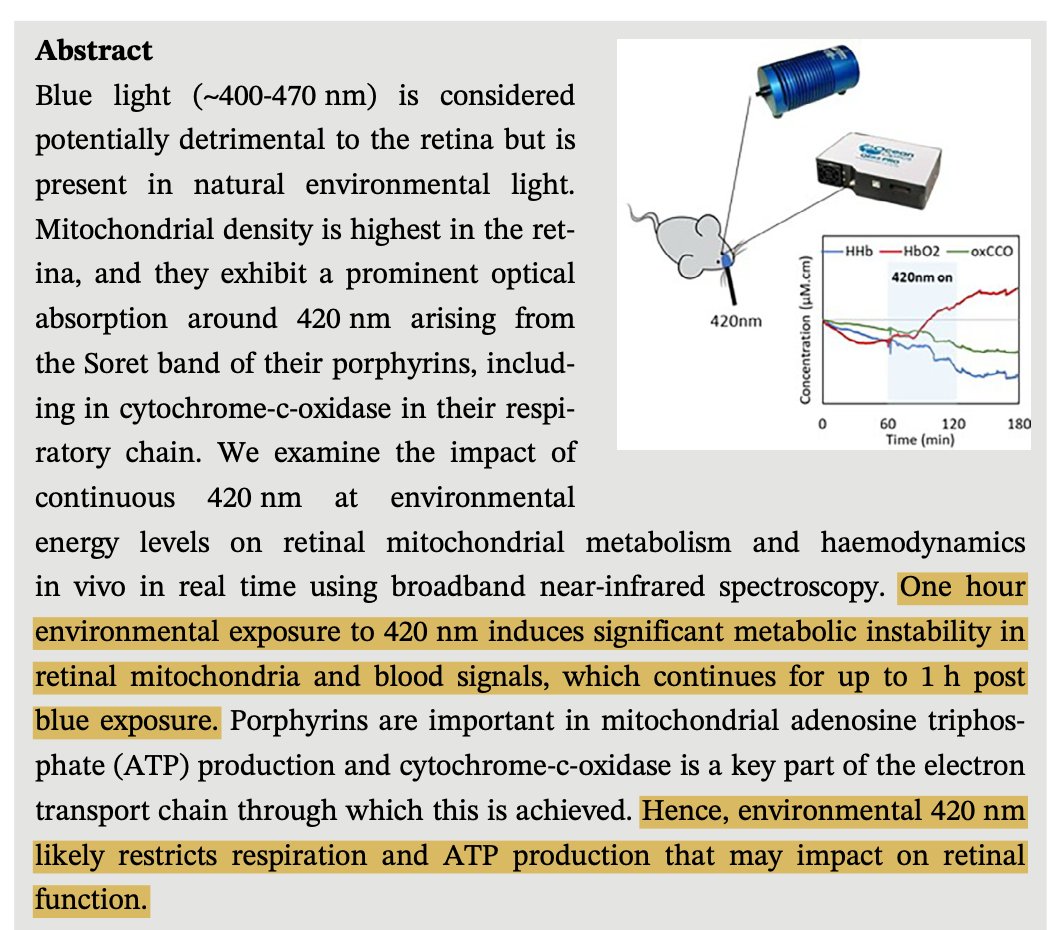
15/ Blue light disrupts the retina. 420 nm light—at normal daylight intensity—disrupted retinal mitochondrial metabolism in mice. The stress built gradually over an hour. When the light turned off, it persisted for another hour. The retina didn’t recover immediately.
16/ Most scientific studies are done in mice under blue LED lab lighting. No light control. No consideration for how artificial light affects results. The irony? We're studying biology in an environment that disrupts it. How much research is invalidated by lab lighting itself?
17/ You don't need a red light panel. Get outside—even cloudy days have high infrared. Trees reflect it (that's why leaves feel cool on hot days). Or: swap LEDs for incandescent bulbs. They have the infrared-blue balance sunlight does. Sunlight >>> expensive panels.
18/ Why isn’t anyone taking action? Dr. Jeffery won't get ethical approval to expose humans to blue LEDs Yet we bathe in them 12+ hours daily—with no infrared to balance it Governments banned incandescent to save energy We saved electricity. But we're paying with our health
19/ TL;DR: Blue LEDs damage mitochondria—spiking glucose, aging eyes, slowing metabolism Red & infrared repair them—but they’re missing from LEDs Get outside daily. Swap LEDs for incandescents Morning sunlight > afternoon red light panels We evolved under full-spectrum light
Thanks for reading! If you found this valuable, repost the first tweet so more people can access this information. Follow @the_no_mind for in-depth health & energy insights you won't find anywhere else.
P.S. Want consistent all-day energy? I built a free 5-day email course to help you unlock stable energy, sharper focus & deeper sleep—by restoring mitochondrial function. Day 2 covers how to optimize your light environment for energy. Get it here ↓ https://energy.no-mind.io
@the_no_mind Damn, this is the most comprehensive explanation I’ve seen of light’s effect on mitochondria. Been looking for something like this for a long time to help explain it in simple terms. The part that blows my mind is that it seems WHAT you eat is only half the battle. WHERE you eat
@MealPrepSorcery Appreciate the kind words, sir! Doing anything you can outdoors under natural light instead of indoors is the way to go. Now imagine how many people train in blue-light-lit gyms at 8 pm, not realizing the effects.
@the_no_mind Or you could simply go outside around trees and plants and be bombarded with natural near infrared.
@jsn_yrty Exactly, trees & plants = the nature's infrared panel.
@the_no_mind I recently interviewed Dr Jeffery’s hope you check it out
@BambroughKevin That’s awesome, I’ll check it out.
@the_no_mind Is there any place for blue light exposure in calibrating the circadian rhythm?
@LeyfMax Obviously, you want blue wavelengths in the morning to set your circadian rhythm & boost alertness. Blue isn’t bad, it’s part of the solar spectrum. The issue is isolation: blue without infrared to balance it. Just get outside.
@the_no_mind Thank you so much for making this stuff easily understandable.
@the_no_mind Excellent thread on blue light, red light and mitochondria. Just excellent.
@Philomedia Thank you!
@the_no_mind Great thread, do you happen to have a yt link for the whole interview? Thx
@ParadoxxxMan Thank you. I used multiple interviews for this thread, but this one’s a good place to start: https://www.youtube.com/watch?...