
🧵The most mysterious verse in the Qur’an is Q 74:30-31. It mentions the number 19 and has baffled readers for centuries. George Archer’s research shows it exposes human arrogance and reveals limits of understanding God. (1/14)


Archer says the six-day creation story is another example. Christians read God’s “rest” as divine sleep or death. The Qur’an corrects this. God is not bound by human categories or interpretations. (2/14)

Numbers, order, and logic are tools humans love. The Qur’an shatters expectations. Finite understanding fails where divine wisdom is infinite. (5/14)

In Q 58, the number “nineteen” appears tied to hell and human arrogance. Archer explains the audience would immediately ask what it means. The Qur’an does not give a simple answer. (3/14)

Some Near Eastern texts link 19 to astronomy and angels. Some lunar cycles, some Gnostic sources. Archer points out none treat it as inherently sacred or significant. (4/14)

19 resists typology. It does not divide neatly into 12, 7, 10, or 3. Archer emphasizes it is deliberately obscure, a challenge to human pride. (5/14)

In Arabic, 19 literally sounds like counting: tis‘at-‘asar, meaning nine-ten. This triggers the instinct to order and categorize but defies it at the same time. (6/14)

This is a test. Those relying on human logic and numerology are exposed as arrogant. Divine knowledge surpasses any calculation or trickery. (7/14)
Later commentators tried to explain 19 historically or symbolically. Archer stresses that the Qur’an’s original intent was clear. Comprehension is not the point. (8/14)
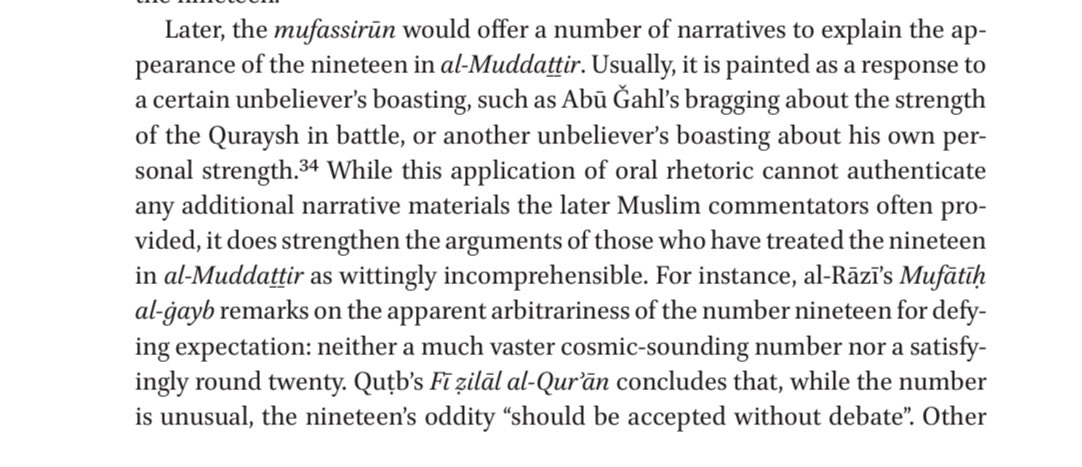
Al-Razi says it is not cosmic, not round, not satisfying. Qutb says accept it without debate. Islahi says it is coherent with the Qur’an. The lesson: human understanding has limits. (9/14)
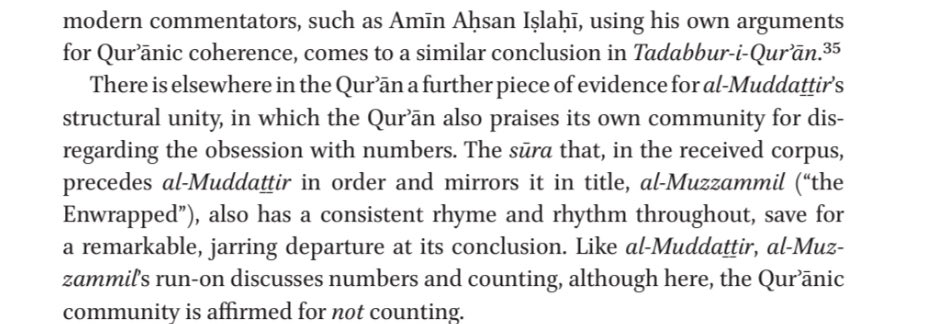
In contrast, Q 73 praises the faithful for not counting obsessively. Numbers can trap arrogance. Knowing is not the goal. Submission is. (10/14)
Both Q 58 and Q 73 break oral rhyme patterns on purpose. Memory is engaged. Hubris is exposed. Archer emphasizes God’s authority is unmistakable. (11/14
the Qur’an uses numbers rhetorically, theologically, and epistemologically. They reveal arrogance and show the limits of human logic. (12/14
What the Quran implies is do not obsess over calculations or typologies. Recognize the unseen. Accept divine authority. Arrogance fails where humility listens. (13/14)
Numbers in the Qur’an are not just math. Archer concludes they are mnemonic puzzles, moral lessons, and theological statements. Nineteen is the ultimate reminder that human pride has bounds. (14/14)
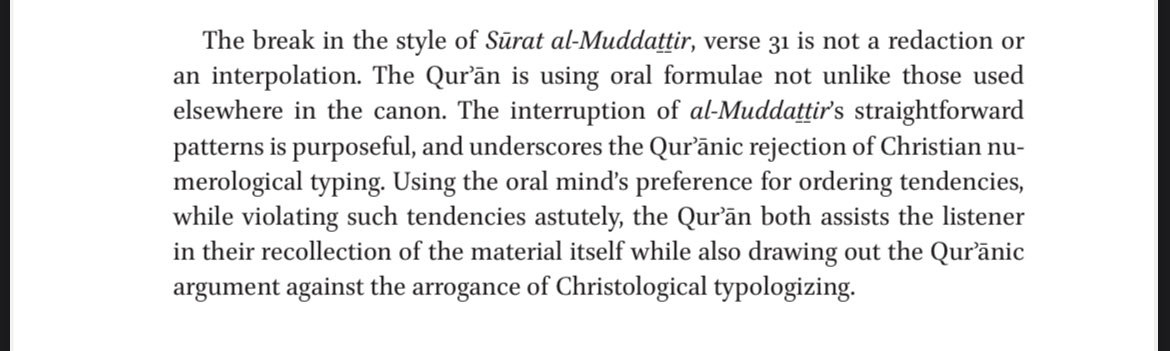
Source: The Postclassical Oral World and the Unity of Sūra 74 by George Archer.
@dmontetheno1 Good thread brother ❤️❤️☝🏻