
Excited to share my project w/@srviswanathan on virtual CRISPR screening -- predicting cancer dependencies from RNA sequencing alone. On unseen rare tumors, nearly every predicted dependency validated experimentally! Creating a framework to rapidly go from patient → treatment

For most rare cancers, we lack cellular models or even enough samples to assess the genomic landscape. We wanted to create a framework that predicts dependencies on unseen N=1 samples, using RNA-seq, which can be easily obtained from primary tumors for a couple hundred dollars.
We began by training dependency prediction models on DepMap and tested the most accurate models across The Cancer Genome Atlas (TCGA), a collection of RNA-seq from >11,000 patient tumors (3/22)


We saw clustering by lineage, but with many informative exceptions such as a mucinous ovarian cell line clustering with bowel tumors, lung neuroendocrine tumors clustering with CNS tumors, and esophageal squamous tumors clustering with head/neck tumors (4/22)

We accurately predicted many types of dependencies including lineage, paralog, mutation-associated, fusion-associated, and complex dependencies without known biomarkers (5/22)


The predicted dependency score of drug targets strongly correlated to the efficacy of the cancer drugs (6/22)


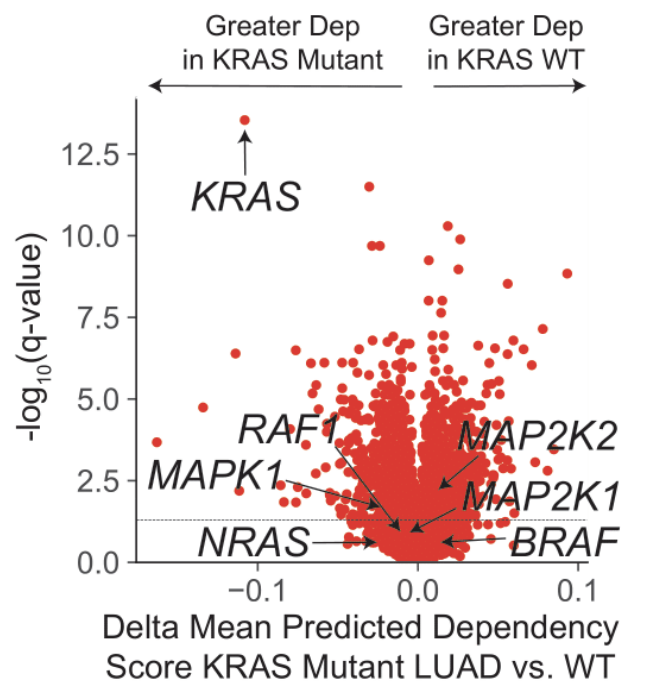
Before looking at rare cancers, we reasoned that our model could be applied to identify undiscovered synthetic lethals since TCGA is 10x the size of DepMap. We recovered many canonical synthetic lethals from TCGA RNA-seq alone! (7/22)

This included all CDKN2A deletion-associated (PRMT5, WDR77, PELO) and microsatellite instability-associated synthetic lethals (WRN, PELO, RPL22L1), and predicted sensitivity to a WRN inhibitor (8/22) https://www.science.org/doi/10... https://www.nature.com/article... https://www.nature.com/article...


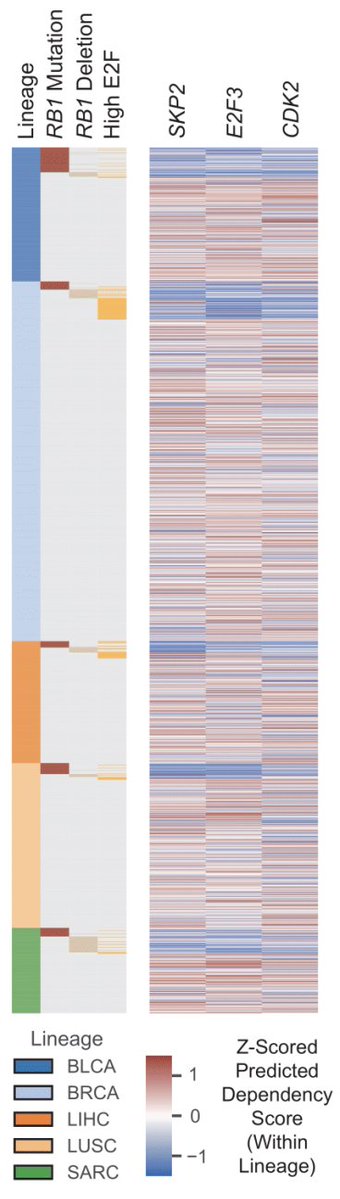
We also found that SKP2, CDK2, and E2F3 were strong synthetic lethal dependencies of Rb1 mutation/deletion. While this has been described in small cell lung cancer, we notably found that this is true across many cancer types; we isogenically validated this in NSCLC (9/22)

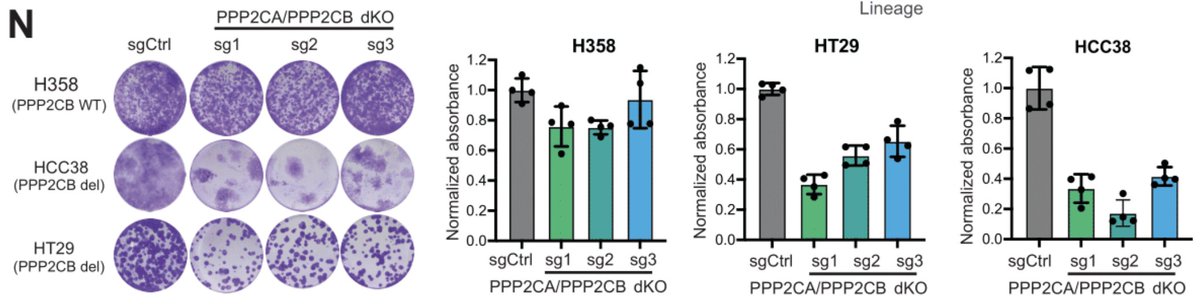
We also identified the synthetic lethal relationship of chr8p/WRN deletion and PPP2CA dependency, due to co-deletion of PPP2CB with WRN. This causes increased sensitivity to PP2A knockout (10/22).

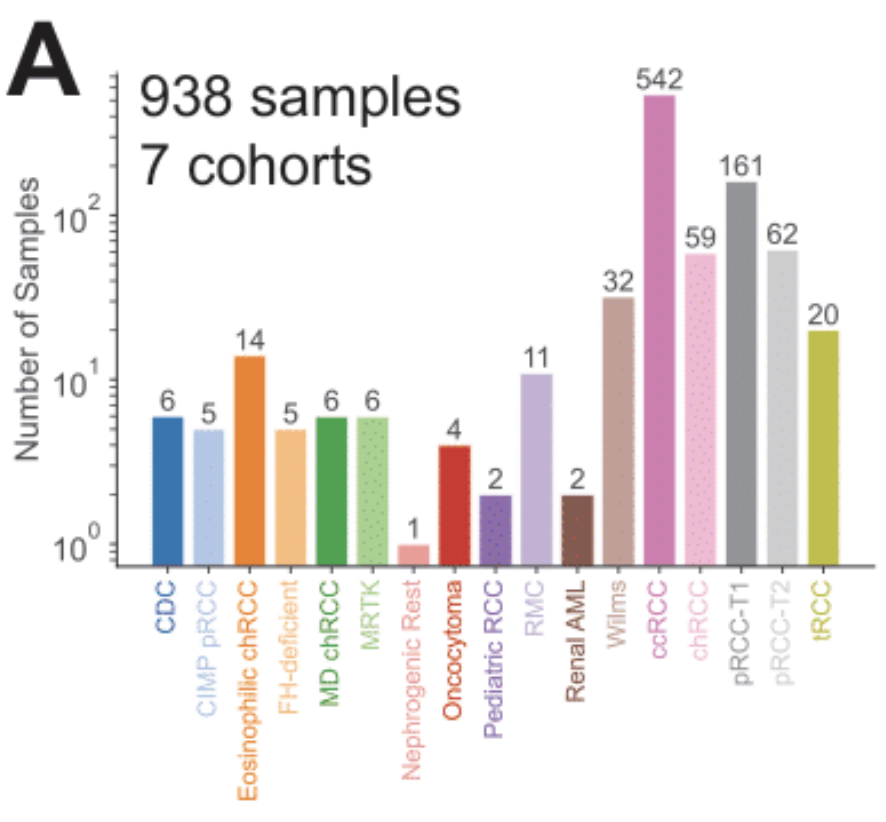
We then applied our model to rare cancers -- starting with kidney cancer, which has dozens of different subtypes. Therapies designed for the most common kidney cancer are frequently applied to other kidney cancers due to lack of alternatives, yielding low response rates (11/22)
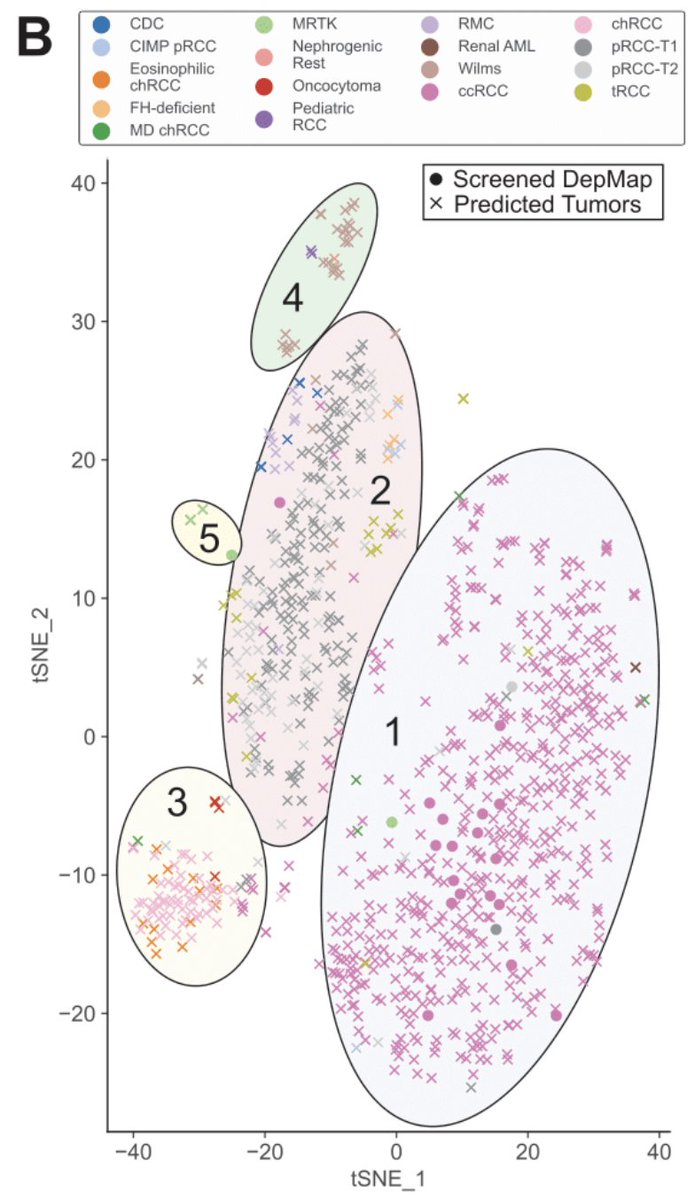
We recovered various known dependencies (beta-catenin/YAP in Wilms' tumors, Myc signaling in RMC tumors, HIF-2a in ccRCC), and nominated new dependencies in other tumor types (USP1 in oncocytic tumors, NFE2L2 in CIMP/FH-deficient RCC) (12/22)


We validated predicted NFE2L2 dependency in an FH-deficient renal cell carcinoma cell line not included in DepMap (13/22)

We then moved onto translocation renal cell carcinoma (tRCC), a kidney cancer characterized by fusions in MiT/TFE transcription factors. We predicted strong dependency on oxidative phosphorylation and mitochondrial translation in tumor samples and cell lines subject to RNA-seq.


We validated our predictions by doing our own CRISPR screen in 3 tRCC cell lines -- there was excellent concordance between our predictions and our CRISPR screen hits! Top dependencies from the screen were oxidative phosphorylation and mitochondrial translation related! (15/22)


We ended by comparing the dependency landscape of tRCC to another TFE3 fusion driven tumor: alveolar soft part sarcoma (ASPS). We validated some predicted ASPS-specific dependencies (PRKRA, MCL1), but then turned our attention to the predicted shared dependency on OXPHOS (16/22)

We validated the high oxygen consumption rate, indicative of high OXPHOS activity, in tRCC/ASPS by Seahorse assay. We then were interested in validating the dependency on EGLN1, predicted to be shared between tRCC and ASPS (17/22)

We noticed the very high expression of HIF1A mRNA in ASPS/tRCC cell lines (the top feature predicting EGLN1 dependency). EGLN1 is known to post-transcriptionally regulate HIF1A protein levels; we observed rapid accumulation of HIF1A following EGLN1 KO in tRCC/ASPS (18/22)


HIF1A is known to glycolytically reprogram cells, which we believed could be deleterious in cells dependent on OXPHOS. EGLN1, inhibiting HIF1A, was a strong dependency in both tRCC and ASPS by genetic and chemical inhibition.


There's a lot more experimental validation that we did that I didn't share here -- check out the paper on bioRxiv! https://www.biorxiv.org/conten... (20/22)
If you want to visualize dependencies yourself, feel free to take a look at the portal we made: http://viswanathanlab-deps.dan... If you want to run it on your own RNA-seq, a snakemake workflow is here: https://github.com/SViswanatha... (21/22)
Huge thanks to everyone who made this possible, especially @srviswanathan, co-first authors @jiaoli43141960 and Bingchen Li, and all other co-authors! (22/22) @DanaFarber_GU @harvardmed @broadinstitute @DanaFarber @UTSWMedCenter