
1/ Today we launch an ambitious paper on the ethics of embryo screening. While the technology is new, our hopes and fears about our future children are as old as the Greek myths, including stories about Hera, goddess of fertility and the namesake of our company @herasight

2/ We begin the paper by showing how embryo screening promotes two widely accepted values: parental autonomy and the welfare of future children. We then reply to some common objections, including worries about pleiotropy.
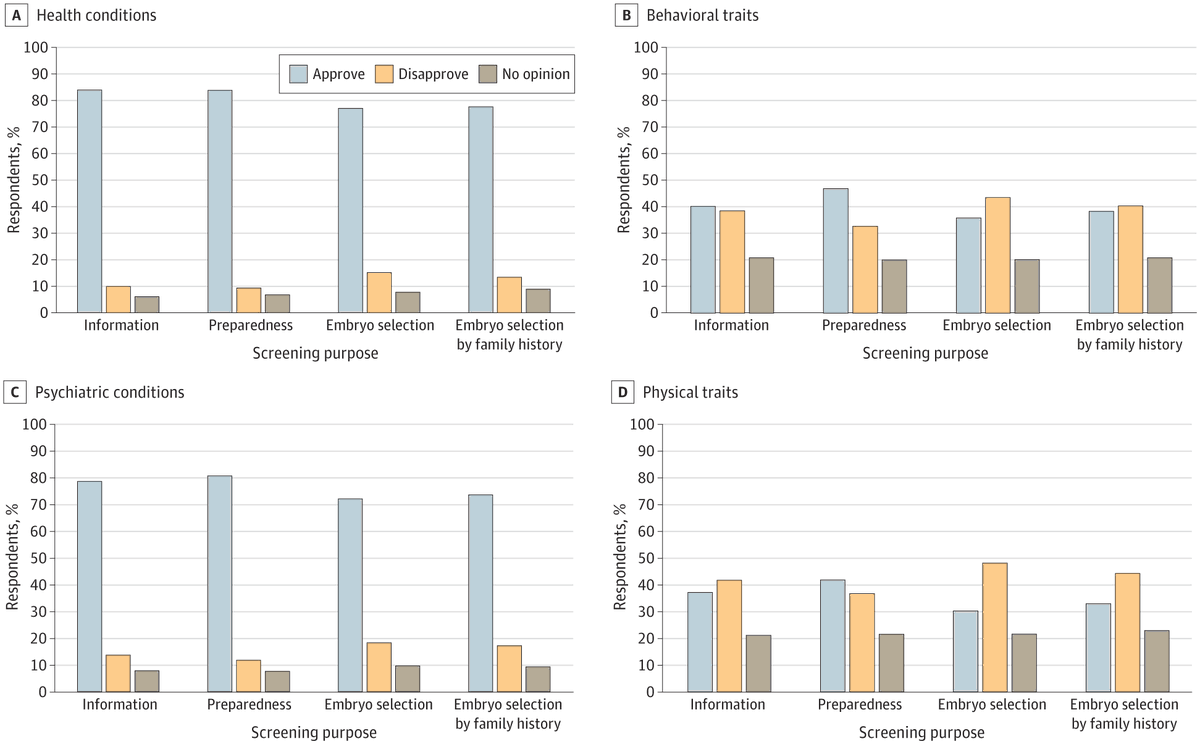
3/ Some say embryo screening should be illegal because it is unpopular. But empirical studies show widespread public support for screening health traits, and moderate to high support for psychiatric and behavioral traits, including intelligence (thanks to @RemyFurrer)
4/ Many bioethicists worry about embryo screening increasing genetic inequalities. But genetic inequalities through assortative mating are at least as big as those enabled by embryo screening, and most don’t call for the governments to control mate choice.
5/ Some think discrimination against the disabled will increase if embryo screening leads to a world with fewer disabled people. But modern medicine already makes many disabilities less common, and this has coincided with more compassion for the disabled, not more discrimination
6/ Others worry that if some people use embryo screening, more will feel compelled to do so as well. However, many of our choices are influenced by decisions other people make, and unless there are clear and direct harms to other people, these choices should be respected.
7/ Some say people are bad at probabilistic thinking, so polygenic prediction is too complex for them to understand. But all medicine is probabilistic e.g. BRCA mutations raise the risk of breast cancer without making it certain. And genetic counseling can help with hard choices
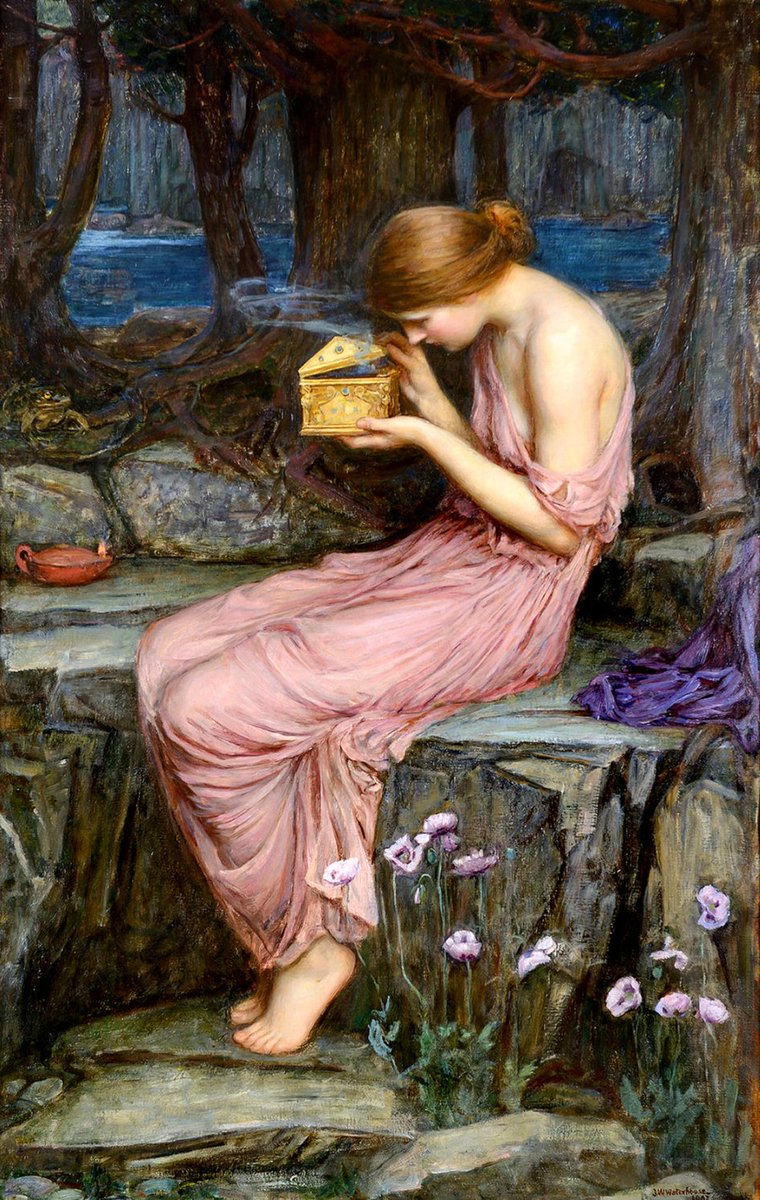
8/ An important concern we address in the paper is pleiotropy: the idea that when parents select against a disease like diabetes, they will unwittingly select for other traits that increase the risk of bad health outcomes. This kind of concern underlies the myth of Pandora.
9/ To answer this question, we conducted an empirical analysis that examined genetic correlations across 2,871 traits against 31 potential candidate traits that parents may wish to influence via embryo screening.
10/ We found that where pleiotropy exists, it is almost always neutral or positive, meaning that selecting against one disease is likely to make other diseases less likely to emerge, not more likely.
11/ The chart below shows our results, with green cells indicating neutral or beneficial pleiotropy and purple cells highlighting instances of negative (or “antagonistic”) pleiotropy:
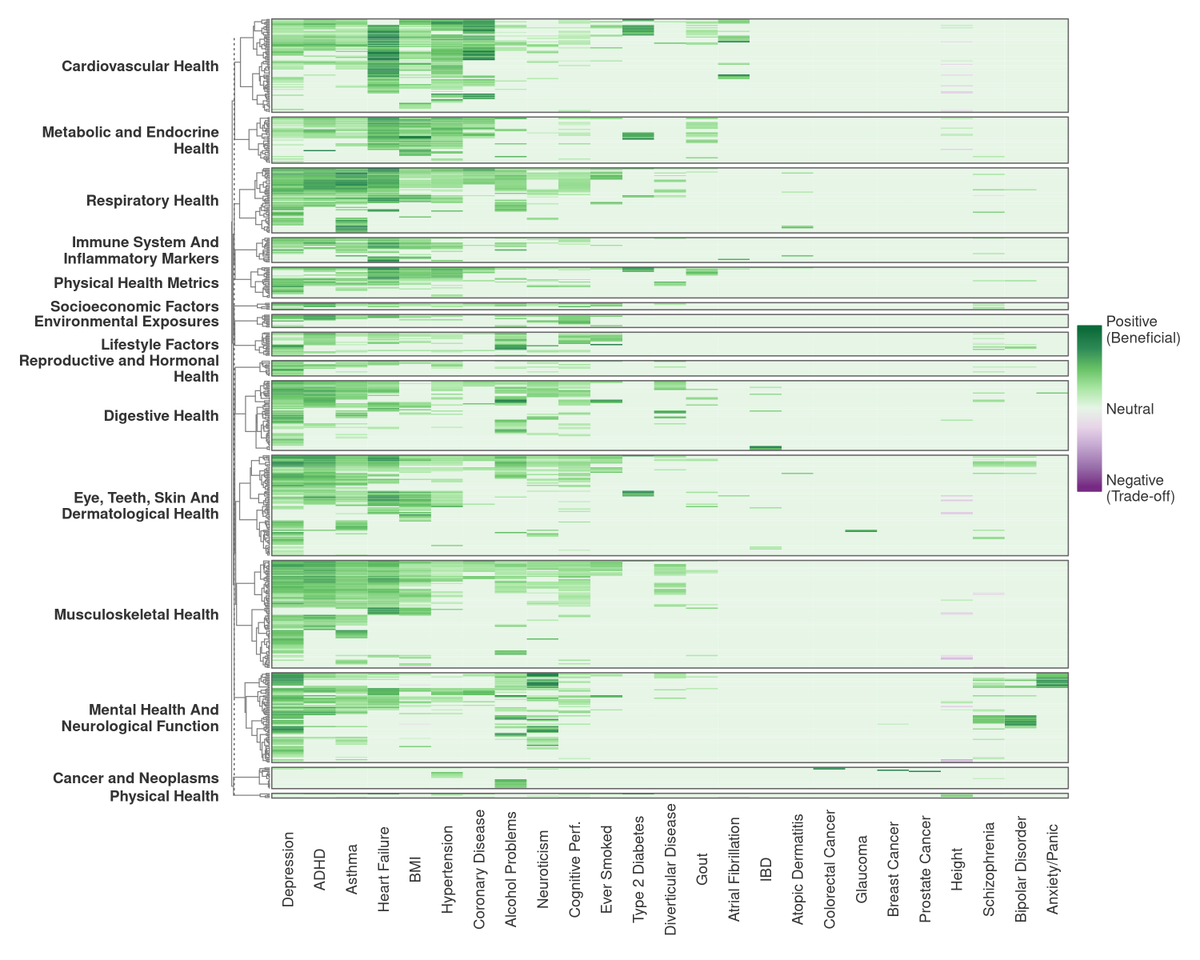
12/ We found that antagonistic pleiotropy is rare and occurs in clearly defined clusters: selection favoring increased height, for example, is genetically correlated with increased risk for atrial fibrillation due to larger atrial size.
13/ Our analysis can't capture every possible pleiotropic effect. No study can. But critics claiming that pleiotropy makes embryo screening risky should specify which traits they mean, so they can be tested rigorously.
14/ Genetics companies and genetic counselors should present known cases of antagonistic pleiotropy to parents. Still, our results show polygenic embryo screening can benefit future children without introducing substantial risks of unintended harm.
15/ This makes embryo screening more like the legend of Circe, who helped safely navigate the ship of Odysseus, than like the myth of Pandora, whose curiosity brought disaster to humanity. And it shifts the burden of proof onto those who oppose embryo screening.

16/ We end the paper with the objection that embryo screening is a form of “eugenics” and is therefore bad. Our reply is that branding embryo screening “eugenics” with the intent of stigmatizing it does nothing to honor past victims of unethical policies but instead shuts down
17/ Read the full paper here: https://philpapers.org/archive...
@JonathanAnomaly @herasight so long story short: people tend to be better or worse in general? 😬
@JonathanAnomaly @herasight Of course I don't "oppose" screening in the sense that I want to ban it. I merely note it requires IVF, and that screening for intelligence is big enough that everyone will be compelled to do it. It therefore means the end of conception through intercourse, which I think is sad.
@JonathanAnomaly @threadreaderapp unroll
@JonathanAnomaly @herasight Amazing. Will actually read the full paper
@JonathanAnomaly @herasight Am I right to say if we end up being able to add animal traits, you'll wish furries were just a private online community?
@JonathanAnomaly @herasight Jonathan, this is an incredibly important paper. There is a lot of talk about how unethical the embryo screening is, and women like me are being unheard, unsupported. Our body autonomy gets jeopardized and stigmatised. We need more honest and transparent discussion on that
@JonathanAnomaly @herasight A common objection raised by conservative Christians is that IVF (as commonly practiced) entails the destruction of embryos that aren't selected, and that this is immoral because embryos are human beings in an immature state.
@JonathanAnomaly @herasight ^ Latest tech scam just dropped