
The @LBNL & @TheBrattleGroup teams have an excellent study out this week on what's feeding electricity price changes over the past 5 years. Legislators should be required to read or get a briefing on it before taking any vote on electricity policy! Highlights & my commentary🧵
High level, there's two parts to your electric bill: the utility poles & wires... and the supply of power. The former is driven largely by incremental capital spending and boy is that booming...

The underlying unit costs of the capital assets that go into the poles & wires are also inflating rapidly, well above CPI, creating compounding effects on electricity pricing.

The study's observations on price only go through 2024, but it has some leading indicators of where we are heading on regulated-utility poles/wires costs, and it is not good. Below is a depiction of utility rate case filings which, assuming approvals, will spike rates:

You might think, well aren't these utilities spending to accommodate all this growth in demand I heard about? Surely that is driving up electricity prices? Nope, at least not over the last 5 years. Prices went *down* where demand growth was highest!
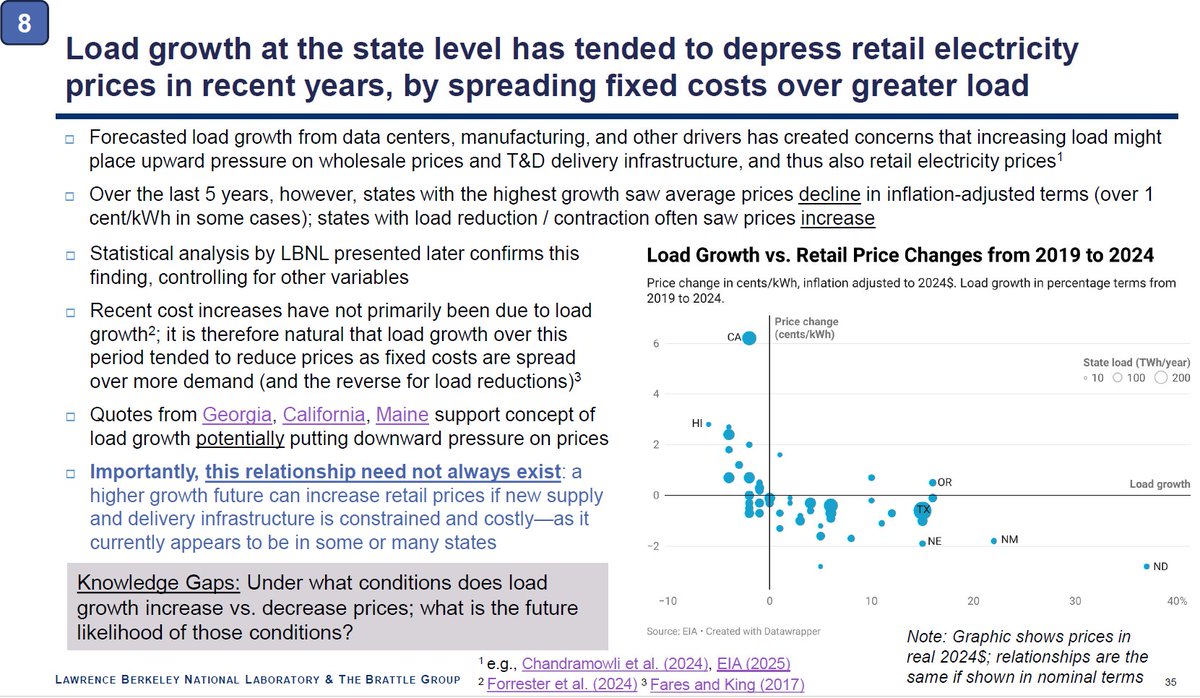
What is going on here, you ask? Well, there is a pretty simple division problem at the heart of the utility economics subject to so-called "cost of service" economic regulatoin: -A numerator of Costs divided by -a denominator of Throughput Volumes equals -a quotient of Price.
The numerator may go up but if the marginal addition to it is less than the addition to the denominator, price goes down. If the numerator includes a lot of fixed grid costs that can fit a bunch more load under the hood, all the better. North Dakota baby!

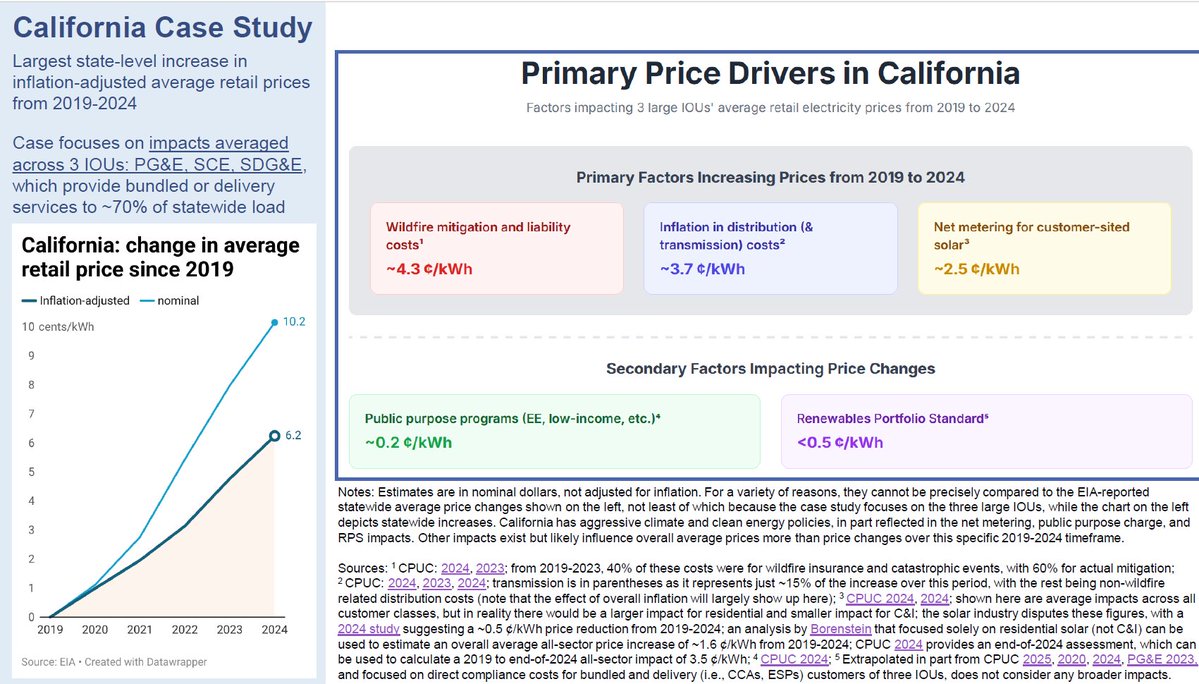
Conversely, you might pay people to erode the denominator by subsidizing certain, uh, rooftop technologies, in a way that dumps a big net cost of that subsidy into the numerator. And fires, lots of fires: also a numerator effect with no demoninator upside. Not good, California!
Now these conditions (load growth = lower prices for everyone) are not going to persist. As we saw, there's a run-up in capital items' costs, and if you *do* have to radically expand your grid to serve new loads, well, then +1 in the denominator might be +2 in the numerator
So while the authors are demure on this ("Under what conditions does load growth increase vs. decrease prices?" is a question for "further study") this isn't rocket science. If incremental costs > incremental revenue, avg. prices go up in cost of service regulation.
This is why it is so important to do the things like @nrgenergy proposes in terms of actually measuring and making commitments around the incremental costs of new very large load additions https://x.com/TKavulla/status/...
Now, as to the other half of the bill, energy supply, that is more a function of organic market fundamentals. Even traditionally "regulated" states are exposed to the same upstream fuel markets as the "deregulated" states are.
And so gas-exposed states, regardless of underlying biz model, have big retail price outcomes when something like the Ukraine war happens. But silver lining: as vs. poles/wires costs, these variable costs can roll up (2021-23) and then roll off (2024) quickly

The study also picks up the Fortress New England effect: a market simultaneously highly dependent on gas and also very opposed to gas infrastructure to get it more reliably to you. If you were in TX, the Ukraine war hardly mattered; Boston might as well've been Paris.
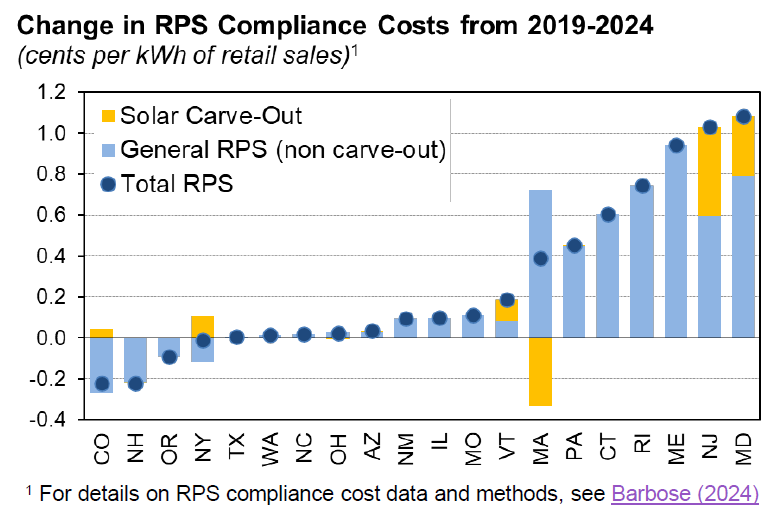
Meanwhile, it should not surprise anyone that Renewable Portfolio Standard obligations that cause people to buy renewables in places where they are not otherwise economic *increase* retail costs. No way!
Supply costs can have shenanigans when subject to state regulation. VA ratepayers in 2027 will pay for gas they used in 2022, while also prepaying for offshore wind *before* they receive a single kWh of juice. (Surprise: this arrangement is profitable for the utility!)

All told, this is a great, politically neutral study, with not just solid headlines, but also lots of hidden gems. Their full presentation here: https://eta-publications.lbl.g...
@TKavulla @LBNL @TheBrattleGroup The answer is to nationalize energy /fin