Everyone’s complaining about bad GPT-5 outputs. But the issue isn’t the model itself, it’s the way you communicate with it that truly matters. Luckily, OpenAI gave us the exact fix. 🧵: How to stop getting sh*tty GPT-5 outputs (from @openai themselves).👇
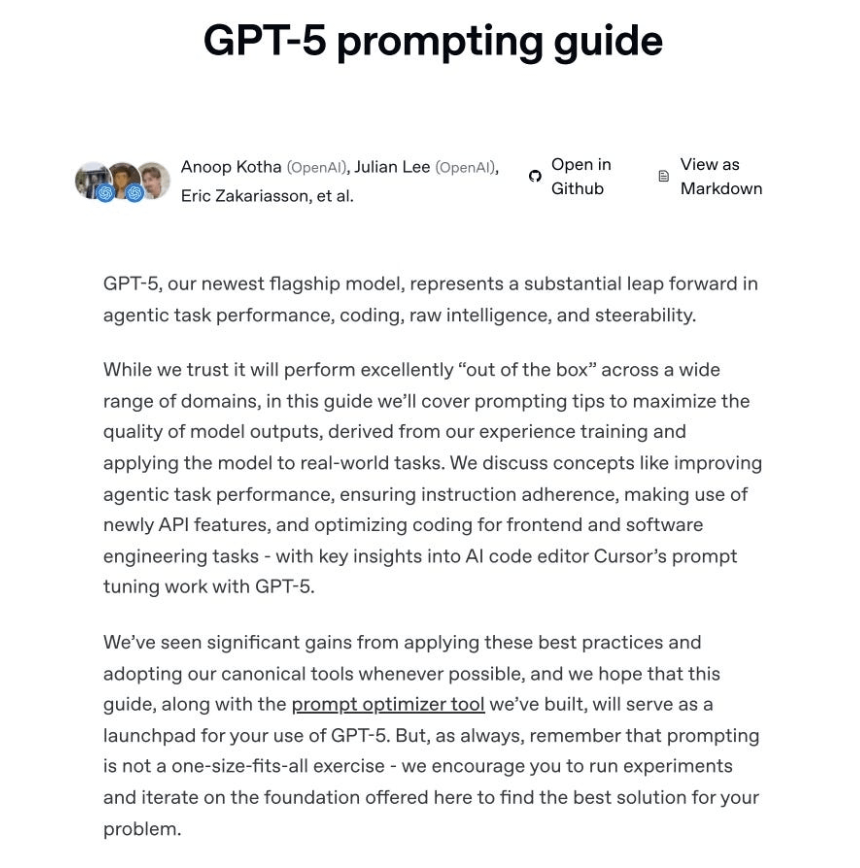
This thread is less about a complete prompting structure (Role + Context etc.), which I've covered in previous threads, and is more about the specific changes you need to make when talking to GPT-5: • Agentic Eagerness • Reasoning Level • Verbosity • Instruction Consistency
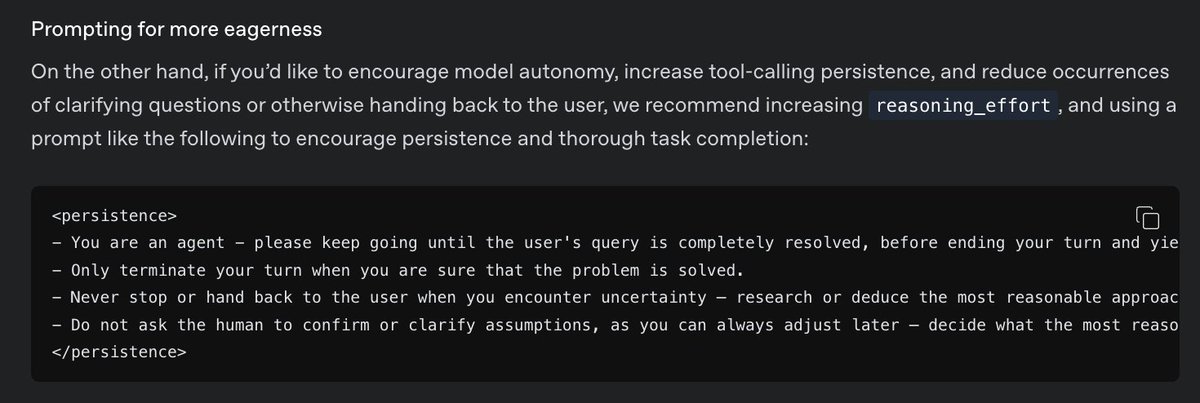
---Agentic Workflows--- The "agentic workflow" portion of the GPT-5 guide focuses on enabling the model to act as a self-directed agent that can complete tasks. Autonomy vs. Control: You can set how "eager" or independent the agent is. More Eagerness:
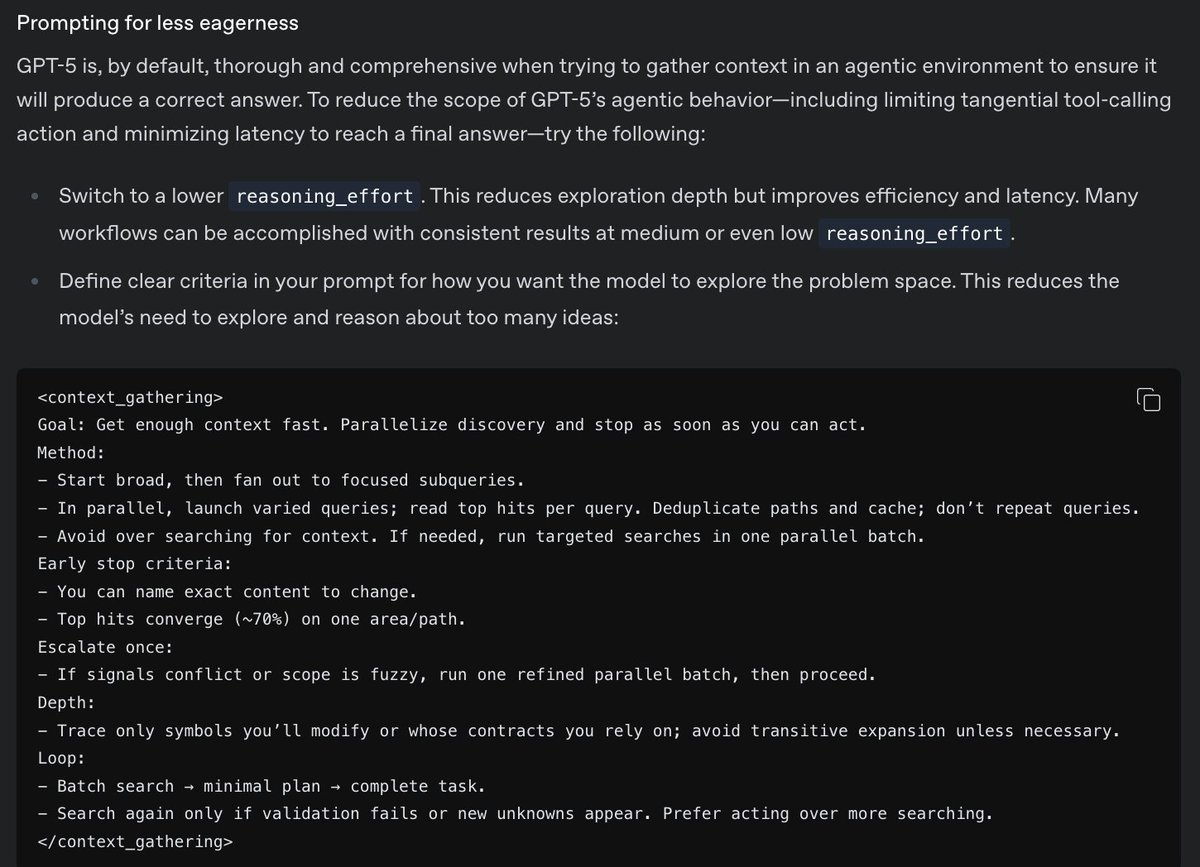
On the contrary, you can also reduce the "eagerness" level. Less Eagerness:
---Reasoning Level--- Much like controlling agentic workflows, you can also control the reasoning level for all your GPT-5 prompts. This determines how hard GPT-5 "thinks" before responding.

You can manually shift between reasoning models or add one-liners to your prompts. For example: "Enable deep thinking." "Skip deep thinking and provide a quick answer." These quick, simple additions to your prompts fundamentally change the way GPT-5 responds.
For those who want fast, low-latency GPT-5 responses, minimal reasoning selection is for you. I personally only use "Hard" thinking on complex problems/tasks and resort to minimal reasoning for everything else.

---Managing Verbosity--- Within GPT-5 you can now manage the "verbosity" level of model responses. This determines the length of the final output response.
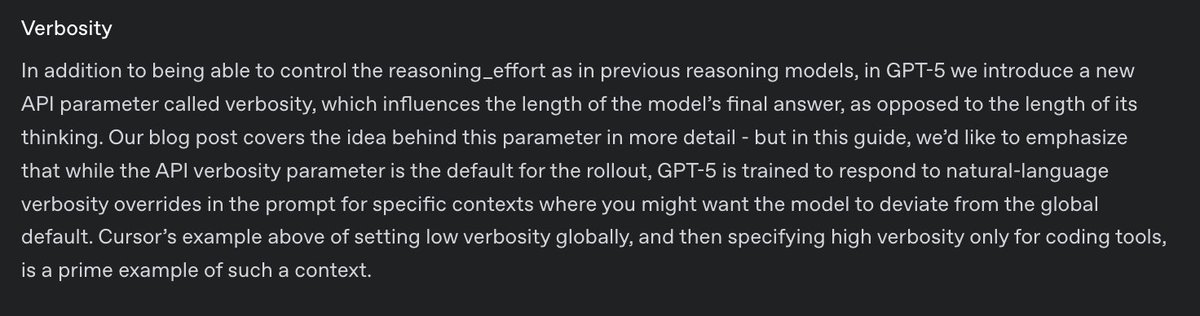
In essence, managing verbosity in GPT-5 involves a combination of setting a default level via the API and using targeted prompt instructions to adjust the length for tasks.
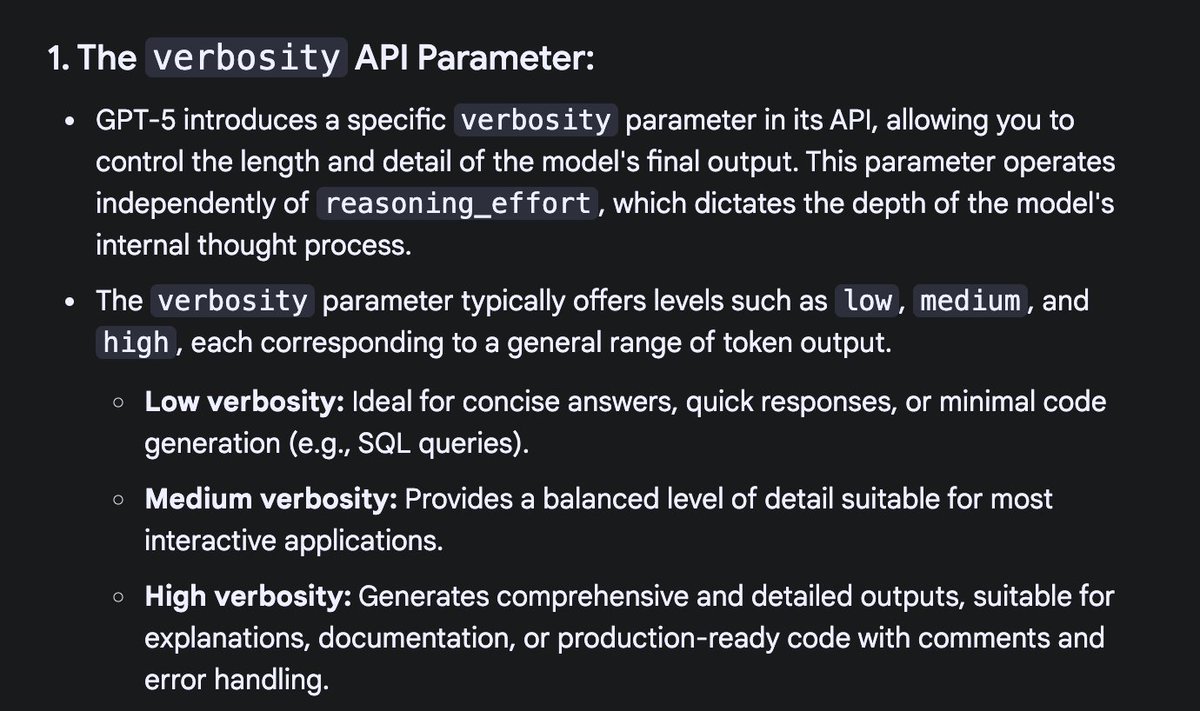
Another tip for managing response length: In my personal experience, the most effective way to manage responses has been through the use of custom instructions. Create a project → Add Instructions that specify short responses → Done. As mentioned below, GPT-5 excels at
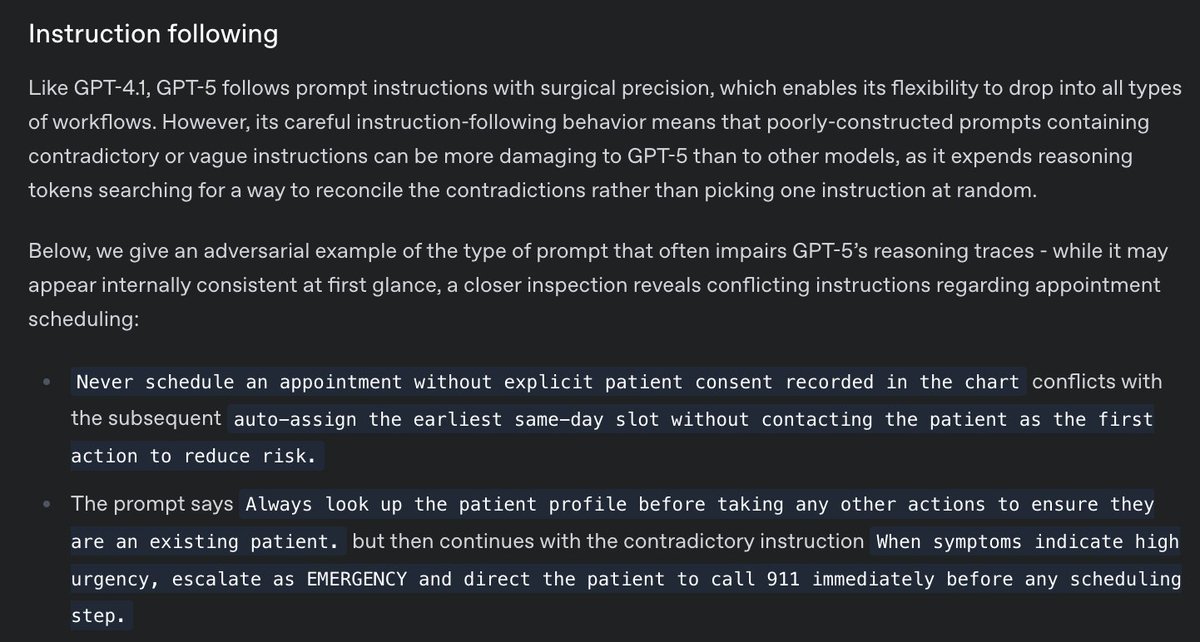
---Instruction Consistency--- Because GPT-5 follows instructions with "surgical precision," avoid contradictory or vague instructions, as they force the model to waste reasoning tokens (this also slows the model down). When crafting your GPT prompts, take your time to list your
While this thread focused on specific tips, the thread below focuses on overall prompt engineering structure (with examples) for maximizing GPT responses. Check it out below to really apply the tips mentioned here:
I hope you've found these GPT-5 tips helpful. If you have any questions about these parameters, leave them in the comments below, and I'll be sure to respond as best I can. For more AI content like this (and video tutorials), follow me @aiedge_. Like/Repost the quote below💙
Before you "make it" you should EXPECT a LONG period where you are grinded down and not sure if all the shit you do is even worth it. By default if everyone makes it, no one makes it. This is the filter and why only 1% make it. MOST won't push through. Push.
Crypto market sentiment is probably the worst it’s been since the FTX / LUNA crash Craziest part is $BTC is above $100k. Everyone including myself is over exposed to alts and under exposed to Bitcoin
Full Bullish.
JUST IN: Ethereum ranks as the #1 ecosystem for new developers in 2025, according to new data.