
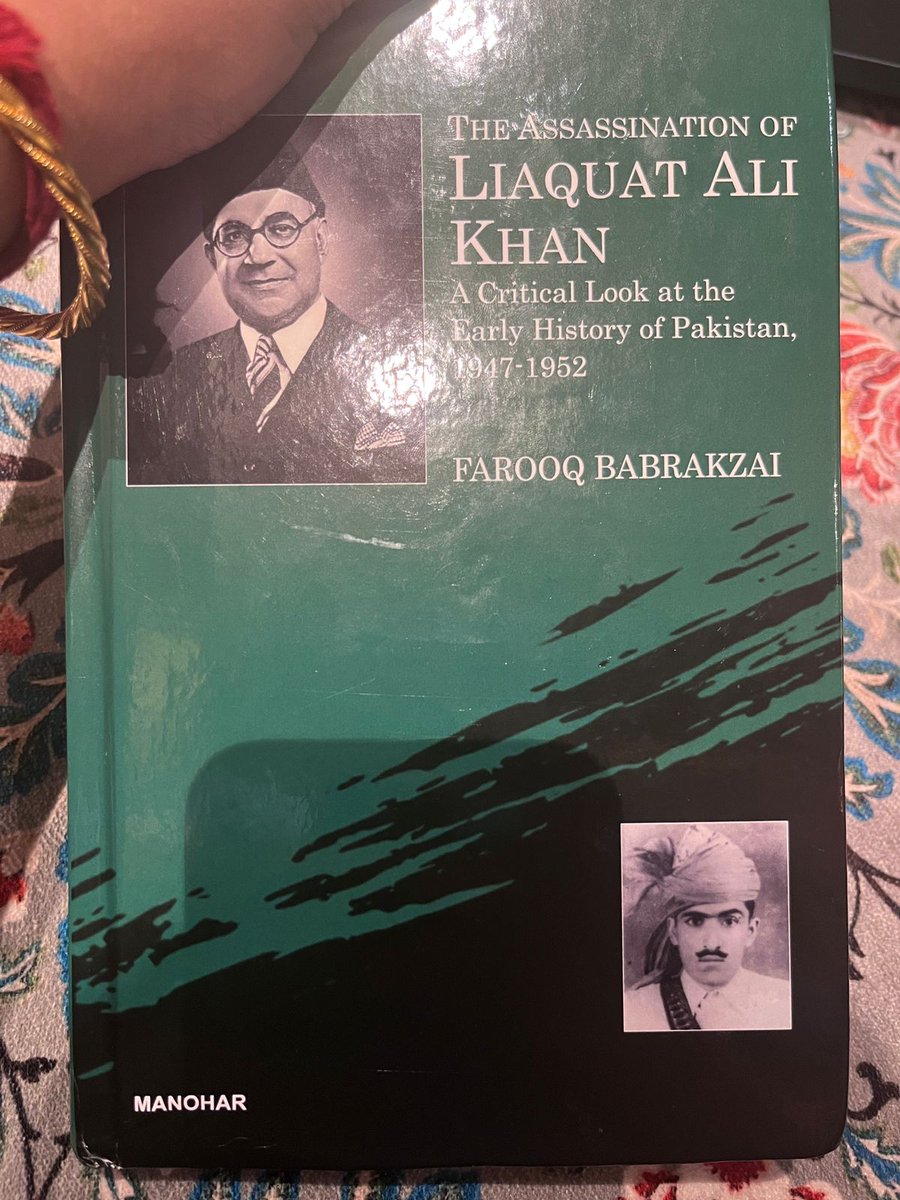
1. My husband bought a book in India to take it back home for a Pakistani friend. I found it weird. So I opened it and started reading. First page, and I knew why. It’s banned in Pakistan. I read two chapters, and what I found will shock you.
2. We Indians, especially Hindus, either refuse to see it or are so blinded by the “secular” blindfold that we think this mindset died in 1947. It didn’t. It simply got a flag and an army. And it is trying to raise its ugly head again.
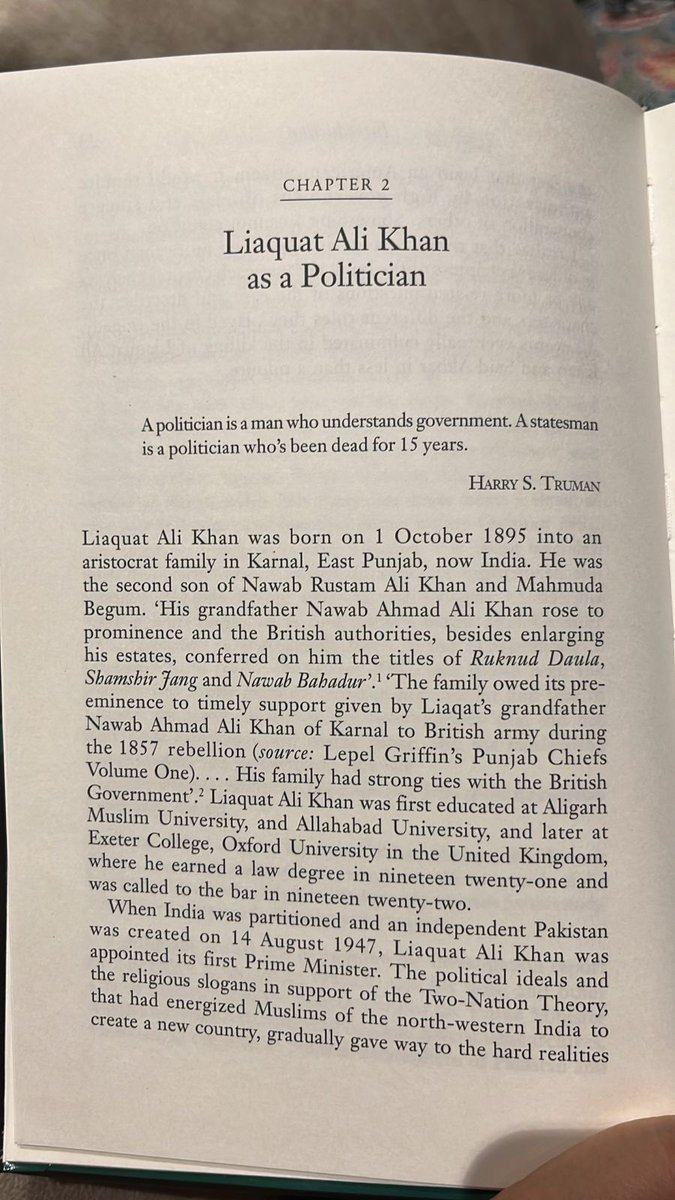
3. You know Liaquat Ali Khan, right? Pakistan’s first PM, the man we studied in British India history. But here’s what textbooks hide: His grandfather helped the British crush the 1857 War of Independence (a war which Hindus and Muslims fought should to should - read Savarkar).
4. That’s Liaquat’s real legacy, not freedom, but favour. He became Pakistan’s first PM. And then, on 16 October 1951, he was assassinated in Rawalpindi. Shot twice in the chest while addressing a rally. The killer? A man named Said Akbar-father of the author.
5. But Said Akbar wasn’t just a random gunman. He was an Afghan Pashtun refugee — from the Zardain tribe — living in Pakistan after fleeing Afghanistan. The very people Pakistan discriminates against were the ones it used as pawns. Just today in Nitividhan session @PankajSaxena84
6. Akbar was groomed, trained, and fed one promise — Jihad. The book literally says: “Social and Political language wrapped in religious language of Jihad ” (p. 33) In other words — religion was the mask, geopolitics the motive.

7. Said Akbar didn’t study Islam to find peace. He studied it to learn Jihad. To fight. To kill. The book records this clearly.
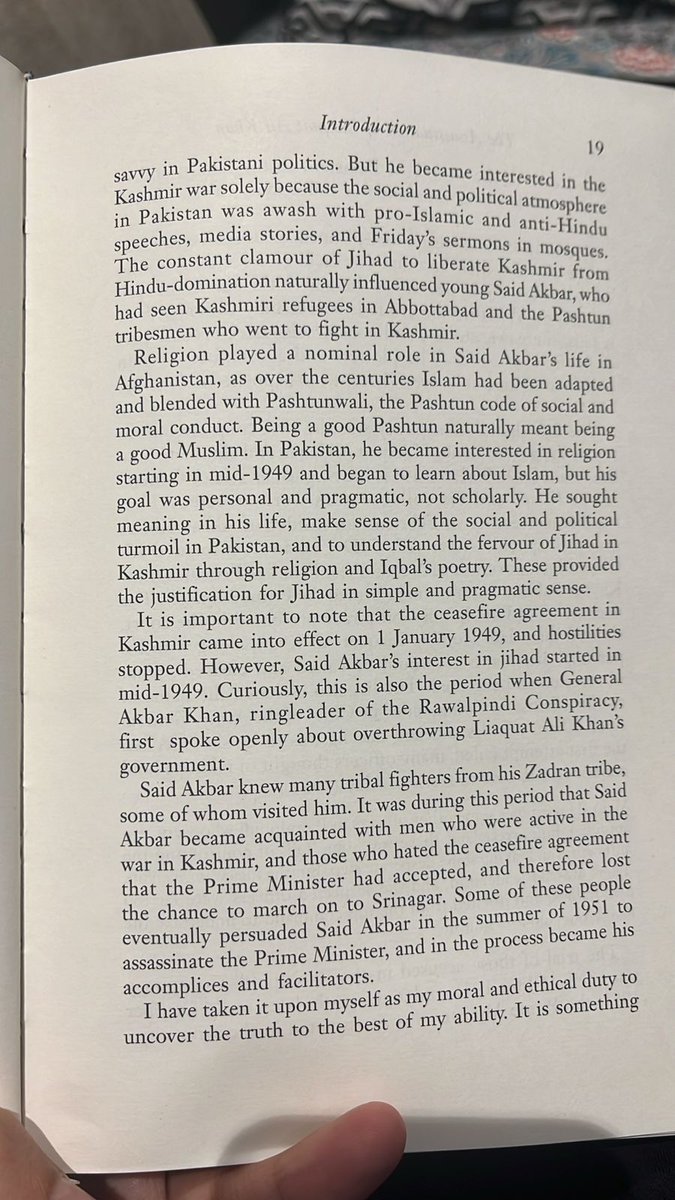
8. And the inspiration behind this? A story Pakistanis glorify even today. Sultan Mahmud Ghaznavi — the invader who plundered, raped, and destroyed the very land that now worships him. He appears in the dream of Said Akbar and tells him to kill for Islam.

9. That’s the myth Pakistan built itself on — turning a barbaric invader into a saint. Teaching children that God speaks through the ghosts of Ghazni. Imagine building a nation on that hallucination.
10. The book describes how Pakistan trained Afghan refugees and Pashtuns as “tools of policy.” Decades later, the same blueprint would be used again as the terror factories across the border. Nothing new.


11. Even Pakistan’s own people knew it. The migrants who came from India after Partition — the Muhajirs — were called “runaways and refugees.” Even Liaquat Ali Khan himself — India-born — was mocked as an outsider. Unity under Islam? Never existed.

12. And here’s something Pakistan’s own pages confess: In the 1948 war, they were losing Kashmir. They were on the verge of defeat until the UN stepped in. The ceasefire — pushed by Nehru — saved Pakistan.


13. The book calls it “a reprieve that gave Pakistan a false sense of victory.” Nehru’s “moral diplomacy” turned a military win into a geopolitical mess. And even a banned Pakistani text admits it. But in India, we still worship him.
14. Within months of the failed coup and the Kashmir blunder, Liaquat Ali Khan was murdered. His assassin — the same Afghan refugee Pakistan had trained. The very monster they created turned on them. History, with perfect irony.
15. A book banned in Pakistan exposes what our “intellectuals” still deny — that jihad, not governance, is its foundation. It also talks about how Prayer congregations gives sermons of Jihad. That betrayal runs in its origin story. India doesn’t need to hate Pakistan. We just
16. Because the mindset that killed Liaquat Ali Khan… the same mindset that glorified Ghazni… that called its own PM a refugee… still looks at Bharat with the same intent. We must see it — not as victims of history, but as custodians of memory.
@gargiuvacha Thanks for sharing and thanks for awesome work you are doing. Some feedback fwiw 1. What is your thesis? It’s not clear from cursory reading 2. Would be good to make one or two main points and back them up or elaborate. Mixing Nehru etc just dilutes. Sorry this is not
@gargiuvacha Pls unroll @threadreaderapp
@gargiuvacha looks liek an interesting radr will read this thread on weekend thanks