
Dispersion Trading in Practice: The “Dirty” Version 🧵 Everyone loves the textbook dispersion trade: short index vol, long single stocks, vega-neutral. But the people who actually make money run the dirty version. Here’s why theory dies in backtests and practice wins in P&L
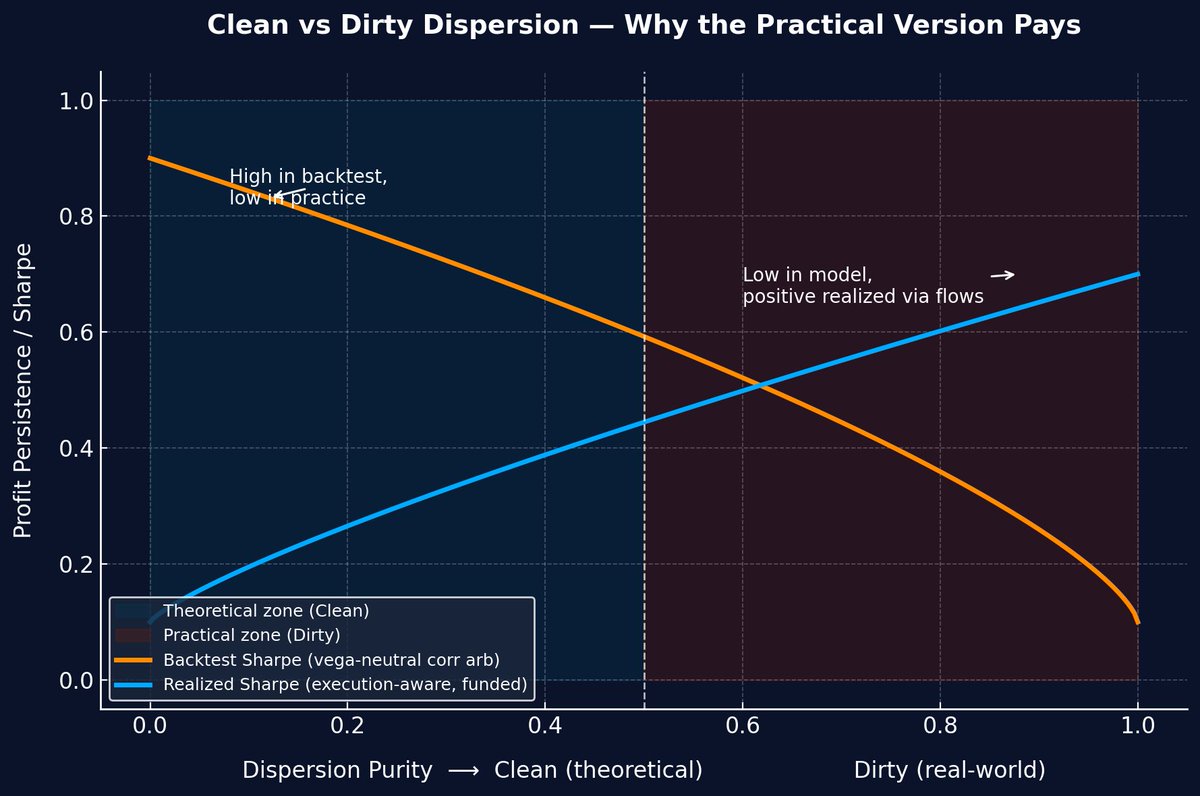
In theory, dispersion trading isolates the correlation risk embedded in index options. The clean (academic) setup: Short index volatility (e.g., SPX options) Long component stock volatility (options on the S&P constituents) Sized vega-neutral across legs so that portfolio
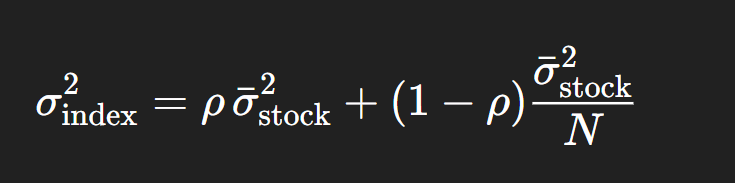
A dispersion trader is effectively short ρ(rho) If realized correlation falls (stocks move more idiosyncratically), P&L rises; if correlations spike (systemic move), losses occur.
In this idealized world: Execution is frictionless. Vol surfaces are continuous and arbitrage-free. Positions can be dynamically rebalanced without slippage. Funding and margin costs are ignored. That’s the clean math.
2. The Reality: Dirty Dispersion Real dispersion books don’t isolate correlation perfectly because practical constraints dominate: a. Execution Friction You’re not trading one “index” vs. one “basket.” You’re trading 500 single names, each with its own bid-ask, greeks, and
b. Vega Weighting vs. Gamma Risk In practice, traders size on vega notionals (matching exposure per 1 vol point move). But correlation shocks hit through gamma, not vega. So a “vega-neutral” book isn’t truly correlation-neutral during stress - when index gamma explodes.
c. Funding & Margin Index short legs free margin, but long single-stock options require collateralized margin. Funding spreads compress your realized edge - dirty dispersion must include carry cost and financing P&L. Market makers and vol-arb funds typically finance these
d. Liquidity Asymmetry Index options are deep and liquid - single-stock options aren’t. The skew and term-structure shapes differ widely across names. When we says “dirty,” we are talking about the impossibility of finding true parallel strikes and maturities across hundreds
3. Dirty ≠ Bad - It’s the Business The “dirtiness” is not a bug - it’s the trade. Every prop firm (SIG, Citadel, Jane Street, Optiver, etc.) runs their own version of dispersion: Some time their correlation exposure (long corr during panic, short corr during calm). Some run
It’s not like there’s one clean formula where you sell SPX vol and buy the 500 names. You have to think about what flows exist and why they exist. That’s the real alpha. the edge isn’t in the math, it’s in the flow asymmetry: Dealers and hedgers are forced sellers of
4. Dirty Dispersion P&L Anatomy Here’s how real P&L attribution typically decomposes:

In clean dispersion, only the first term should exist. In dirty dispersion, the other four dominate your realized outcome.
Practical Example: Setup (S&P-style, equal-weighted intuition): Index implied vol = 12% Average single-stock implied vol = 28% Implied correlation (toy identity under equal vols/weights):

Ex post reality: Realized correlation comes in at 0.12 (idiosyncratic tape, earnings dispersion). Assume average single-stock vol realizes near what you paid (keep it simple): σˉstk≈28%
What that implies for the index leg: Implied index variance from the identity:

Realized index variance given ρreal=0.12

Variance gap captured by a short-index / long-basket stance (directionally): ΔVar≈0.01444−0.00941=0.00503(vol^2 points). Square-rooting just to sanity-check: implied index vol ≈12.0%, realized ≈9.7%. So, in theory: short index vol vs long single-stock vol wins as
Now the dirty part (where edge dies if you’re sloppy) Execution drag (basket reality): You don’t cross one spread, you cross a basket. Suppose you trade the top 200 names, and your average all-in spread toll works out to 1.5 bps per name (vega-weighted, in P&L terms relative
Surface mismatch (residual vega/gamma): Your “vega-neutral” sizing doesn’t immunize gamma in a stress or skew curvature when names gap differently. Expect mark-to-market noise that can easily rival your theoretical corr edge unless you rebalance ruthlessly (which costs more
Clean math edge: correlation drop from 0.184 → 0.12 gives you a 0.0050 vol² variance advantage (12.0% → 9.7% implied-to-realized on the index leg, holding stock vols steady).
Dirty reality: 300 bps basket crossing + carry/funding 15–50 bps + mismatch/gamma noise can fully offset that advantage unless: you restrict the basket (liquid names, tighter quotes), time entries around known flow, size on vega-notional but monitor gamma, and automate
You can’t arbitrage correlation cleanly, you can only exploit flow imbalances when: The index vol is bid (systematic put demand), The single-stock vol is stale or under-reactive, and Your execution infrastructure can recycle the risk faster than it decays
The “dirty” in dirty dispersion is the alpha.
@QuantINsider_IQ I’m gonna kill myself after reading this retarded tweet
@QuantINsider_IQ @threaderapp unroll
@QuantINsider_IQ Where do the sheep come into this?
