
1/6 Are Banks Having a Liquidity Problem? tl:dr, Liquidity in the plumbing of the financial system is getting scarce. It is not a crisis now, but it has been moving in this direction for weeks, and it is now at a worrisome point. When the financial plumbing gets stressed, it

2/6 A positive spread is typical around month- and quarter-end "window dressing," when financial institutions need to report their positions and want to show conservative cash positions. Now it has been weeks, and it is in the middle of the month. This chart shows that
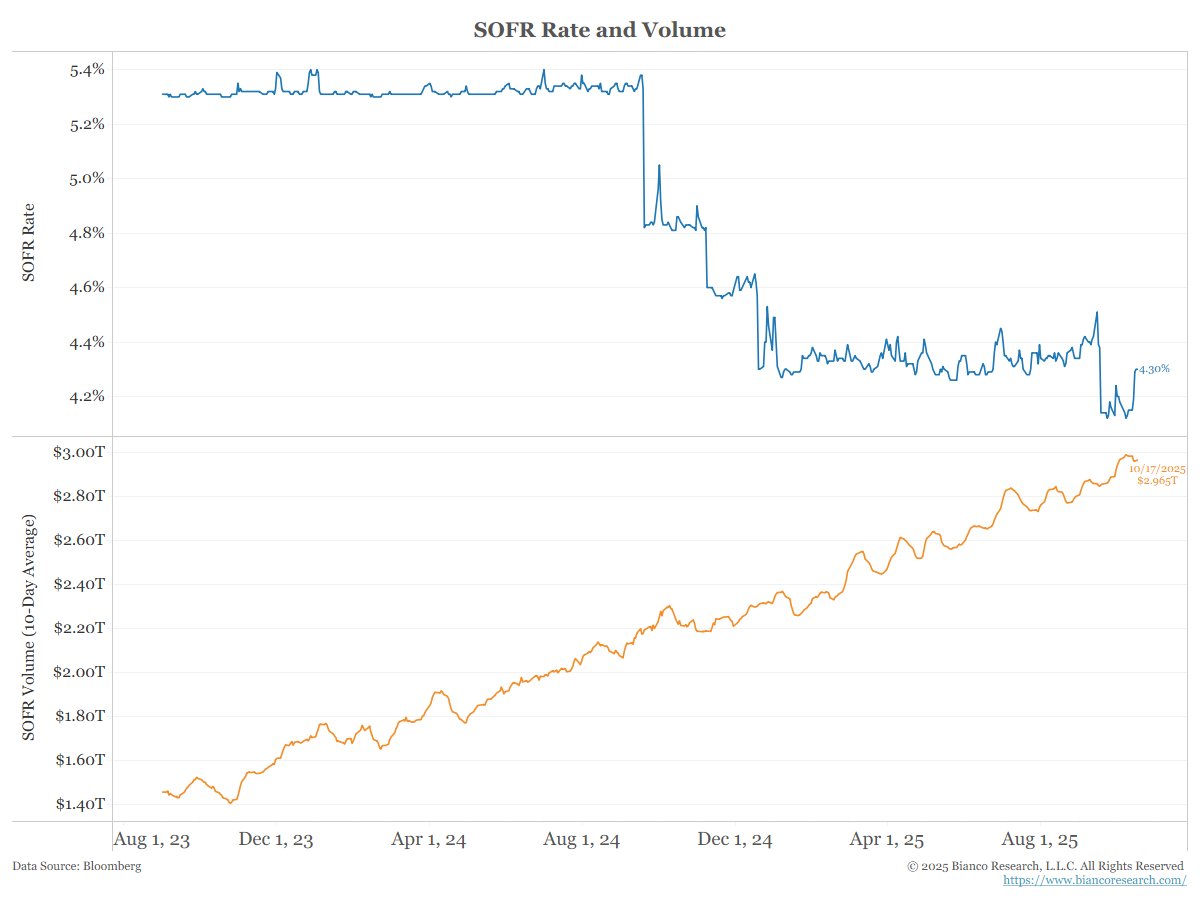
3/6 In a normal SOFR market, when the balance between supply/demand is maintained, SOFR loans should trade at a slight discount to IOR rates (see the average and standard deviation range in the bottom panel of the spread chart in the first post). This is because IOR should act
4/6 Cash being parked in the New York Fed Reverse Repo Facility ( RRP) sink almost every day is now nearing zero. And, as the arrow below shows, it has really started diving toward zero several weeks ago. The RRP is about ten years old. This facility allowed market participants

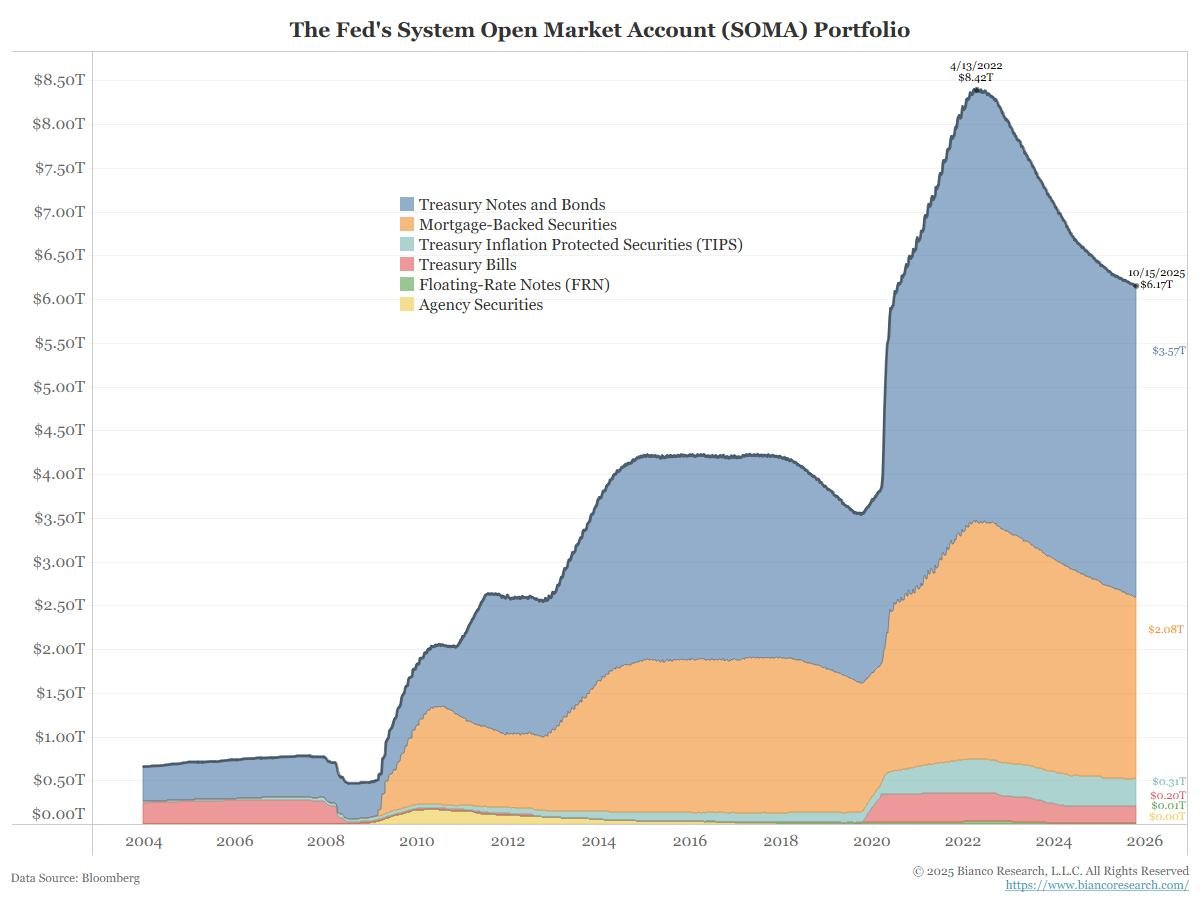
5/6 Will the SOFR/IOR Spread Peak Now? The simple answer is yes, if the drain of cash stops now. But it is not clear how this happens. Since RRP is at zero, it can no longer "pump" liquidity. So, the Fed has to stop QT? I suspect they will do exactly this at the October 29
6/6 The signal from the funding market and bank stocks was that they are worried the Fed drained too much liquidity from the system (QT), and it is not clear whether they appreciate it, the risk of another round of QE, or how to fix it.
@biancoresearch Bank reserves at Fed just over $3tril. This may be the Floor amount the Fed sees as workable.
@Stu85737 In July, Fed Governor Chris Waller said bank reserves can fall to $2.7T without problems. They are now just under $3T (chart). Recent bank stock action and funding market stresses suggest the minimum levels might be higher than Waller’s estimates, if not at current levels.

@biancoresearch @grok explain this thread to me . What is SOFR and IOR and why is the spread typically positive
@biancoresearch Great overview. However, regarding the "cockroach" problem, you do not believe that years of booming markets and bailouts have not properly flushed the system of bad assets the way a proper recession would have in the past?
@biancoresearch @threadreaderapp unroll
@biancoresearch Trump is getting rid of illegals. Think about the loan consequences specifically in the auto industry. Just think about it.
@biancoresearch Liquidity isn’t gone overnight - it evaporates quietly, then all at once. The pipes are dry, the Fed still draining, and the roaches only matter when the lights go out. Watch the spread, not the spin. 👉 What breaks first: QT or confidence? #Macro #LiquidityCrisis
@biancoresearch Liquidity cracks in the plumbing always show up before everyone realizes there's an issue. Watching $TLT and repo spreads like a hawk these days
@biancoresearch Bank failures have usually been liquidity driven, this is not new. Underlying that though can be credit problems. Unfortunately banks have always tended to borrow short and lend long.
@biancoresearch What did they think would happen when the moved $2.5T of Bank deposits to the Fed's repo option - with participants who can access and be paid interest in Reserve Balances - and then drained those balances pushing deposits into Cash repo alternatives🤔 Of course, we have a
@biancoresearch Agreed
@biancoresearch Yup. I brought this up last month! https://x.com/monetarycomm/sta...
@biancoresearch @UnrollHelper unroll
@biancoresearch Oh shit. Another doom post from Jim! You’re going to be right one of these times!
@biancoresearch Black boxes give you liquidity problems under stress. Will keep happening
@biancoresearch It’s simply an indicator that quantitative tightening is slowly coming to an end — and that it’s gradually becoming time for the Fed to change its monetary direction.
@biancoresearch Student loans kicking in draining liquidity
@biancoresearch @threadreaderapp unroll
@biancoresearch The same footprint showed up before March 2020 and September 2019 — the SOFR–IOR spread was the smoke before the fire. What’s different this time is who’s holding duration risk off balance sheet.
@biancoresearch interesting; thx @Analystlearner thoughts?
@biancoresearch I see SOFR moving up above IORB as simply an indication that MMF have exhausted their dry powder to lend into repo, so they abstain. Banks fill the void but only at rates higher than they could earn in IORB. Does that mean banks are similarly low on liquidity? Not necessarily IMO
@biancoresearch The end of the government shutdown should provide some short term relief as the TGA draws down. Unfortunately, that 800B is going to get spent very quickly unlike the 2T RRP... Next refill might be tougher to manage
@biancoresearch @biancoresearch SOFR is at 4.3- what will happen at 4.5 and 5?
@biancoresearch Thank you, Jim! Writing in a manner that enables those of us trying to understand gave me my best understanding of these issues to date.
@biancoresearch I love this thread, your work and this data. Thank you for it. While I think I understand a lot if I, can you please try to summarize it in simpler terms. Thanks
@biancoresearch Jim, as a normie, thank you so much for taking the extra time to make this a great/easy post to read. I really appreciate being able to understand without the need to ask Grok to explain things along the way.
@biancoresearch '(long thread, tried to write it so "normies" can follow.)' Much appreciated. Many of us normies have high understanding of the financial system and macroeconomics but because we don't work directly in the industry it can be hard to follow the jargon and slang.
@biancoresearch Thank you
@biancoresearch QT is done Bank bailouts have strong bipartisan support During the March 2023 bank run scare, Trump was even more freaked out than Biden Admin