
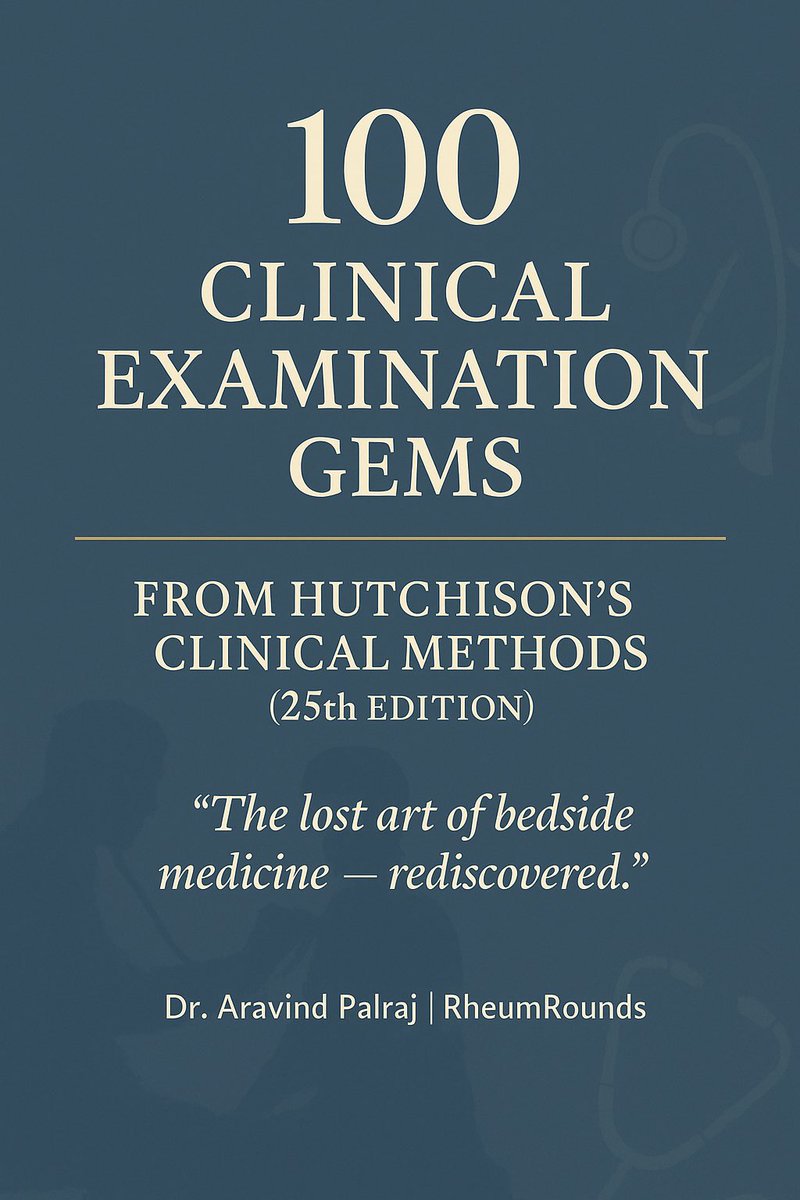
🧵100 timeless bedside gems every doctor should know. Straight from Hutchison’s Clinical Methods — distilled into 10 clean infographics. If you love real clinical medicine, this thread will remind you why you chose it. 🩺 Let’s bring back the art of examination 👇 (Save this
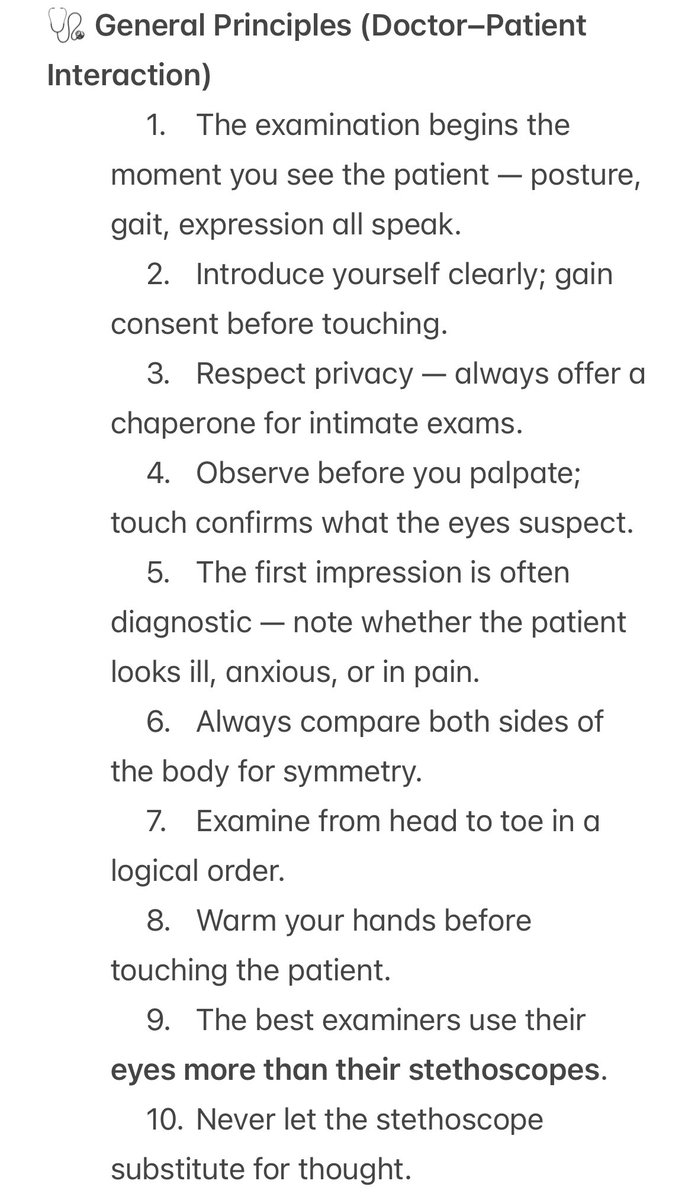
General Principles 1️⃣ The patient will tell you the diagnosis — if you learn to listen. History first. Examination next. Investigations last. 🩺 The foundation Hutchison built 125 years ago still holds true.
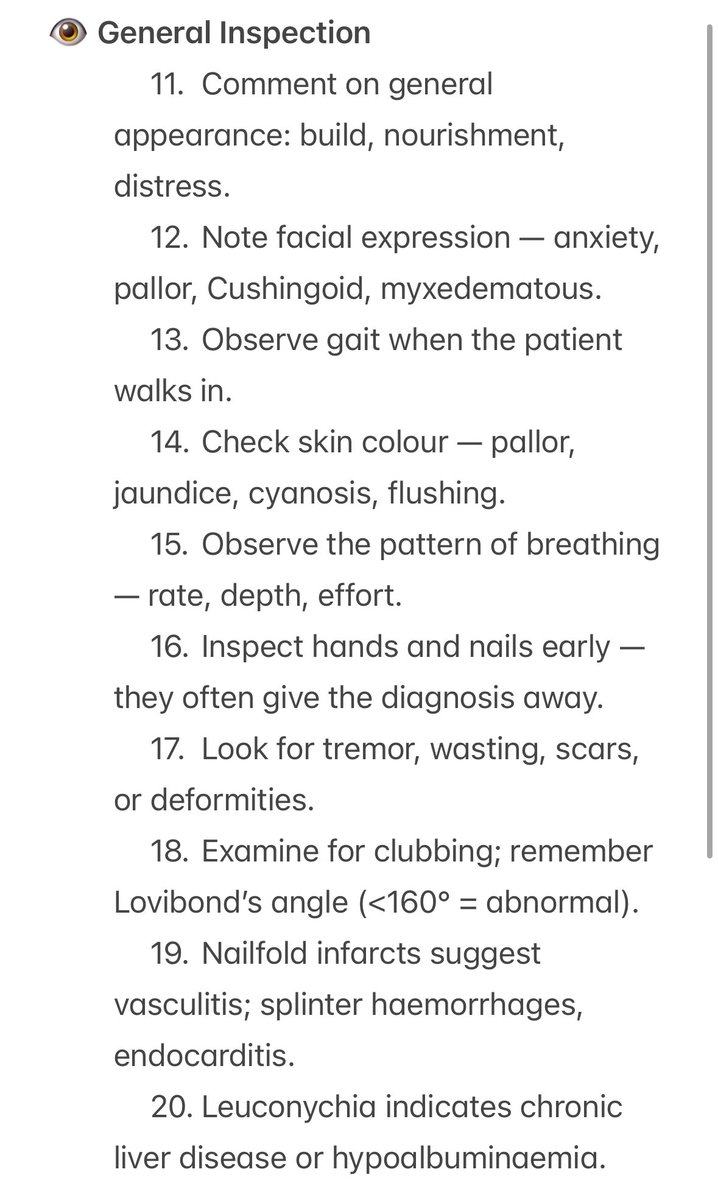
General Inspection 2️⃣ The first 10 seconds matter. How they walk, talk, sit, breathe — that’s your first set of vitals. The best clinicians diagnose before touching the patient.
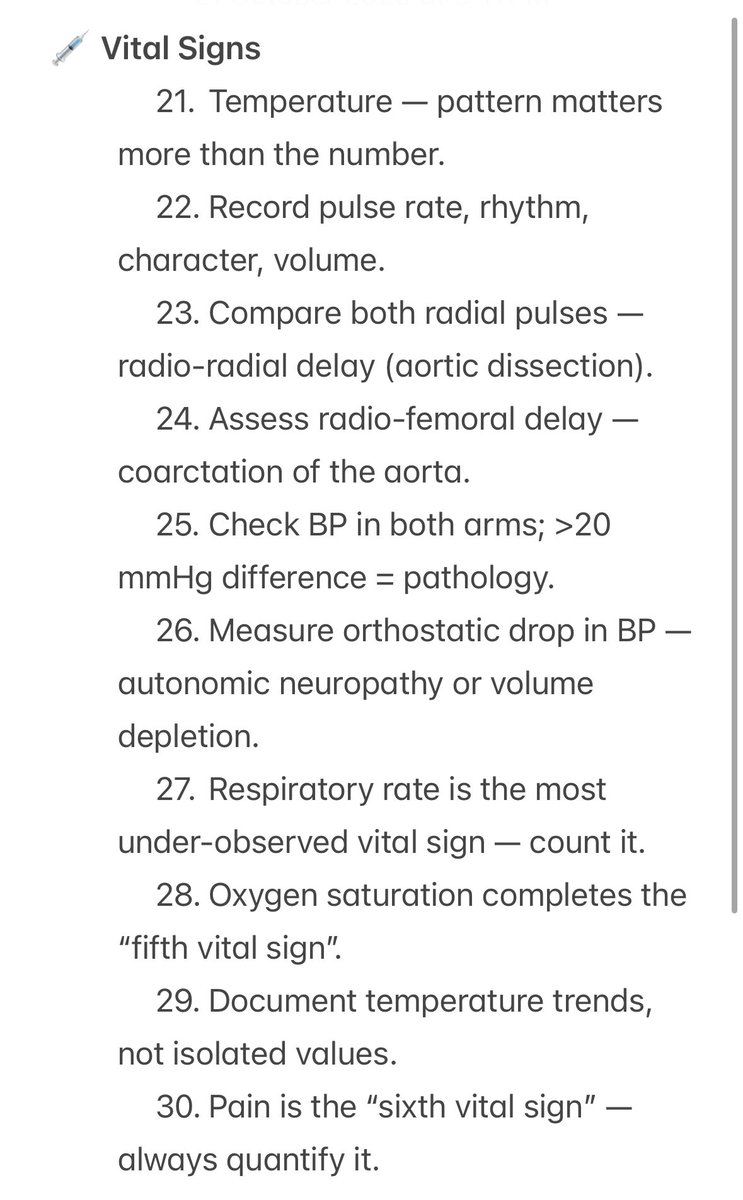
Vital Signs 3️⃣ “Count the pulse. Count the respirations. Feel the temperature.” The basics we rush through are often the ones that save lives. #ClinicalSkills
Hands and Arms 4️⃣ The hands are a diagnostic atlas. Clubbing, tremor, palmar erythema, koilonychia — every sign tells a story. 👋 Start there.
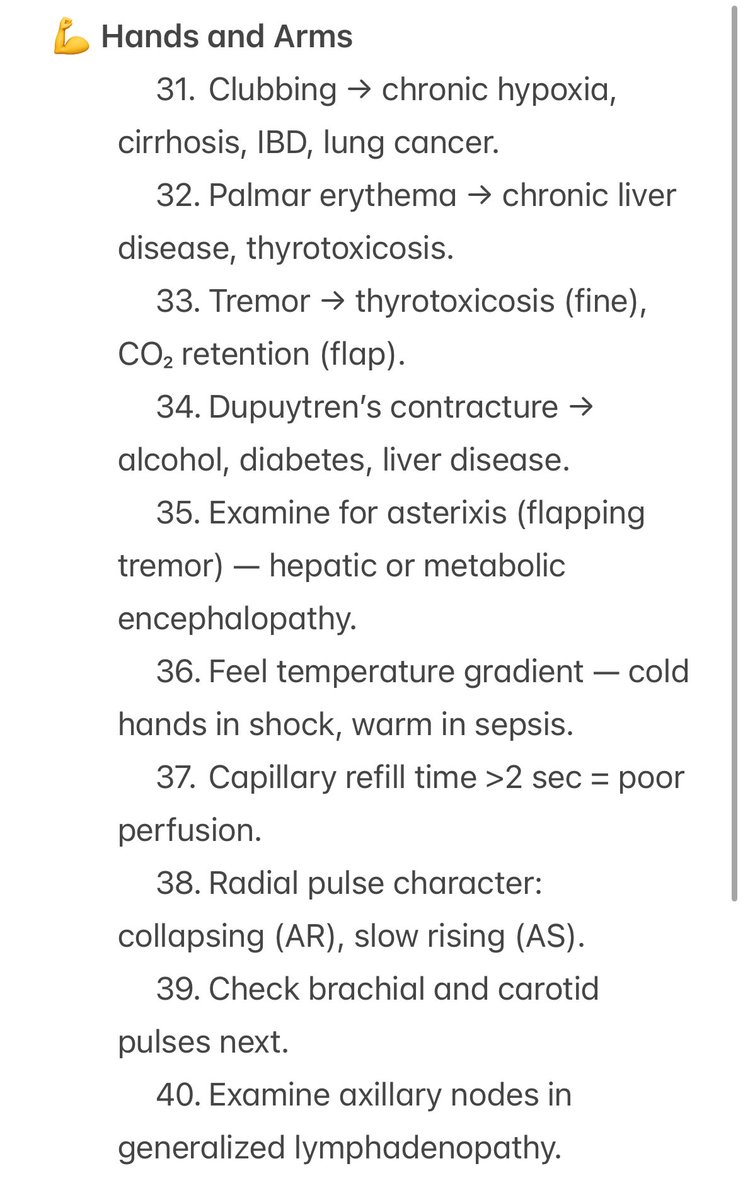
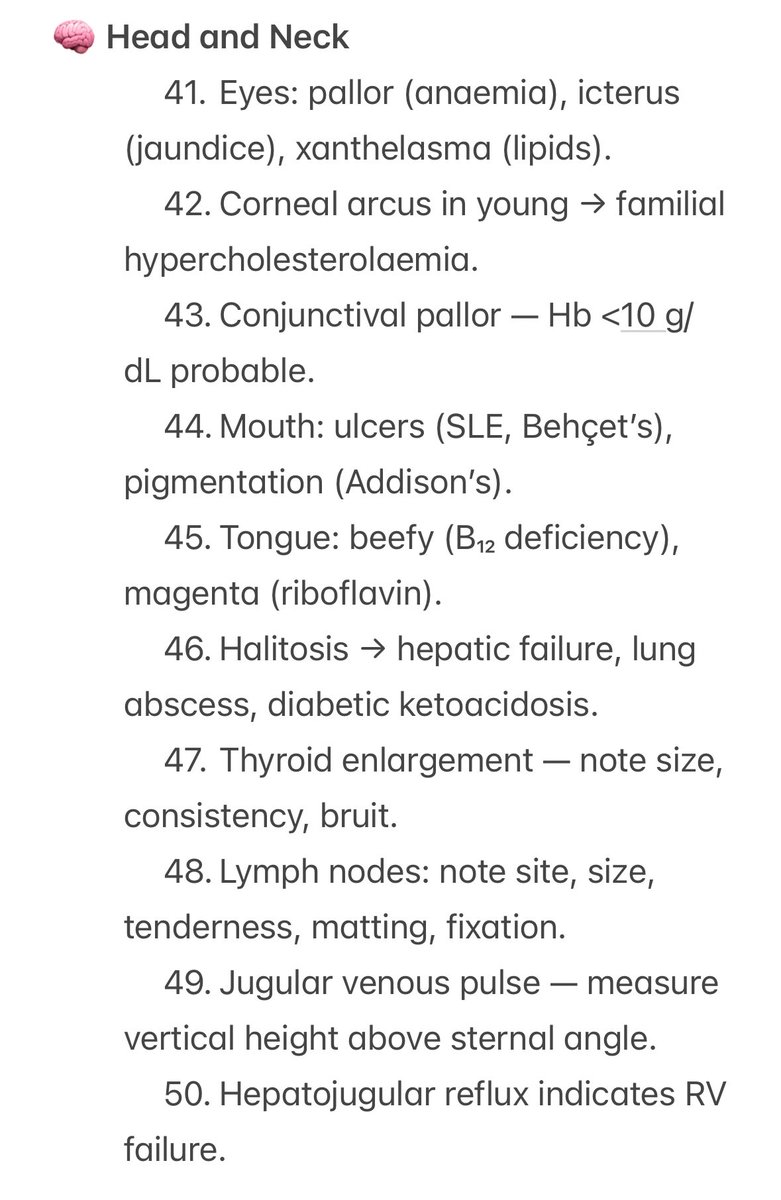
Head and Neck 5️⃣ The face is a mirror of disease. Addison’s bronze, Cushing’s moon, thyrotoxicosis stare, myxoedematous puffiness — the entire endocrine chapter is right there.
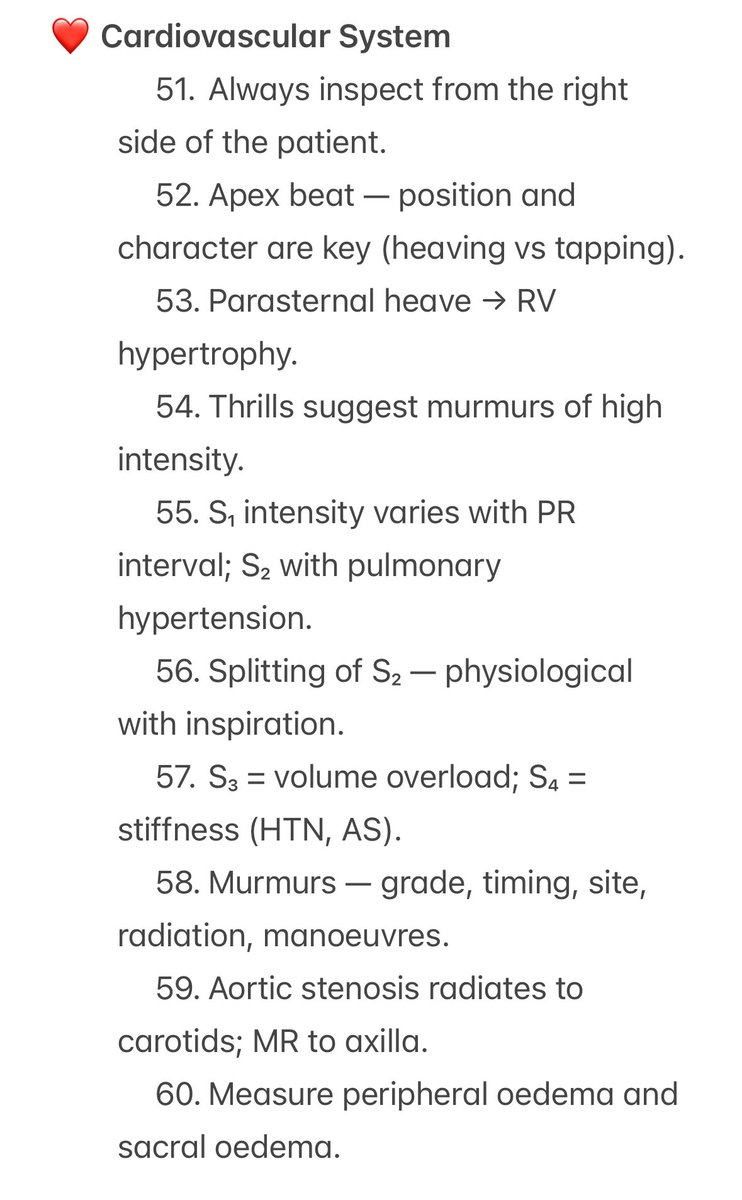
Cardiovascular 6️⃣ Before the ECG, there was the pulse. Before the echo, there was the stethoscope. Hutchison reminds us: the rhythm of the heart begins in the fingertips.
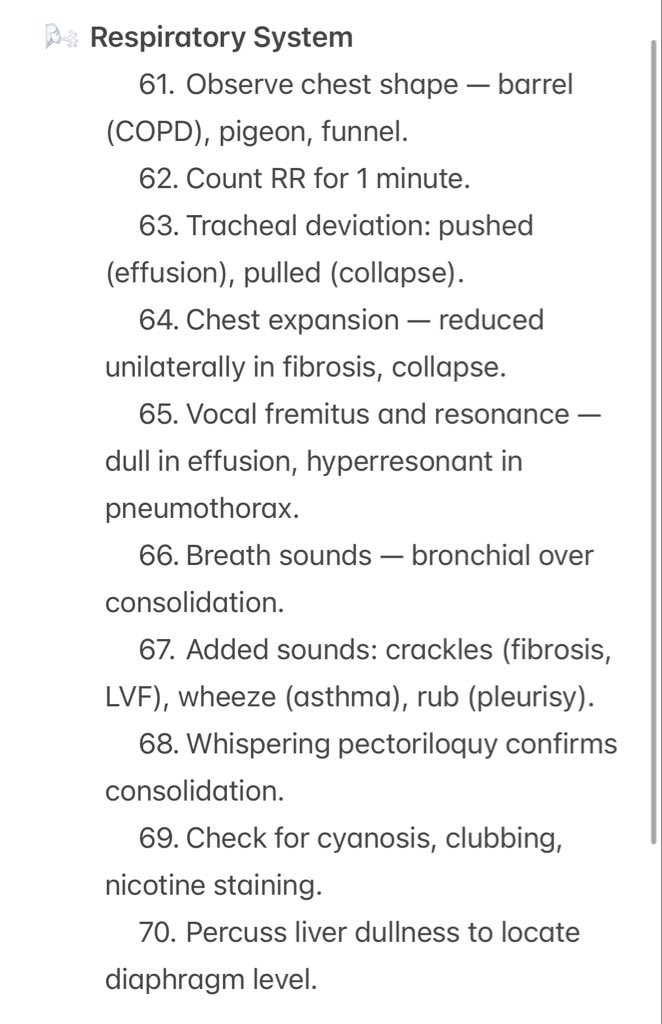
Respiratory 7️⃣ The percussion note tells the truth before the CT does. Hyperresonant, dull, stony — the chest speaks if you know the language. 🌬️ #MedTwitter
Abdominal 8️⃣ Inspection. Palpation. Percussion. Auscultation. The four words that built internal medicine. 🩺 Each quadrant tells a story — you just have to listen.
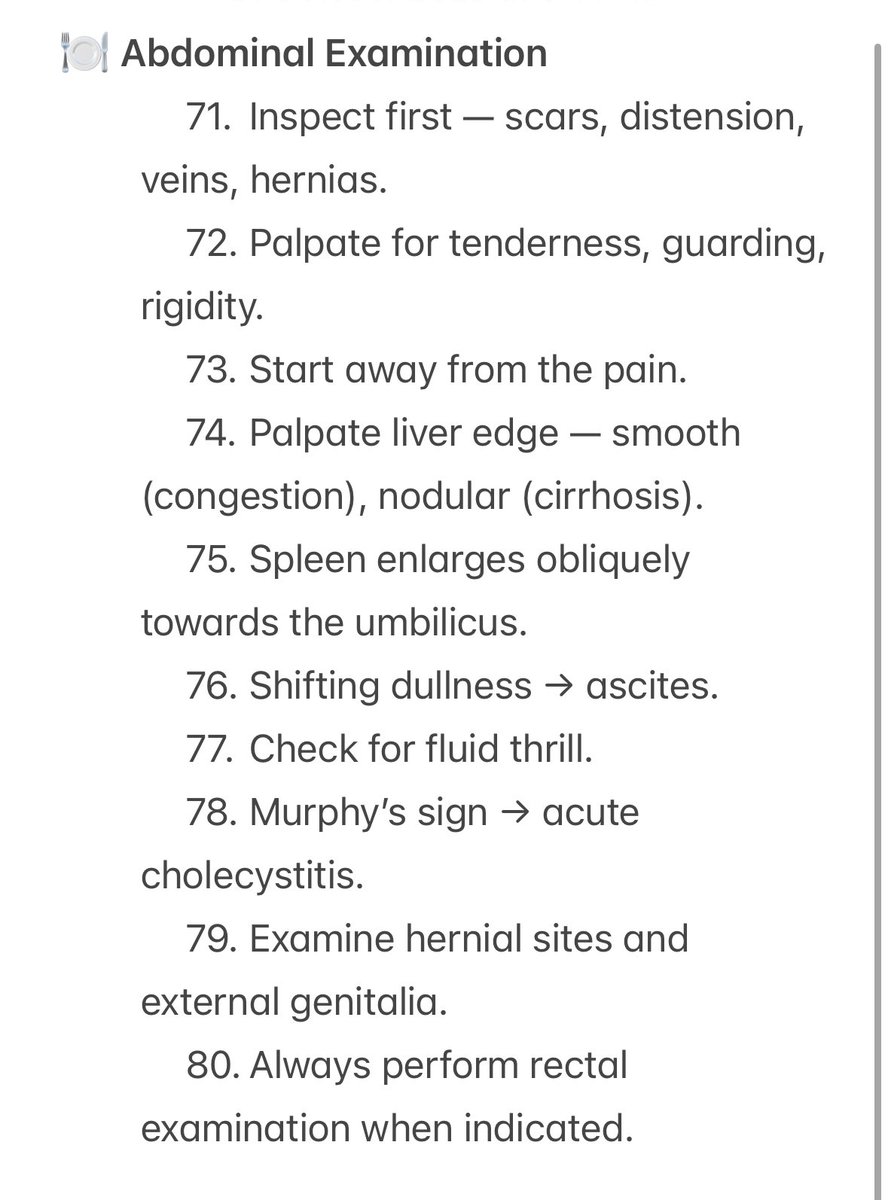
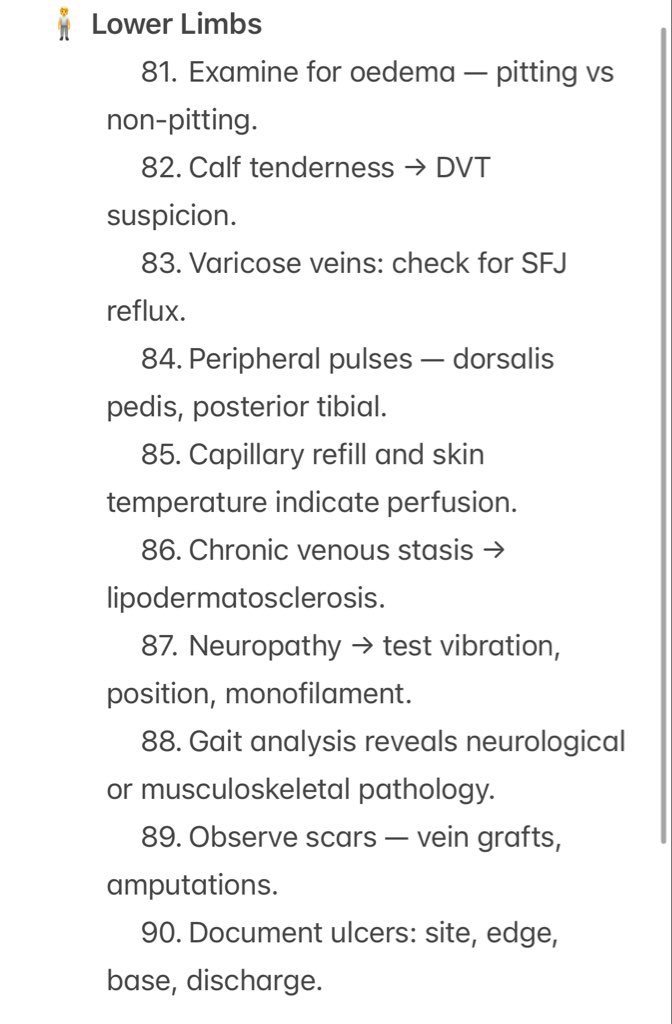
Lower Limbs 🦵 Lower limbs: don’t skip them. Check pulses, temperature, capillary refill, calf tenderness (DVT), varicose changes, and neuropathic loss. Small findings in the legs often explain big system problems — vascular, neuro, or metabolic.
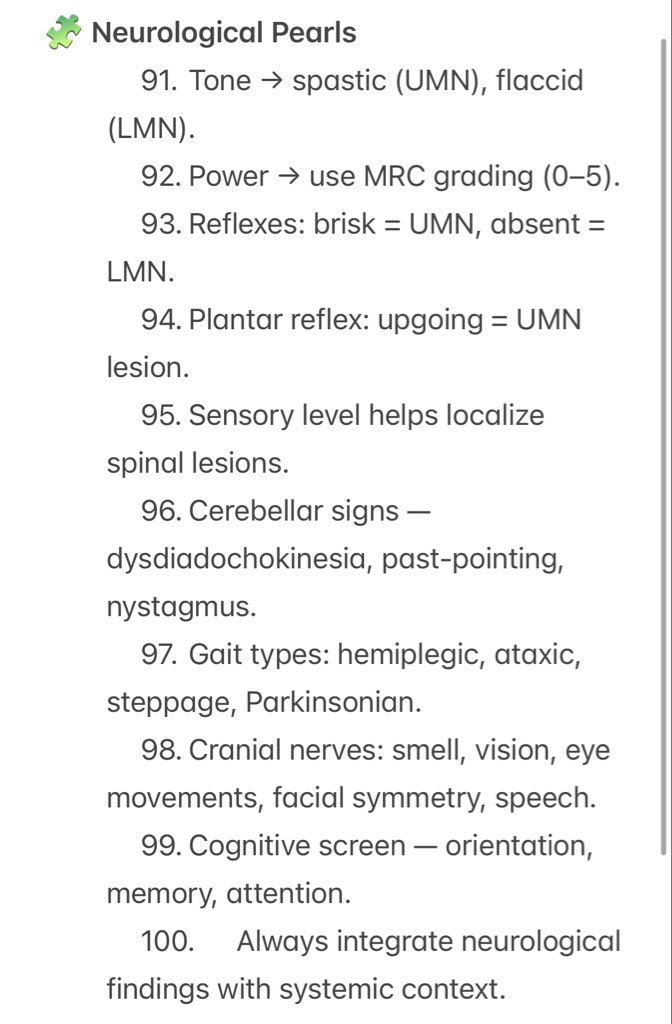
Neurology 1️⃣0️⃣ Examine the nervous system like poetry, not like code. Tone, power, reflexes, coordination — rhythm and balance. Hutchison called it “the art of pattern recognition.”
Closing / Summary 💯 100 Gems. 10 Infographics. 1 timeless lesson. Machines may assist. But bedside medicine will always belong to the human mind. 🩺 Keep learning. Keep examining. Keep observing. — Dr. Aravind Palraj | #RheumRounds
@Rheumat_Aravind Excellent recap and share. Never forget the basics is my mantra. A Trans vaginal sonography has to come after a per vaginal exam. Both are very different.
@imacuriosguy Thank you sir
@Rheumat_Aravind Good job sir.
@DrAamer Thank you sir
@Rheumat_Aravind Congratulations for compilation 🎊 👏 💐 and thanks for sharing
@ArunInamadar Thank you sir😊
@Rheumat_Aravind @threadreaderapp unroll
@Rheumat_Aravind Can you please share a Pdf
@Rheumat_Aravind Pdf please?