
Deep vein thrombosis (DVT) and potential resulting pulmonary embolus (PE) are a common reason for presentation to the hospital, especially in the winter. DVTs can be diagnosed with #pocus at the bedside. Interestingly enough, blood clots peak in January and February and have
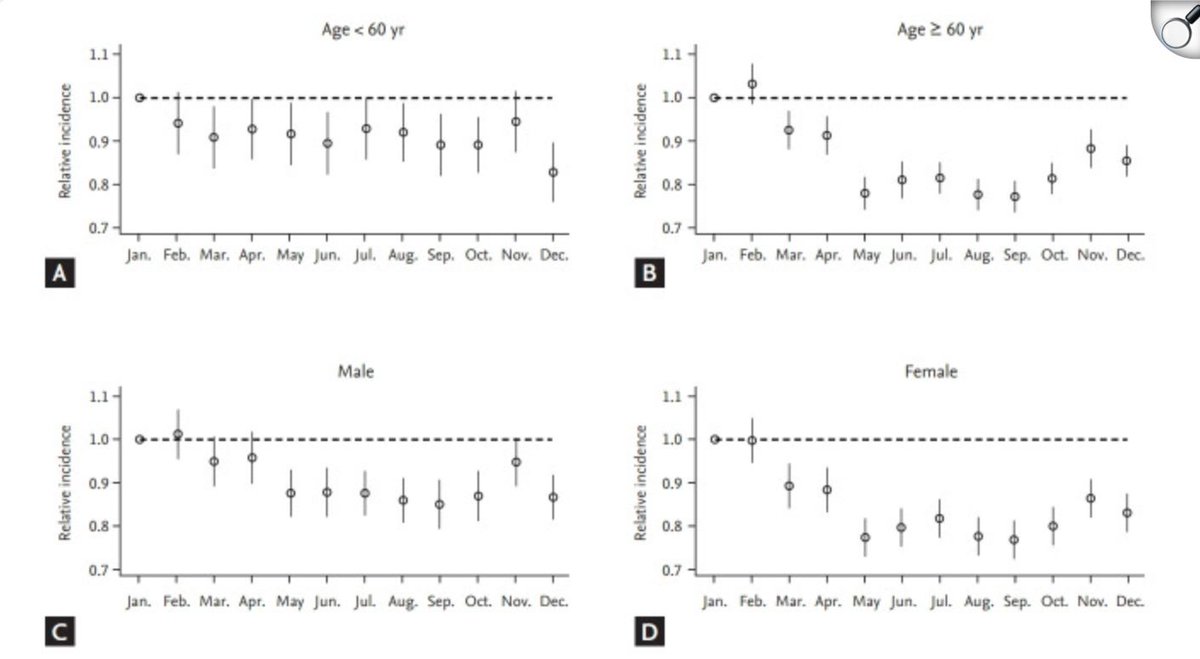
This was also seen in DVTs diagnosed in Sweden between 1987 and 2010. As shown below, June and July had the fewest DVTs, while January and February had the most. https://buff.ly/cpjiLeO

And in a study of Italian patients from Ferrara, Italy, between 1998 and 2002, DVTs peaked in January and February and reached their lowest incidence in July. https://buff.ly/gMLPP3k

While it is not clear exactly why this is the case, it suggests we should be more suspicious of DVT/PE in the winter months. Here is an example of a #pocus DVT exam. Perpendicular pressure is applied in the thigh. The femoral vein is not compressing as it should, a sign of a
To learn more about the history of DVT diagnosis, incidence in different populations, and how to perform a DVT exam at the bedside with #pocus, get a copy of The POCUS Textbook on Kindle or Hardcover: https://buff.ly/Jpi8sE3

We are truly living in the science fiction future that Star Trek predicted in the 1960s. We now have handheld scanning devices that can see inside our patients and diagnose disease at the bedside! Instead of just focusing on lung sounds, we should be teaching lung SIGHTS. What

