
A few days ago, we looked at the quarterly results of India’s IT giants. But if you only focus on these huge companies, you miss a quiet transformation happening underneath. Mid-sized IT firms that were once the underdogs are now outpacing the giants. A 🧵 👇
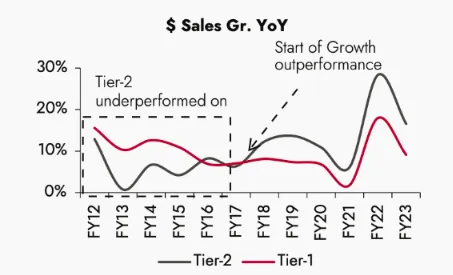
A decade ago, large-cap IT firms were comfortably ahead. But around 2017, something changed. Since then, smaller firms have been consistently outperforming them on growth and margins. Image: AMBIT
This is not accidental. These firms run on a different business model, one that values deep expertise and engineering over sheer scale. Let’s look at three of them: Persistent Systems, Coforge, and Tata Elxsi.
To understand why midcap IT is thriving, we need to first understand how large-cap IT was built. The large-cap model relies on scale. Western clients need large teams of engineers to maintain IT systems, and Indian firms provide that talent at a fraction of the cost.
Firms like TCS and Infosys mastered this. When a bank buys a core banking system, they help integrate it, customize it, maintain it, and fix it when it breaks. It is steady, recurring work. This model is manpower-heavy. Success depends on how efficiently companies deploy their
Midcap IT firms took a different path. Instead of focusing on maintenance and cost takeouts, they focused on building. They work on product engineering and specialized R&D.
Persistent Systems works with software vendors and hyperscalers like AWS and Google Cloud. When a SaaS company wants to add a feature or optimize its infrastructure, they often call Persistent.
Coforge is deeply entrenched in the travel and BFSI sectors. It designs booking systems, cargo operations software, and core platforms that keep airlines running.
Tata Elxsi focuses on embedding software in cars and on media and telecom systems. It knows automotive software inside out, a niche that helped it ride the EV boom.
While large firms still dominate maintenance contracts, product engineering and R&D make up a much bigger share of midcap revenues. And that is starting to show up in results.
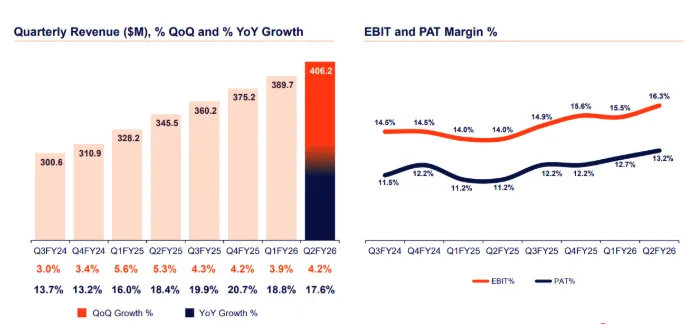
Persistent posted ₹3,605 crore in Q2 FY26 revenue, up 17.6% year on year, with a 13.2% PAT margin, a 45% jump from last year. That is 22 straight quarters of sequential growth. Image: Persistent.
Coforge reported ₹3,986 crore in revenue, up 32% year on year, with PAT nearly doubling to ₹376 crore. Its BFSI and travel businesses are booming. A decade ago, Coforge, then NIIT Technologies, was a laggard, growing just 11% a year. A new leadership team in 2017, a rebrand,
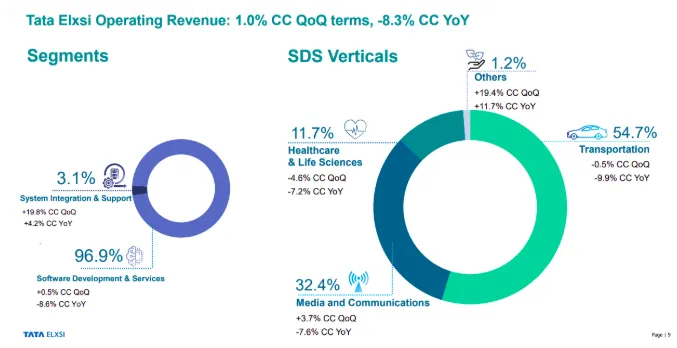
Tata Elxsi had a slower quarter, with ₹918 crore in revenue, up 3% quarter on quarter but down 4% year on year. Still, its long-term story stands out. Revenues have doubled since FY21, with margins that once touched 30%. Image: BSE.

So what is driving this success? First, deep specialization. Midcap IT firms win by knowing their clients’ domains better than anyone else. Clients frustrated with one-size-fits-all vendors now prefer smaller teams with senior specialists.
This has led to premium pricing and big wins. Coforge bagged a landmark deal with travel tech giant Sabre. Persistent won a banking client away from a tier-1 rival.
Tata Elxsi’s high margins were not accidental. They reflected premium pricing for specialized auto and media work. The rise of EVs, which rely heavily on embedded software, turbocharged its recent growth. Image: BSE.
Persistent has built a reputation as the go-to partner for software companies that need to modernize their products. Its work requires senior architects who understand complex technology stacks deeply.
Coforge’s deep expertise in travel has paid similar dividends. It understands airline economics, cargo systems, and global distribution networks inside out.
Tata Elxsi also benefits from being part of the Tata ecosystem, with clients like Tata Motors, Jaguar Land Rover, and Tata Communications. Coforge, meanwhile, strengthened its BFSI and digital business through smart acquisitions such as SLK Global and Cigniti.
Another reason midcaps are thriving is their proximity to AI. Because of their focus areas, many of them are directly involved in building the software and infrastructure that power AI systems.
Persistent works closely with hyperscalers building AI data centers and is developing its own GenAI suite called SASVA. It filed 20 patents this quarter alone, taking its total to 75. Image: BSE.

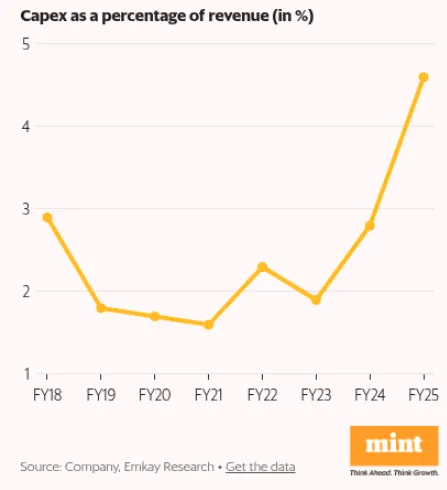
Coforge is also ramping up investments in AI. In an industry that spends just 2–3% of revenue on capex, Coforge has doubled that share, much of it going into its AI platforms and intellectual property. Image: Livemint.
These strengths, however, come with risks. Deep specialization can turn into vulnerability when a key sector falters, as Tata Elxsi’s auto slowdown shows.
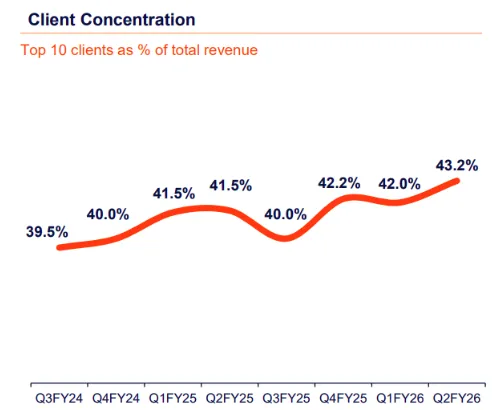
Persistent’s dependence on tech clients makes it exposed to global slowdowns. It also earns 79% of its revenue from North America, with 40% coming from its top 10 clients, a concentration large caps avoid. Large IT firms, by contrast, enjoy broad diversification across
We cover this and one more interesting story in today’s edition of The Daily Brief. Read on Substack, watch on YouTube, or listen on Spotify, Apple Podcasts, or wherever you get your podcasts, just search for “The Daily Brief by Zerodha.”
@zerodhamarkets Thank you 😊