
it has previously been observed that the word for “night” in many languages is N plus their word for “eight”, no one seems to be clear why. my guess is it is from the planetary hours, a system used way far back, assigning hours to the classical planets - there are seven of them.

there are 7 classical planets - sun, moon, mercury, venus, mars, jupiter, saturn. the hours of the day were assigned to these in various ways. its possible that in some circles these seven just became associated with the days counted hours, and night became “8” (pure speculation)
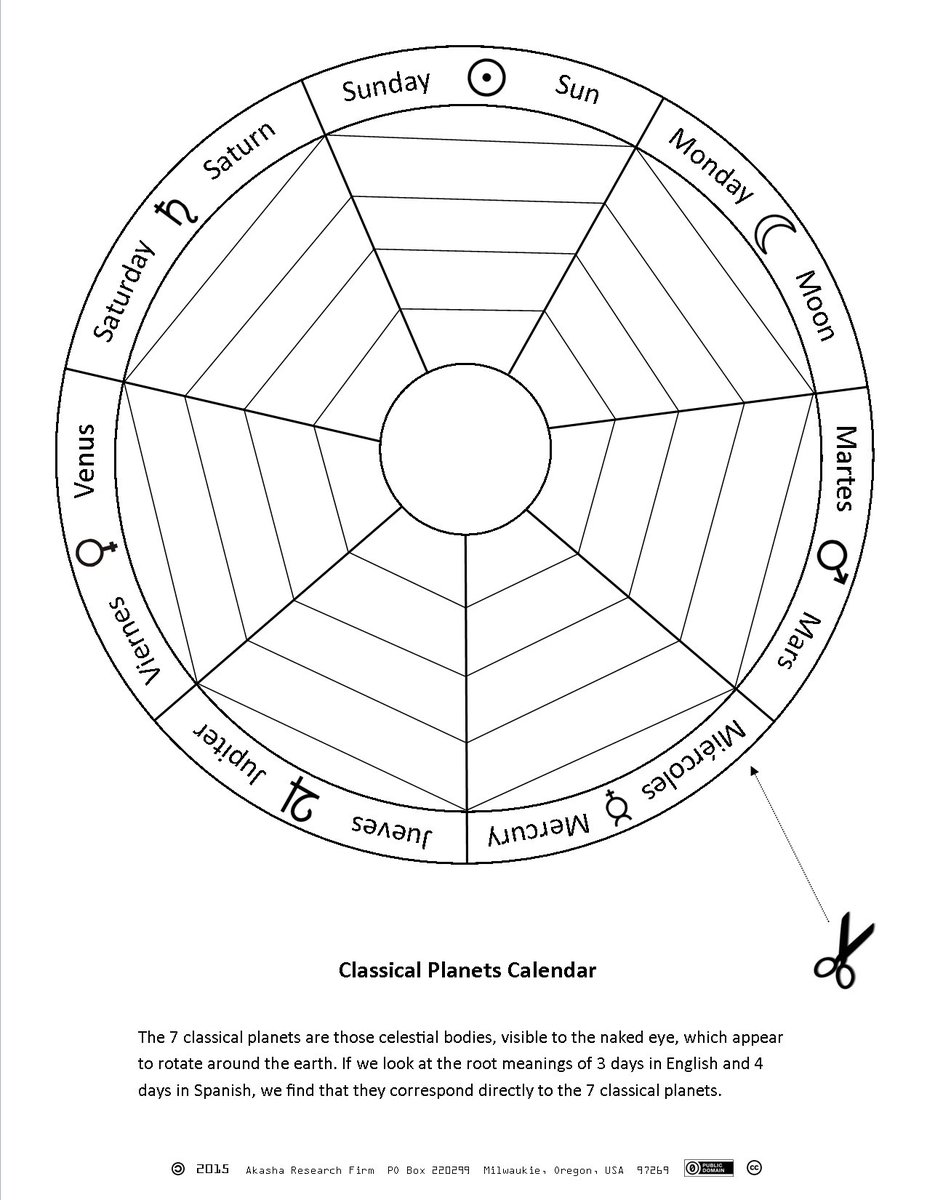
it seems odd or perhaps implausible, but the days of the week still retain their classical association with these seven planets linguistically - somewhat obscured in english aside from sunday and monday (moon-day), much more visibly in other languages. the hours could retain this
@owenbroadcast It is just a coincidence—a single coincidence, thousands of years ago, not ten or twenty or fifty coincidences. Purely by chance, the Proto-Indo-European words for "night" and "eight" resembled each other, and this resemblance remained in most of its descendants.


@royllovians im open to it
@owenbroadcast That's a stretch and barely true in the examples but German and French. More likely: similar but morphologically unrelated words in PIE; and phonetic changes preserving that similarity.
@paingroyper the english one is pretty good
@owenbroadcast >he doesn't know about the proto indo europeans
@owenbroadcast @myth_pilot It's also possible that it is because those languages are all Indo-European and so such basic words like those 2 have common root in addition it being possibly related.
@owenbroadcast No, it's because we go night night at 8 PM 🌃🌌
@owenbroadcast I don't think so. The words come from the Indo-European stock. N is a stable consonant, so words for NIGHT from Indo-E *nok(w)ts tended to be pretty stable; and the Indo-E word for EIGHT, OKTOW, had the same consonants, so they'd undergo the same changes in the language groups.
@owenbroadcast These are all romance languages and all of these words are etymologically related through latin. This only shows this phenomenon in latin and Germanic. The rest follow naturally
@owenbroadcast Very silly but maube because ur supposed to sleep "eight" hours?
@owenbroadcast Isn’t a simpler explanation that most languages come from latitudes that have roughly 8 hours of night? “Night eight”
@owenbroadcast you could compare the languages to the latitude where they are spoken 8 hour nights (often) or not
@owenbroadcast Night lasts about 8 hours maybe thats why
@owenbroadcast I feel like @AnthonyEsolen might know something about this
@owenbroadcast 8 hours of sleep?
@owenbroadcast what a great thread
@owenbroadcast I never knew this.
@owenbroadcast This is just pie sound changes at play you can find similar "coincidences" in other language families. This is still a very cool phenomenon.
@owenbroadcast It’s way simpler than this. It’s because night and eight, in all the languages, descend from PIE nókʷts and oḱtṓw respectively. The most natural evolution of those PIE roots, given the “sound palettes” in each language, are the results that you post.
@owenbroadcast Curious if this extends beyond Germanic/Romance languages or if it might just be a PIE thing that LOOKS like n+"eight."
@owenbroadcast N is not a prefix. The root for night is the nigh- part. The -t ending just communicates that it's an established state. The Indo-European root it comes from means something like "to take away" (thus, negate) & describes the absence of light/energy once the sun goes down.
@owenbroadcast Or, far more simple reason, these are all European languages and in Europe it gets dark around 8 PM on average.
@owenbroadcast Seems coincidental. It fails in eg Greek and Serbocroatian
@owenbroadcast Proto-Indo-European would be my guess
@owenbroadcast Similar in Irish also, you would almost think it comes from Germanic roots. Irish IS influenced by Latin and Norse, but it seems this goes back to PIE *nókʷts.
@owenbroadcast in romanian it´s as you say - noapte and opt vowel a goes with feminine nouns opt as eight to me - because to opt, options, optimist all share roots - seems a symbol of eternity but vertical - 8 but the 7 planets version is also solid 7 as base so 8 as beyond "visible"-sensed
@owenbroadcast night and eight rhyming over 3000 years ago in the root language is the simple reason
@owenbroadcast How about why “horse” and “hair” sound similar in multiple languages
@owenbroadcast I noticed this with dutch: acht, achter, etc. meaning eight, after, etc. This has something to do with an unending cycle. Seven is the fundamental cycle with 8 coming after.
@owenbroadcast It's a coincidence going back to two common ancient etyma that were vaguely similar. 1. eight < oḱtṓw https://en.wiktionary.org/wiki... 2. night < nókʷts https://en.wiktionary.org/wiki... Meanwhile other daughter languages break the pattern e.g. A. Greek oktṓ, nyx (nykt-)
@owenbroadcast This is all about consistent sound changes! The Romance words for "night" all derive from the Latin stem "noct-" for 8 from Latin "octo". Because the stress pattern and the ending were the same, they underwent the same evolutionary steps. Therefore they kept the n+ relation.
@owenbroadcast I would have thought it's because the night prayer of the Christian liturgy of the hours is sometimes called the "Eighth Hour," as if follows the canonical seven times of prayer.
@owenbroadcast There are only two families represented there, German and Romance, so it’s more a result of sound changes being the same across the two endings over time. If this held true outside of western Indo-European I’d be more curious, but AFAICT it doesn’t.