
Equity Residential (apartment REIT with 86k units, most in coastal markets) had its earnings call last week. Some very interesting/telling color on state of the market. 1) Are renters in weakening financial shape? Not at all, so far. Incomes are up, rent-to-income <20%. But...

2) While current renters are in healthy shape, prospective renters pulled back -- likely due to nervousness about economy -- especially in D.C. and, to lesser degree, in Boston. EQR said the leasing season essentially ended one more earlier than usual.

3) Speaking of D.C. (but likely thematically true elsewhere), EQR said renters are NOT "turning in keys" and moving out. But there's "less sense of urgency to buy and sign on the dotted line and commit to move-in dates."

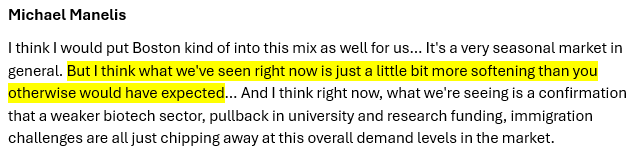
4) Boston also slowed down "a bit more" than expected due to softening in key job sectors like biotech, higher education and research, as well as immigration (which could be international students, who tend to be a chunk of rental market).
5) On the flip side, San Francisco continues its strong rebound (following an extended visit to the doldrums). "The recovery in San Francisco, particularly downtown, is real." Rents now flat with 2019 levels, while incomes up 22% -- suggesting more upside potential.

6) New York also continues to be a strong market.

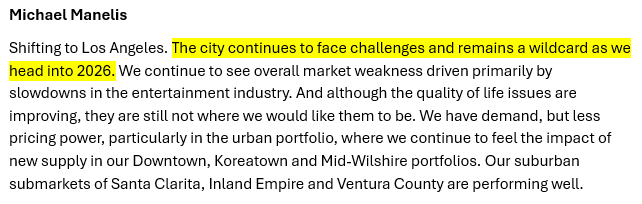
7) And then there's Los Angeles... It's been a recurring theme for REITs going back a number of years now: "The city continues to face challenges." EQR called L.A. a "wildcard" heading into 2026.
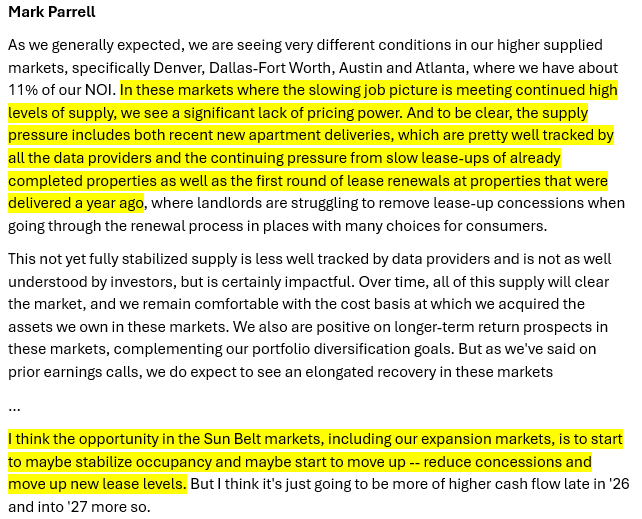
8) In the Sun Belt and Denver, high supply remains a big headwind. EQR noted with so much competition, it's taking longer for new properties to fill up, and that's leading to rent cuts and concessions. Sees upside starting in 2026 as new units fill up and remove concessions.
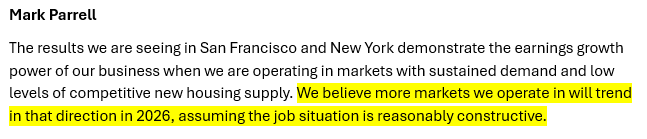
9) Assuming the job market holds up, EQR thinks other markets could follow the rebound story seen in San Francisco and New York as new supply levels drop off.
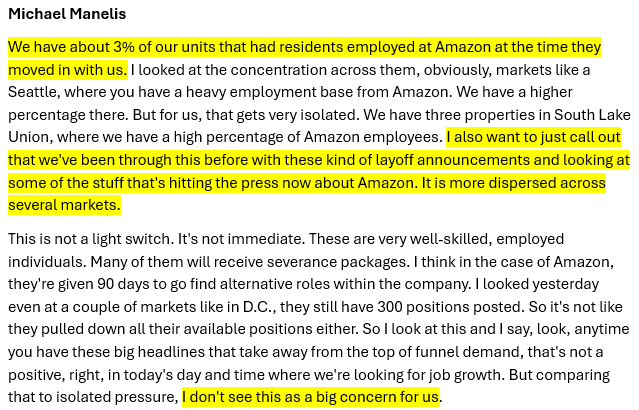
10) Interesting factoid: About 3% of EQR's residents were employed by Amazon (at time they moved in). On Amazon's recent downsizing announcement, EQR said "we've been through this before" and "don't see this as a big concern for us."
11) On AI and efficiency gains, EQR said they're seeing a 50% reduction in lease application timelines due to its AI-driven tech. Also reported 2% reduction in payroll costs.

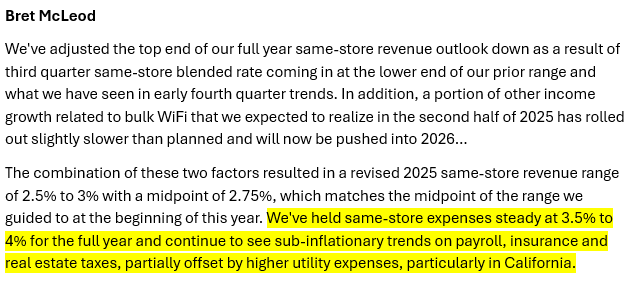
12) EQR also reported "sub-inflationary trends on payroll, insurance and real estate taxes," partially offset by higher utility costs. That's helped offset reduced guidance on revenue growth.
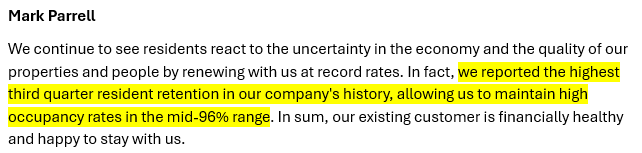
13) EQR -- like its peers -- also continues to benefit from high renter retention and healthy occupancy rates, offsetting some impact of reduced momentum on new leasing side.
14) EQR shows gain-to-lease of 1% (which means renters pay a slight premium to renew above current market rent), but that's not unusual in slower, colder months. EQR (and everyone else) likely need to see renewed new lease rent growth in spring to maintain renewal rent growth.

15) Getting that momentum likely depends on some improvement in consumer sentiment. The one known factor: There's a lot less new supply competition moving forward.

16) Lastly, and very importantly, EQR was one of several REITs announcing stock buybacks. Given big discount in REIT stock prices versus value of apartment properties in real world, EQR signaled stock buybacks are better use of capital than more property acquisitions.

As always, this is NOT investment advice of any sort. Just 16 things I found interesting from EQR's Q3'25 earnings call. More to come this week from other REITs.