
What's interesting is that there made me coins that portray the Prophet Muhammad. Robert Hoyland makes interesting arguments as to why the coins in the Abbasid-era portray the Prophet 🧵
First of all, the Qurʾān lacks a clearly articulated prohibition against images. On the Qurʾān and early Muslim attitudes towards images see: Lammens, “Arts figurés,” 241; Arnold, Painting, 4‒6; Georges Marçais, “La question des images dans l’art musulman,” Byzantion 7 (1932):
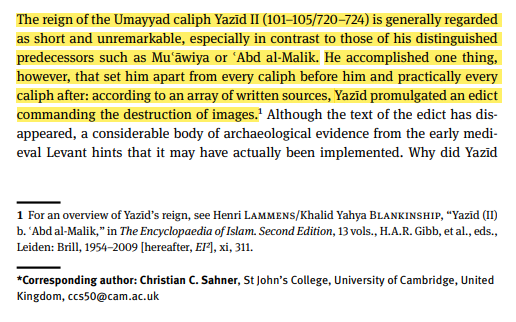
In fact, this iconoclasm by Yazid was so popular, that it even inspired Byzantine iconoclasm in the 700s (C.H. Becker, “Christliche Polemik und islamische Dogmenbildung,” Zeitschrift für Assyriologie und Vorderasiatische Archäologie 26 (1912): 191‒195; Gerhart B. Ladner, “Origin

In nearly every text, Yazīd is portrayed as the primary instigator of the edict. That it was a real piece of legislation is implied by several texts, which refer to a “command” (fūqdānā, 1234, cf. Zuqnīn), a “general letter” (egkuklion epistolēn, John of Jerusalem), a “universal
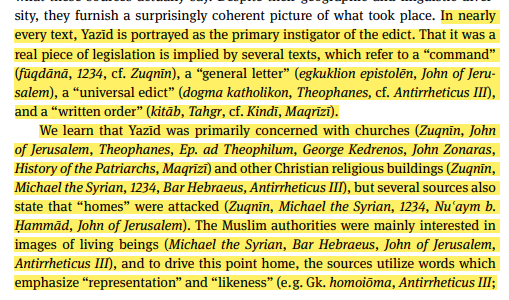
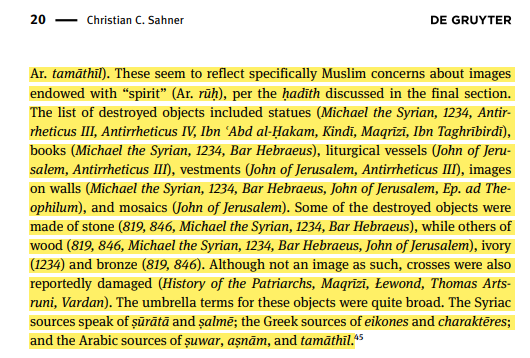
The slow formation of a prohibition on images is also suggested by the many examples of representational art from the first two centuries after the Hijra. These include the coins that circulated before ʿAbd al-Malik’s financial reforms, including the so-called standing caliph
Robert Hoyland gives reasons as to why the figures on the coin should be the Prophet rather than the caliph himself! - (1) The coin was part of a propaganda battle with Byzantium, Justinian II put Christ’s portrait on his coins but putting his own face would be weak. The only
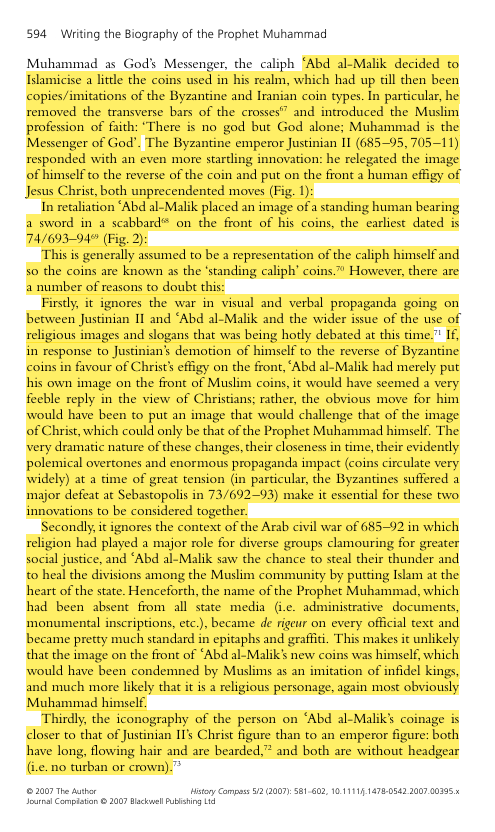
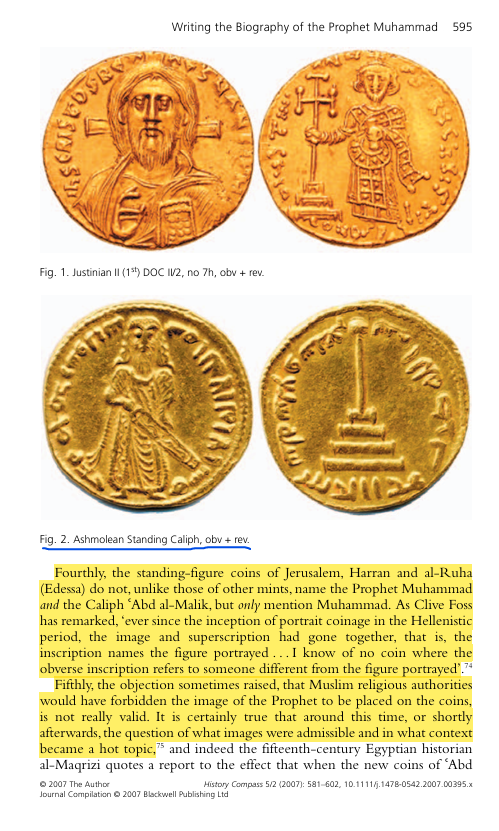
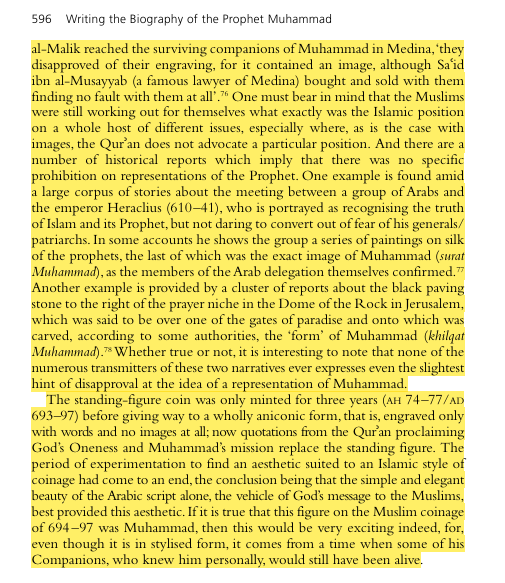
Full reasons in text as to why it's not Abd al-Malik 📜 - Firstly, it ignores the war in visual and verbal propaganda going on between Justinian II and Abd al-Malik and the wider issue of the use of religious images and slogans that was being hotly debated at this time. If, in
🔍 If you found this thread insightful, please follow and repost to support more historical research and threads like this. 📷 Join the discussion & access more resources: 📷