
Bad prompts = robotic outputs. Good prompts = decent outputs. Great prompts = outputs that feel alive. I stopped giving LLMs tasks. Now I give them consequences. Emotional stakes > perfect instructions. Here's the framework (Steal it):
For months, I obsessed over perfect prompts: role definitions, formatting rules, 12-step instructions. The outputs were good. Technically correct. Soulless. Then I accidentally stumbled on something that changed everything.
I was frustrated, so I wrote: "A founder is reading this at 3am deciding whether to bet their last $50k on this idea. What do you tell them?" The response was different. Thoughtful. Weighed consequences. Showed nuance I'd never seen before.
Here's what I mean: ❌ OLD: "Analyze this business model" ✅ NEW: "A VC is deciding right now whether to write a $2M check based on your analysis" ❌ OLD: "Write marketing copy" ✅ NEW: "This headline determines if 10,000 people scroll past or stop and read" ❌ OLD: "Debug this code" ✅ NEW: "This bug is crashing in production. 50,000 users can't access the app. What's wrong and how do we fix it NOW?" ❌ OLD: "Summarize this research" ✅ NEW: "A patient is making a life-or-death treatment decision based on this summary"
You would ask me...Why does this work bro? LLMs are trained on human text and human text is full of stakes. When you add consequences, you're not just giving instructions. You're activating the model's training on how humans think and write when something actually matters.
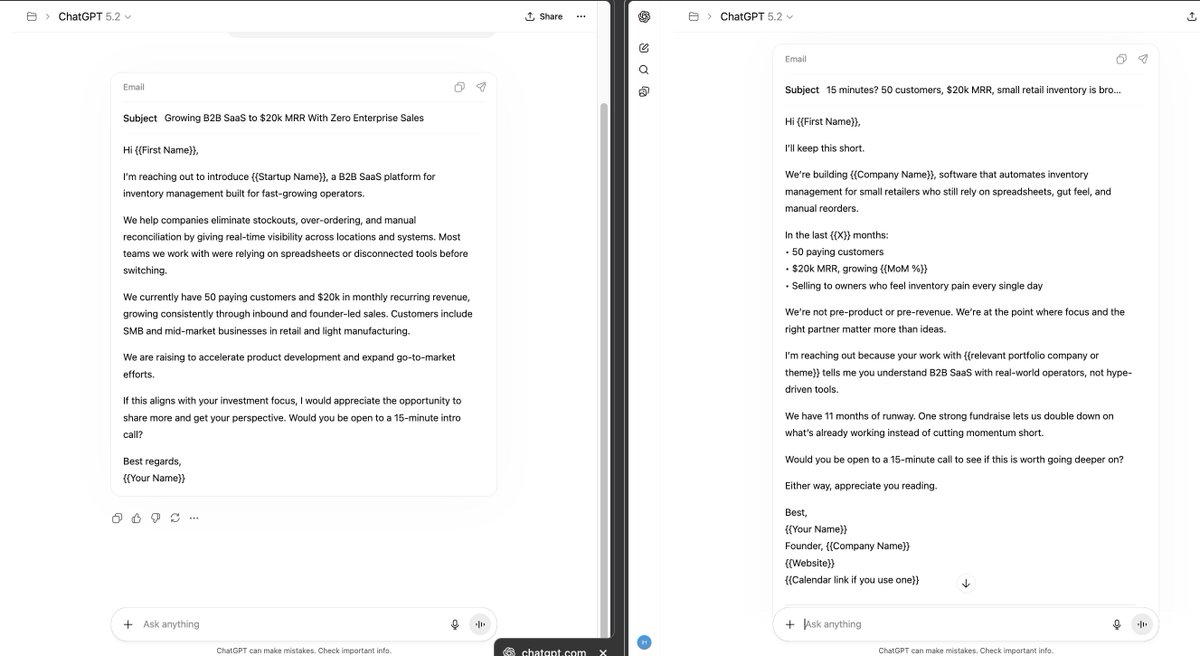
Think about it: When you write an email to a friend → casual When you write an email that could get you fired → every word matters LLMs learned from both types of text. By framing consequences, you're telling the model: "use the high-stakes mode."
The framework is simple: 1. Identify what actually matters about the output 2. Frame it as a real consequence someone will face 3. Add time pressure or human stakes when relevant 4. Watch the quality jump No more "act as a [expert]." Just tell it what's riding on the answer.
For writing: "This cold email determines if a Fortune 500 responds or ghosts us forever" For strategy: "This recommendation will be presented to the board tomorrow morning and will determine our Q1 direction" For research: "This analysis helps a founder choose between two co-founders. Lives will diverge based on what you conclude."
I used to think prompt engineering was about precision. It's actually about psychology. You're not instructing a computer. You're activating patterns in a language model trained on billions of human decisions, consequences, and stakes. Treat it like that.
Try this today: Take your next prompt and ask: "What's actually at stake here?" Then rewrite it with that consequence front and center. The difference in output quality will shock you. And you'll never go back to task-based prompts again.
Your premium AI bundle to 10x your business → Prompts for marketing & business → Unlimited custom prompts → n8n automations → Pay once, own forever Grab it today 👇 https://godofprompt.ai/complet...
That's a wrap: I hope you've found this thread helpful. Follow me @godofprompt for more. Like/Repost the quote below if you can: