
Did Jesus Historically Claim To Be God? 📚 A Thread 🧵 #christianity #bible #biblicalstudies #jesus
Context (1/2)📚 To be clear, I am not arguing for or against anyone's beliefs and this thread is not to be taken with bad intentions. I wanted to expand on Prof. Dale Allison's interview, where he explains how Jesus never claimed to be God. Now, he is a Christian. So people
Context (2/2) 📚 For example, many people simply spammed irrelevant verses trying to argue that it is evidence for Jesus historically claiming to be God. I will be using this thread as a mega-thread to dispel any form of misinformation that doesn't discredit biblical studies in
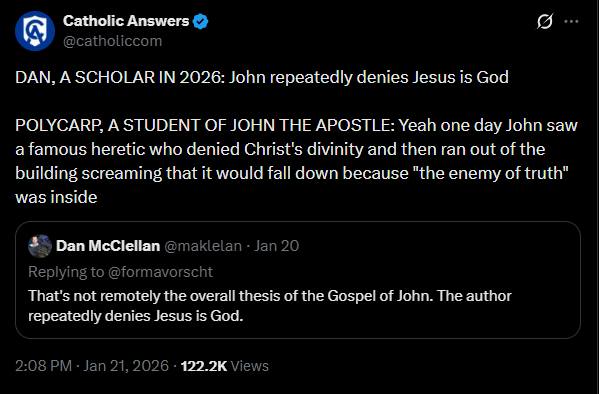
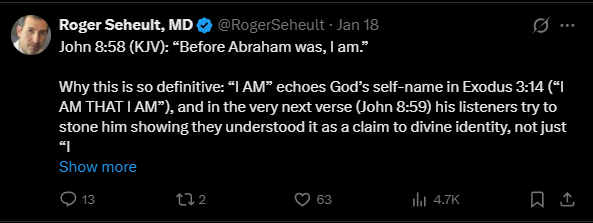
Common Arguments 📚 Consistently, people will use verses like John 1:1, John 10:30, John 8:58 as evidence that Jesus claimed to be God. There are other verses in Revelation, Matthew, and other letters that I will also talk about.
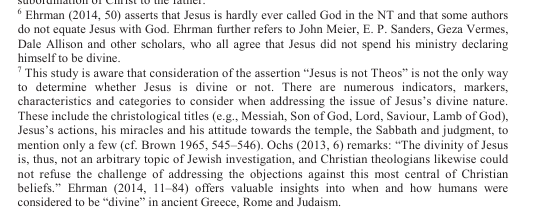
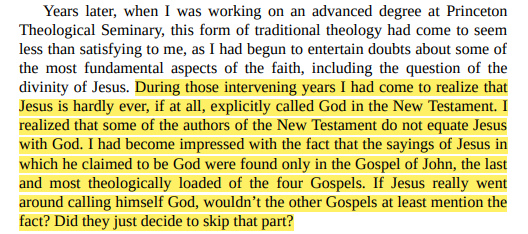
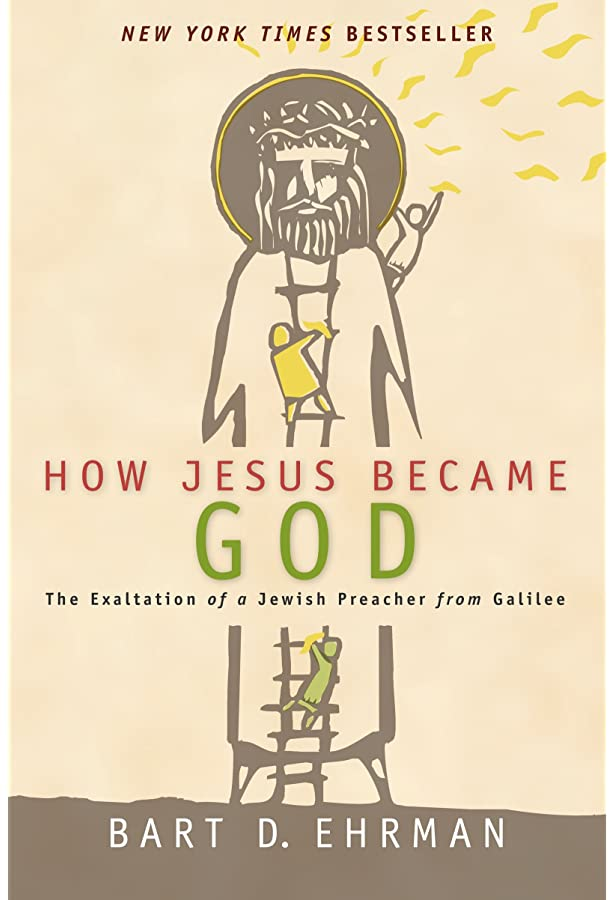
What do scholars believe?📚 Ehrman (2014, 50) asserts that Jesus is hardly ever called God in the NT and that some authors do not equate Jesus with God. Ehrman further refers to John Meier, E. P. Sanders, Geza Vermes, Dale Allison and other scholars, who all agree that Jesus did
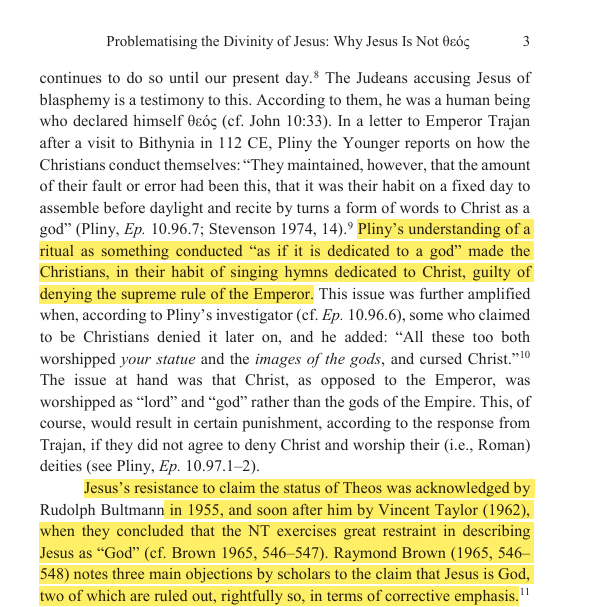
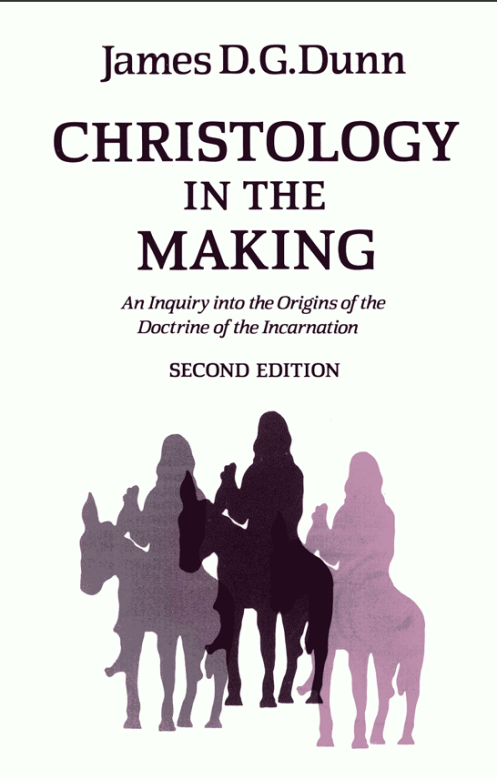
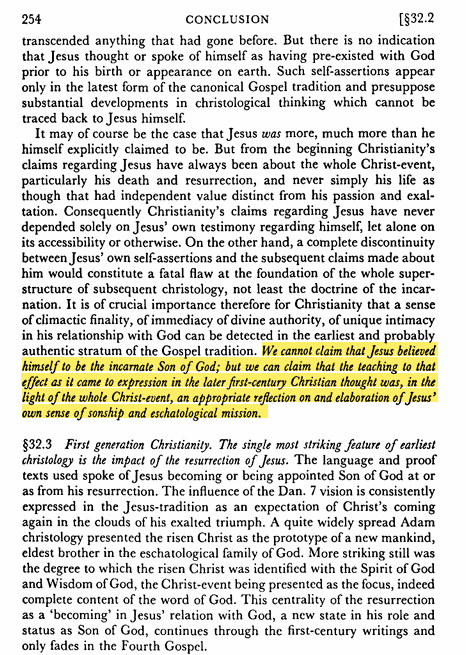
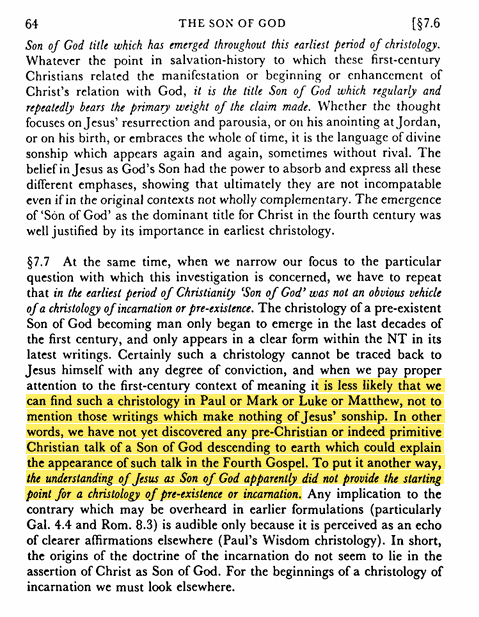
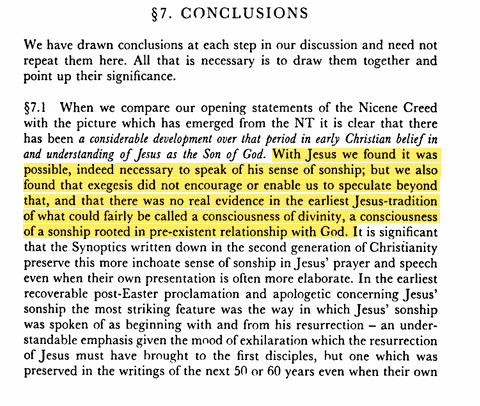
From James D.G. Dunn: "We cannot claim that Jesus believed himself to be the incarnate Son of God." "Only in the Fourth Gospel can we speak of a doctrine of the incarnation." Matt. 11.27 also does not mean Jesus is God and should be interpreted as Jesus representing Israel in
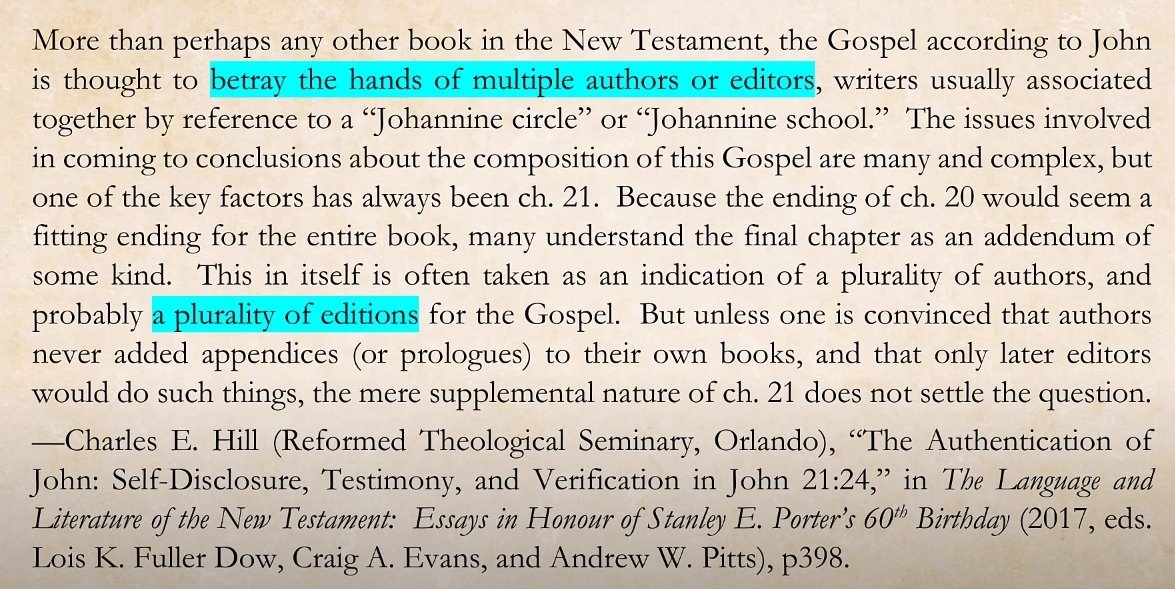
John 1.1 as evidence of Jesus claiming to be God? (1/2)📚 For context about the gospel of John: - (1) It is not authored by an eyewitness. - (2) It was likely composed of multiple authors redacting and composing in stages. - (3) It was likely composed 50+ years or more after
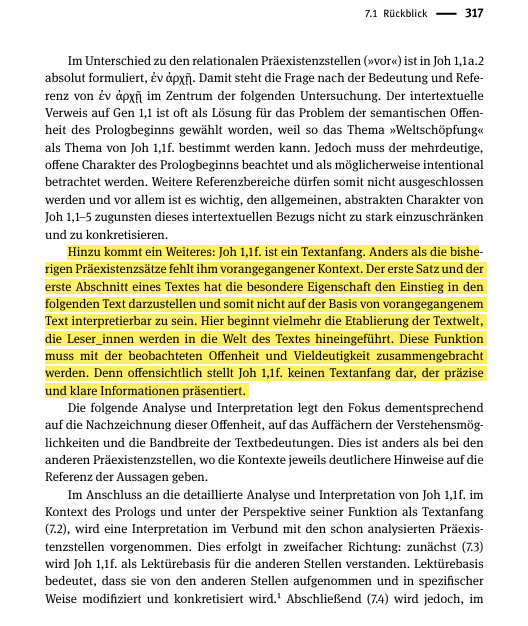
John 1.1 as evidence of Jesus claiming to be God? (2/2)📚 Furthermore, John 1:1-2 might not refer to preexistence in a straightforward or exclusively temporal sense: - John 1:1-2 uses the phrase "en archē ēn" ("in the beginning was") to describe the Logos. Unlike other


John 8:58?📚 (1/2) This verse does claim that Jesus is God, but Jesus never historically said this. The reasons being: - (p1) assuming that the gospel of john is the latest gospel, after gMark, gMatthew, and gLuke. This is generally what both modern and even traditional
Why is John’s Gospel so problematic? From Prof. Crossley/Myles 📚 The gospel of John differs greatly from the Synoptics (Mark, Matthew, Luke) and scholars consider it to be mainly unhistorical. The gospel of John is of limited use for the historical Jesus and scholars don't
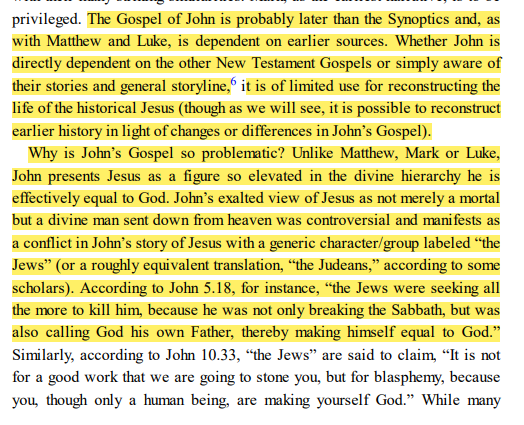
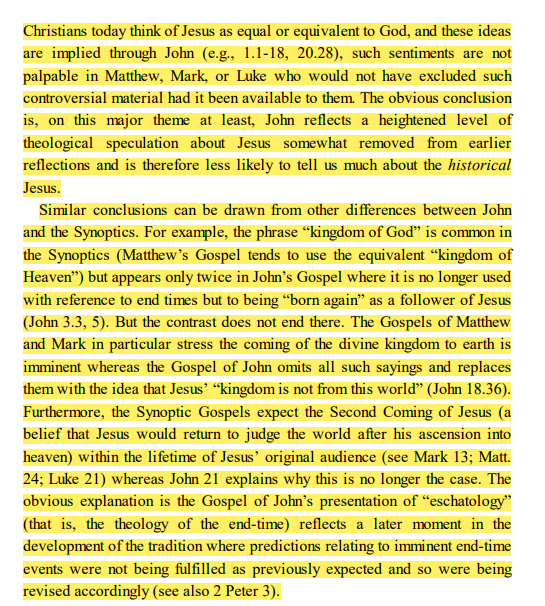
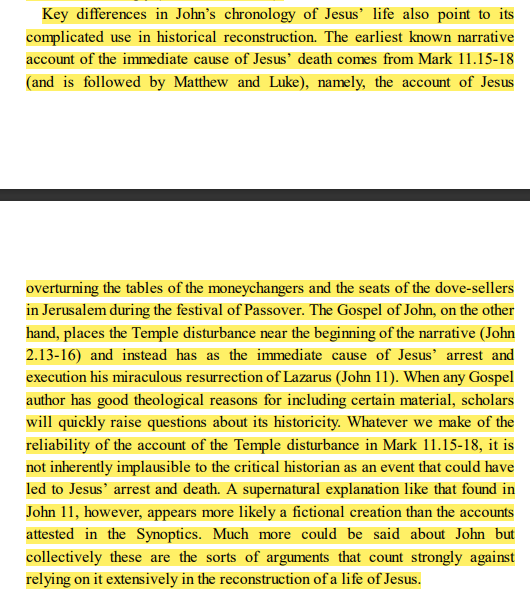
Gospel of John is Theological; Not Historical📚 The Fourth Gospel, compared with the Synoptic Gospels, has been viewed as theologically composed rather than historically oriented (W. F. Albright, From the Stone Age to Christianity, 2nd ed. (Baltimore: The John Hopkins Press,

John 10:30? (1/2)📚 Same with the reasons as John 8:58 - - (1) From The Five Gospels (Funk, Hoover, 1993, Harper Collins): "John 10:30: ranked as not going back to Jesus, due to the "voice" and having no common ground with the aphorisms and parables of Jesus found in the
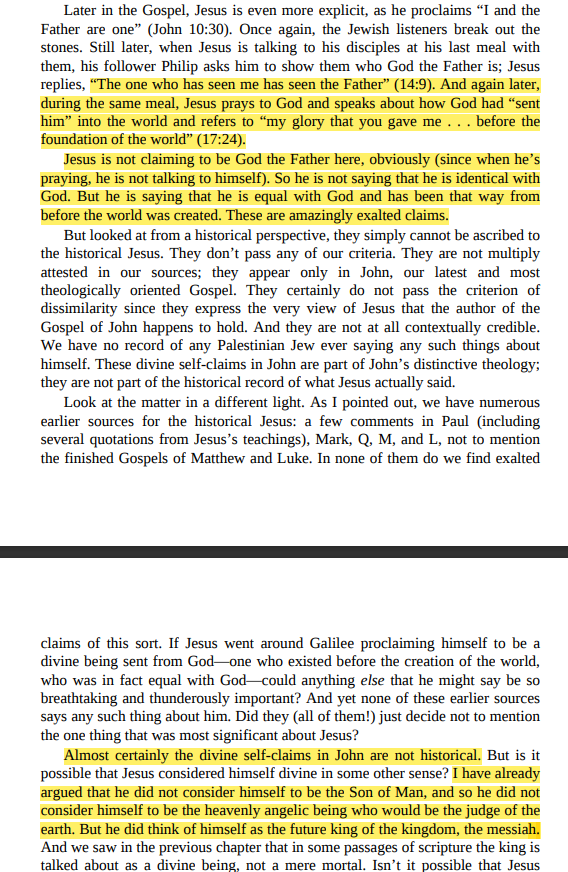
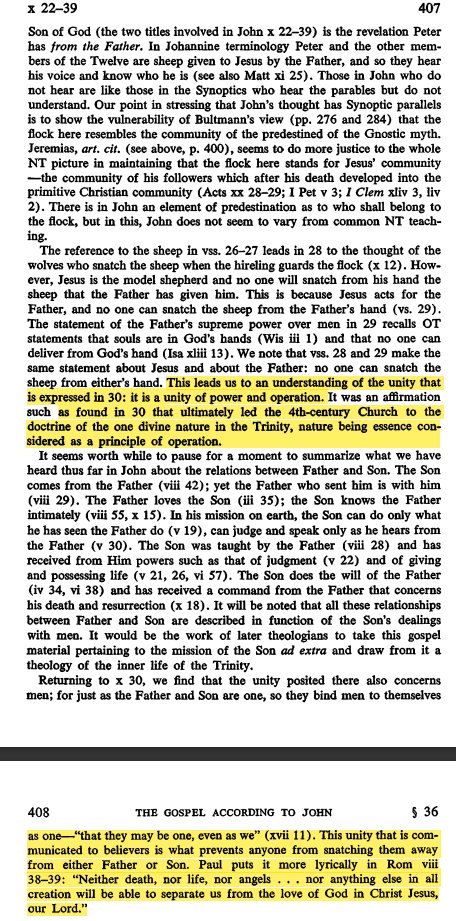
John 10:30? (2/2)📚 It is possible to not read it as a divinity claim. "We note that vss. 28 and 29 make the same statement about Jesus and about the Father: no one can snatch the sheep from either’s hand. This leads us to an understanding of the unity that is expressed in 30:

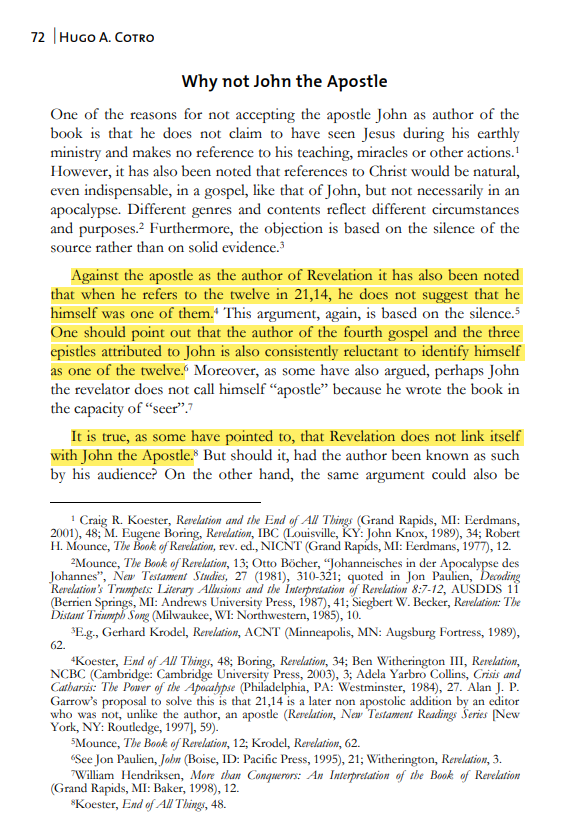
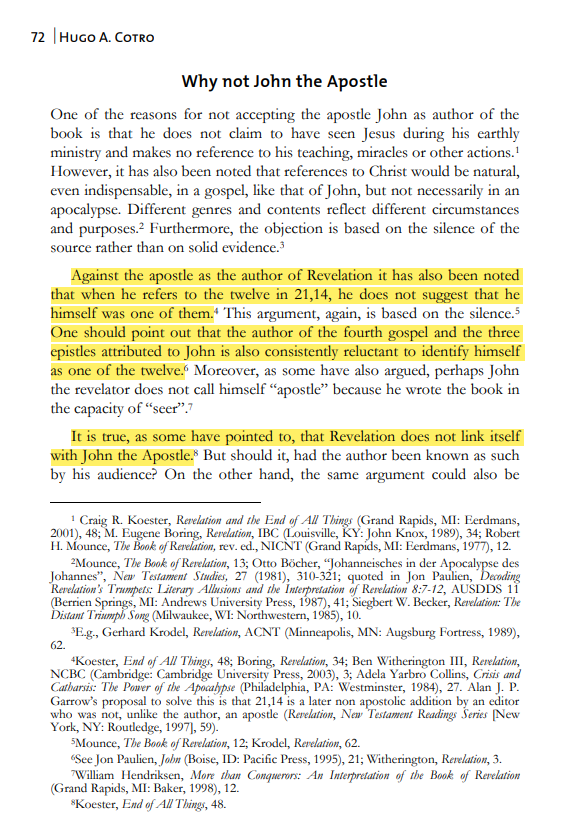
“The First and the Last” (Rev 1:17; 2:8)?📚 A divinity claim yes, but it isn't a historical saying of Jesus nor is it by an eyewitness of Jesus. (It is not by John but by a different John).


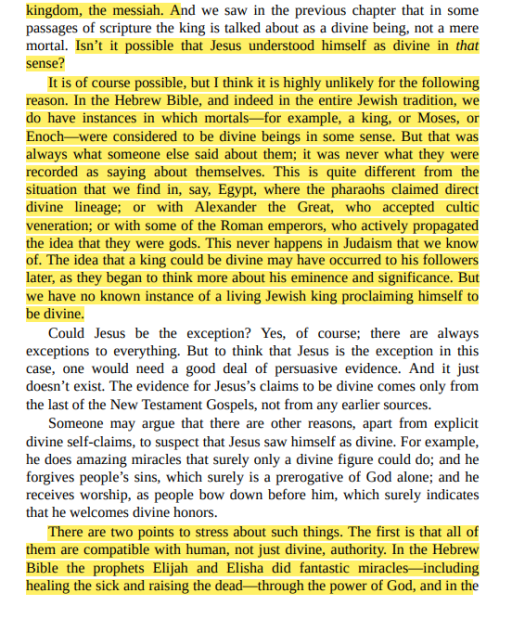
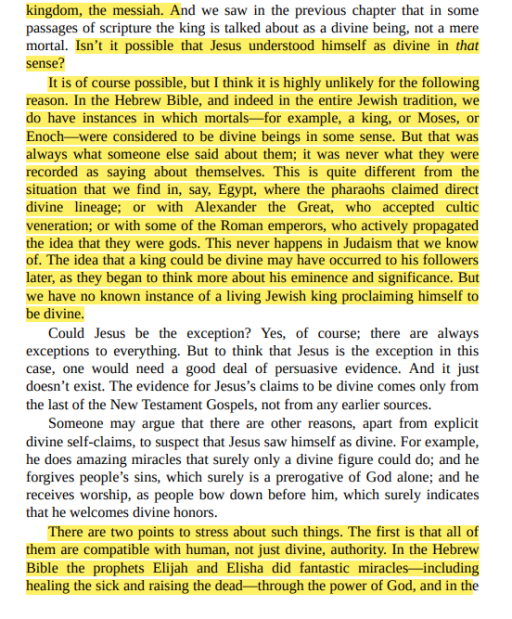
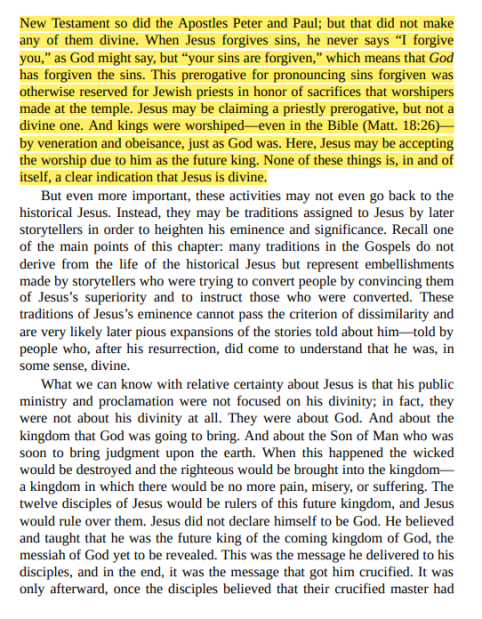
Forgiving Sins?📚 In the Hebrew Bible the prophets Elijah and Elisha did fantastic miracles—including healing the sick and raising the dead—through the power of God, and in the New Testament so did the Apostles Peter and Paul; but that did not make any of them divine. When Jesus

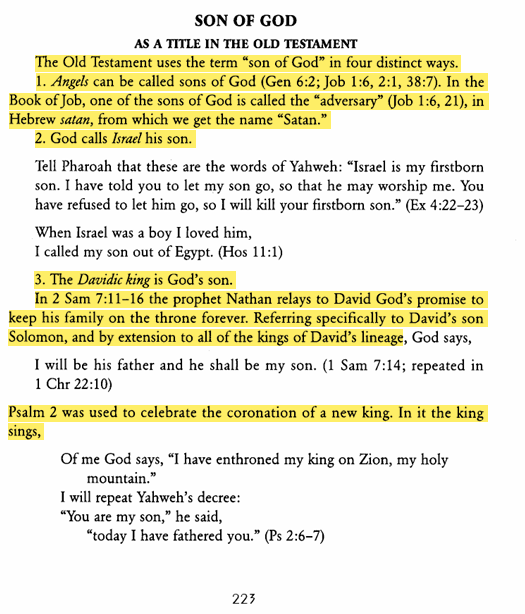
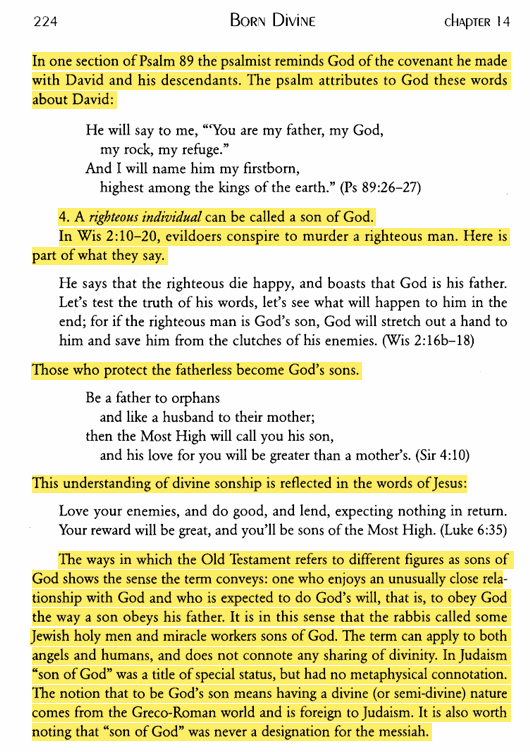
Son of God?📚 The Old Testament uses the term "son of God" in four distinct ways. - (1) Angels can be called sons of God. (Gen 6:2; Job 1 :6, 2:1, 38:7). In the Book of Job, one of the sons of God is called the "adversary" (Job 1:6, 21), in Hebrew satan, from which we get the
Proskuneo?📚 Some people claim that Jesus is God in gMatthew because some people bow down to him. Proskuneo simply means to bow down. I can bow down to a king without actually worshipping them, bowing down was just shown as a sign of respect or to someone with a good authority.
Mark 1:2-3?📚 People misread this and thinking it's calling Jesus God. That's not true. Davis, C. J. (1996). The Name and Way of the Lord: Old Testament Themes, New Testament Christology, identification of "the Lord" with Jesus is actually not explicit in the text but instead

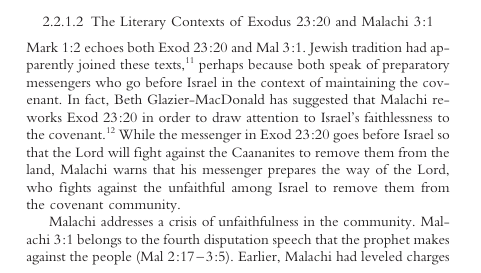
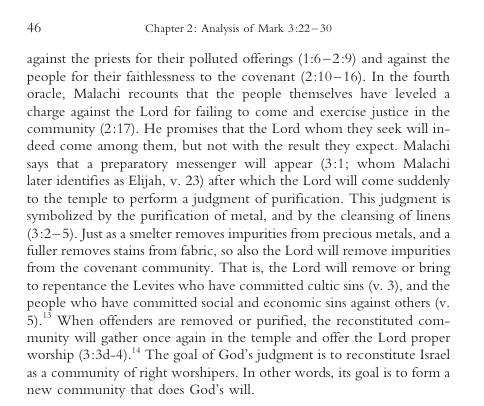
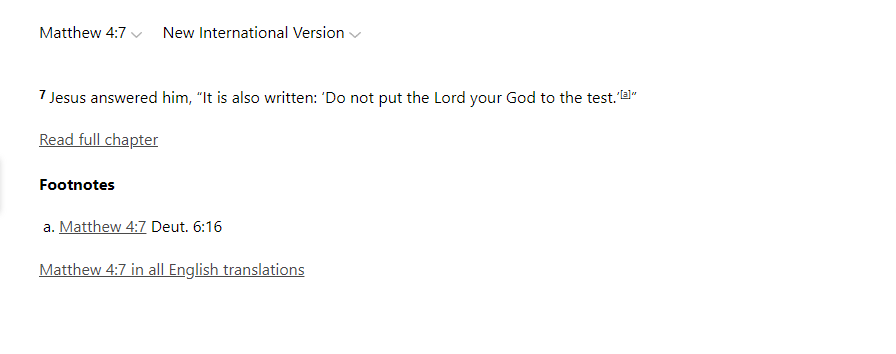
Matthew 4:7?📚 It essentially talks about Satan attempting to "tempt" Jesus, Jesus then states "Jesus said to him, “Again it is written, 'You shall not put the Lord your God to the test.'' It's a parallel verse that follows to Deuteronomy 6:16. Notice how Deuteronomy 6:16 is

Anything Else? + Conclusion📚 I probably missed perhaps a few more verses in which people use to claim that Jesus historically claimed to be God. If there is any, please let me know. Keep in mind this is different than whether or not an author believed Jesus is God. Again, no