
Lowering stress is essential to optimal health. Let’s talk about how to use your breathing to do so, and what this tells us about stress in general. [Thread]
This thread will be based off of our YouTube video that is premiering now, which is a more in depth and visually pleasing presentation of this information. Go check it out! https://youtu.be/qG1BgsFJPdo
It’s very important to understand that energy is the yin to stress’ yang. Stress can be thought of as the adaptive response to energy demands that are not being met. Things that increase energy production, specifically in the mitochondria, tend to lower stress.
Our mitochondria require oxygen (O2), obviously, in order to produce energy. However what you may not know is that in order to get oxygen into tissues, you need sufficient carbon dioxide (CO2) production. https://www.youtube.com/shorts...
This is probably the main reason why people who live at higher altitudes are exceptionally healthy. The amount of CO2 in the atmosphere relative to O2 is increased, which results in more O2 being delivered to tissues for energy production. http://raypeat.com/articles/ag...
However, we can harness this property without moving to the mountains. Breathing into a bag is able to provide a similar effect, giving us more CO2, and thus energy. Anxiety and panic are driven by adrenaline, and CO2 seems to play a key role too. https://pubmed.ncbi.nlm.nih.go...
I’ve used this quite a bit myself, and as goofy as it sounds, it’s really helpful when you’re in a pinch. https://x.com/Outdoctrination/...
However, if you aren’t too keen on looking like a bit of a freak momentarily for some extra carbon dioxide, we’ve got you covered.
The simplest place to start in terms of breathing is picking the correct entrance. The nasal route increases the relative amount of carbon dioxide produced and retained, meaning greater systemic tissue oxygenation and energy production. https://pubmed.ncbi.nlm.nih.go...
Next is ensuring the proper route for your respiration. There are two primary ways to breathe: thoracic + diaphragmatic breathing. Thoracic breathing is driven by the “accessory muscles” of respiration, while diaphragmatic breathing results in a deeper, more complete breath.
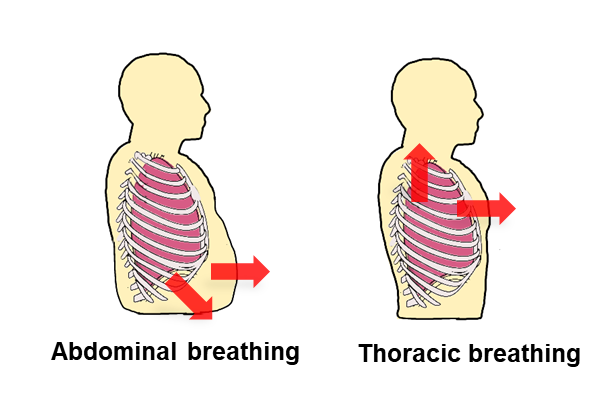
Diaphragmatic breathing is also known as belly breathing, because when you’re doing it correctly it feels like your belly gets filled with air. This is the best way to ensure you’re getting the most out of your breathing, in my view.
The theme of effective breathing methods seems to be slow exhales. For example, traditional yoga breathing practices have been heralded for thousands of years for their ability to lower subjective stress and overheating, and these practices typically emphasize a slow exhale.
The reason behind this, again, is CO2! Yoga breathing practices have been shown to increase CO2 production/retention, and consequently lower subjective stress and raise energy expenditure: https://pubmed.ncbi.nlm.nih.go...
Diaphragmatic breathing seems to be able to do the same, but is even more powerful! In this study subjects boosted energy expenditure by over 20% using this breathing method! https://pubmed.ncbi.nlm.nih.go...
A great review in 2015 proposed breathing techniques as primary treatment for anxiety, laying out a mechanistic framework. Anxiety and nervousness are mediated in large part due to the sympathetic nervous system and its associated stress hormones. https://pubmed.ncbi.nlm.nih.go...
One notable figure has actually trained his diaphragm in order to lower sympathetic tone and gain a competitive edge: https://www.nbcsports.com/baya...
Many other breathing techniques are able to dramatically decrease stress, such as the 478 method. In general, slow exhales and breathing through the nose promote CO2 retention and thus can lower sympathetic activity. https://x.com/zaidkdahhaj/stat...
If you have trouble breathing through your nose due to chronic congestion, increasing CO2 may just be your best bet to resolve it. CO2 nasal sprays have been efficacious in reducing this issue. https://pubmed.ncbi.nlm.nih.go...
In general, breathing techniques that allow for retention of CO2 should be helpful with this, including the Buteyko method: https://www.youtube.com/watch?...
@Outdoctrination A few months ago my doctor mentioned that the lungs must be very inefficient, since so much "stale air" stays in the lungs during each breath Minutes later he told me there is no evidence to support my vegetable oil avoidance That's the day I decided doctors are useless to me
@Outdoctrination Read the book BREATHE by James Nestor.
@Outdoctrination @threadreaderapp unroll
@Outdoctrination @threadreaderapp unroll
@Outdoctrination How much Baki g soda does 133 pound person take every day
@Outdoctrination @threadreaderapp please unroll
@Outdoctrination @threadreaderapp unroll
@Outdoctrination Will just taking baking soda also help with this?
@Outdoctrination If you know what you want on sport betting Then you ought to know this mafia @Markfixedtip I won't say much about him to you.........try him and thank me later