
It’s common to see pictures like this. A far cry from what most see today. The question is always, how? What were they eating? Was it because they ate less, and were were more active? The truth will shock you. Let’s take a look:

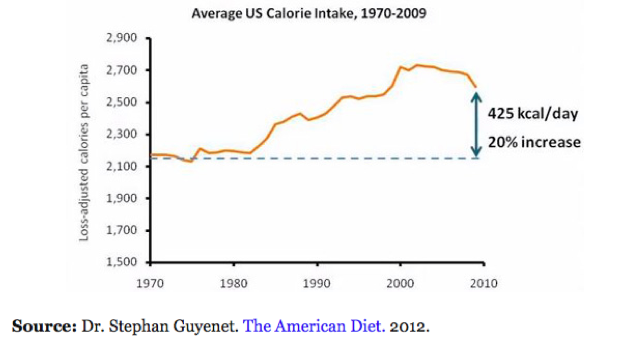
It's pretty well understood that obesity started skyrocketing in the 70/80s, and hasn't slowed down since. It's quite common to juxtapose this with a graph like this. See, it's just because we are eating more, right? WRONG How much did we eat before then?
1897-1916, Danish families were consuming >3,000 calories daily “it will be noted that the more well-to-do classes in the country, both in 1909 and in 1916, obtained a fair supply of energy, particularly when their restricted amount of muscular work is taken into account.”
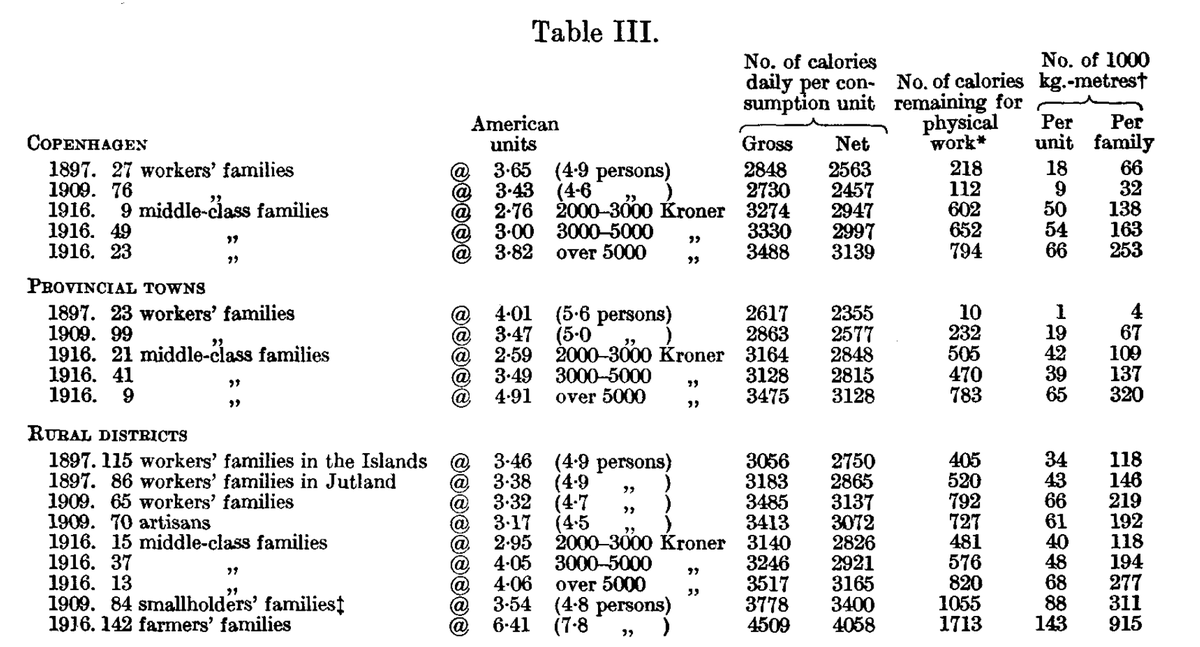
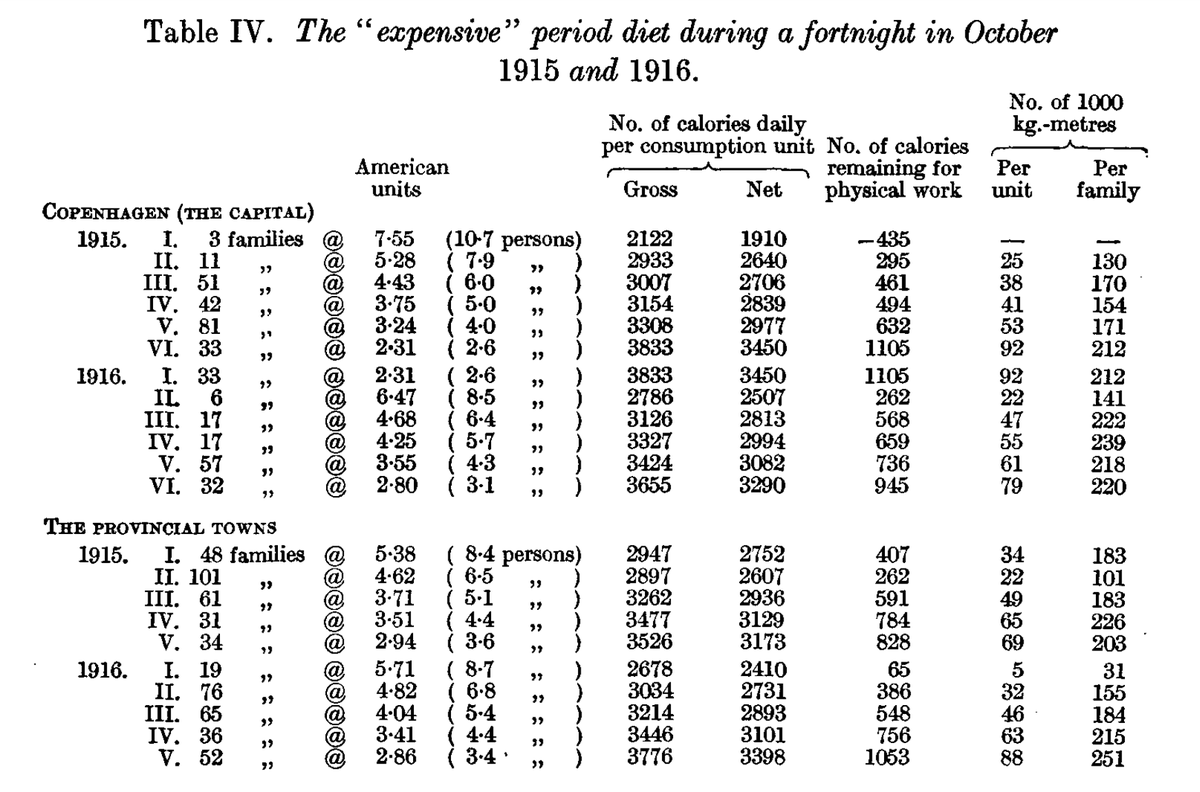
(1897-1916) “The most prosperous of the investigated families again reach the same level as the agricultural worker in their consumption of calories. One-half of these well-to-do families are doctor's families" the rich ate a lot, didn't move much, but were lean.
This was a common finding: the more money people made, the more they ate, and the less they moved, but they were not obese! In 1939, the US' book of agriculture shows that a moderately active male would eat ~3,500+ calories daily, and weighed around 154 pounds!
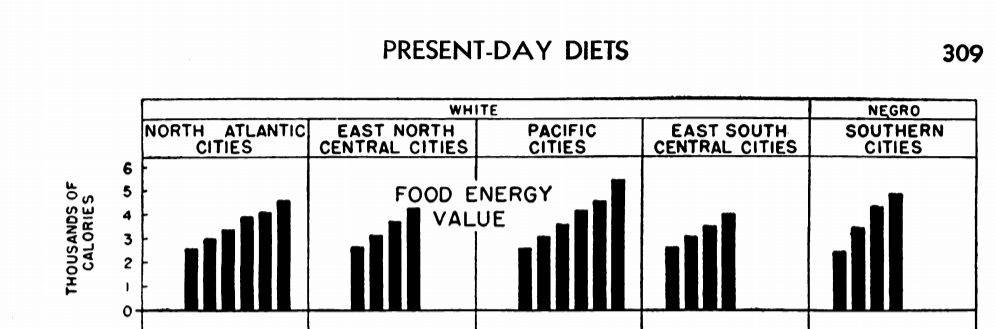

We also ate a LOT of sugar. In 1939 the US bought ~110 lb sugar/year per person, equivalent to around 140 grams of sugar daily! This doesn't even count the sugar from fruits and the carbs from vegetables, bread and potatoes, which there was a lot of!

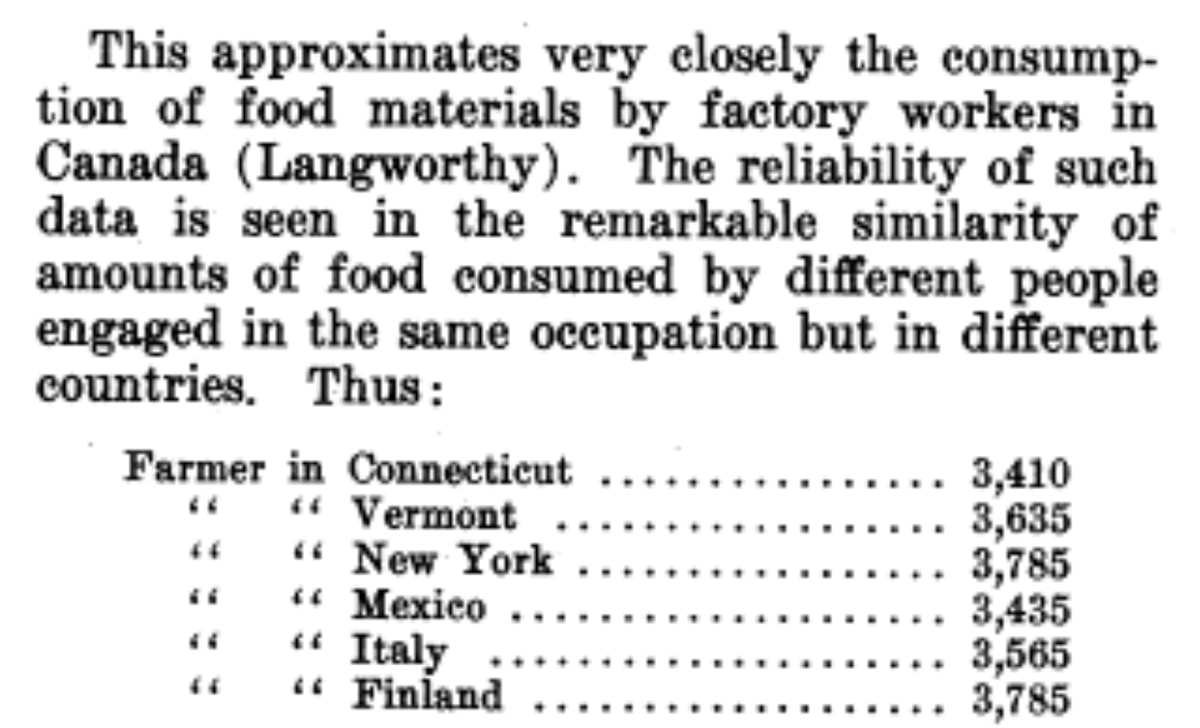
1938, farmers from various states and countries were recorded as consuming between 3,400-3,800 calories daily
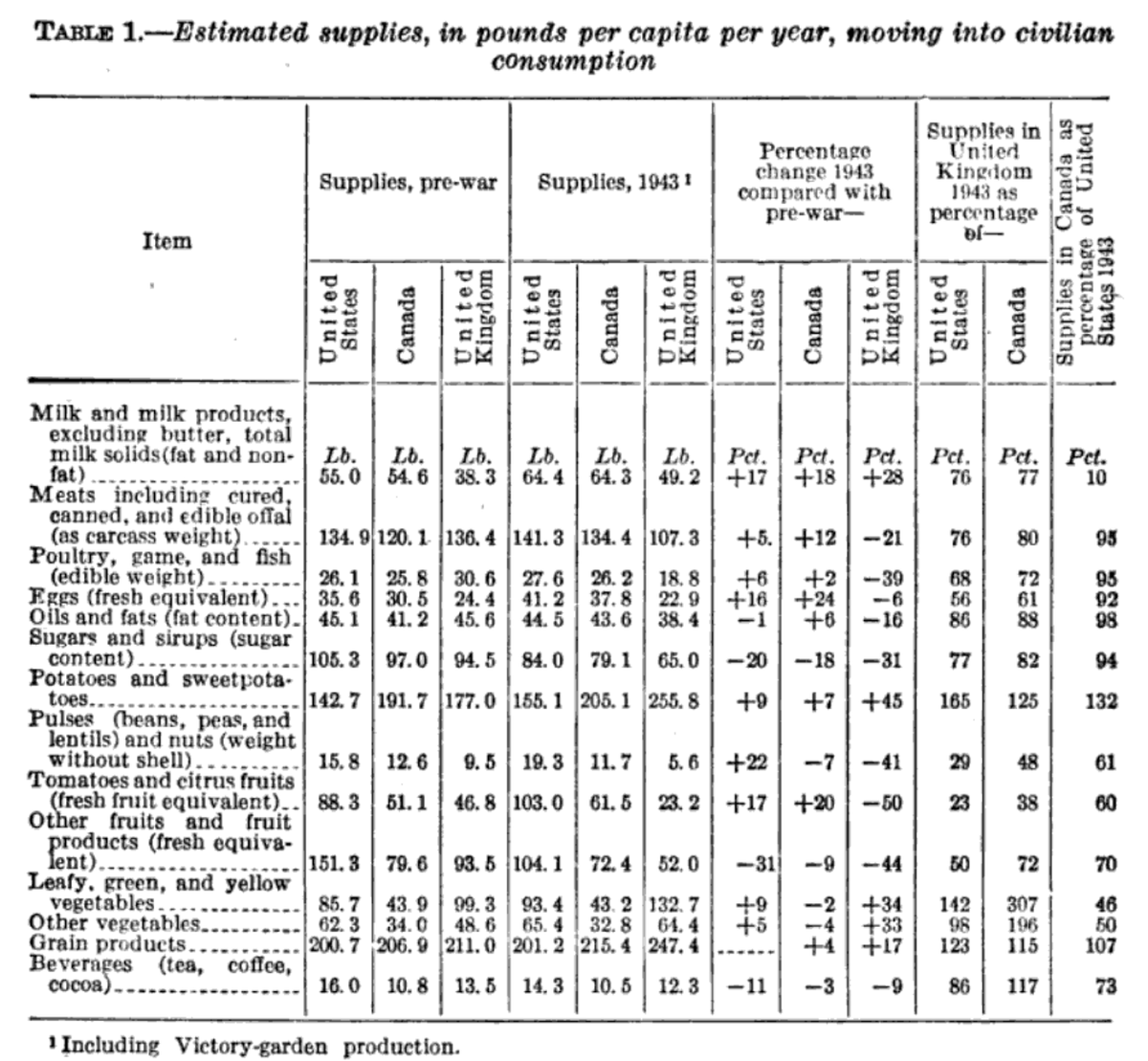
Here's some stats pre-WWII and in 1943. Again, the US were eating TONS of white sugar (100+ grams/day), lots of milk, meat, fruit, vegetables, potatoes and bread. Canada and the UK were similar. We were healthy.
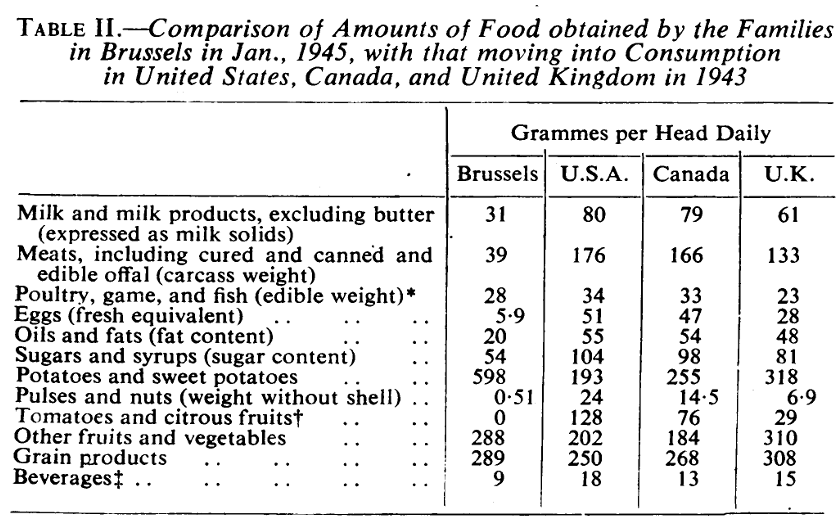
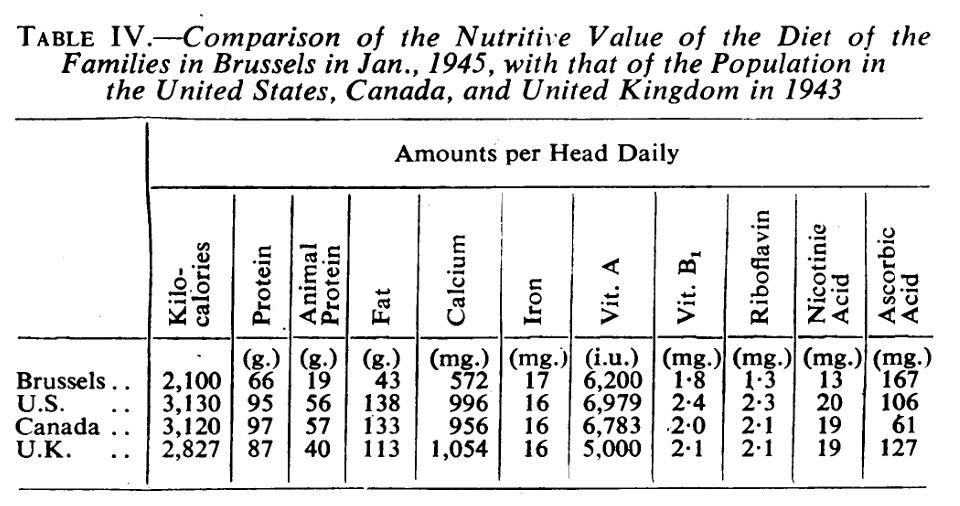
US, Canada, UK and Brussels food consumption in 1943-45. In the US, 3,100 calories, ~100 g protein, ~140 g fat, ~375 g carbs, ~100 sugar. Pretty high in fat too, but it was much better fat! Notice how the protein did not eclipse 100 grams despite this. Typical male was 154.
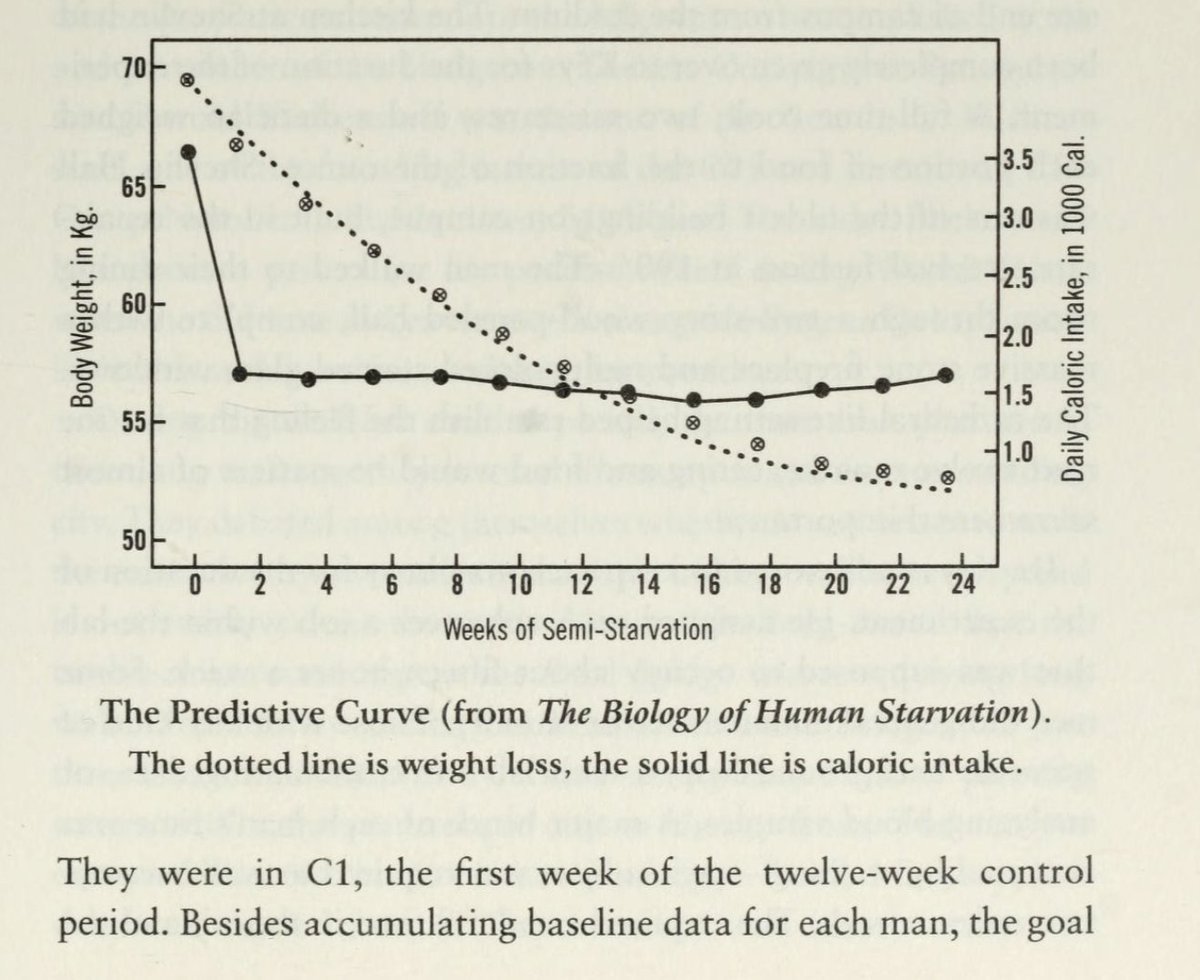
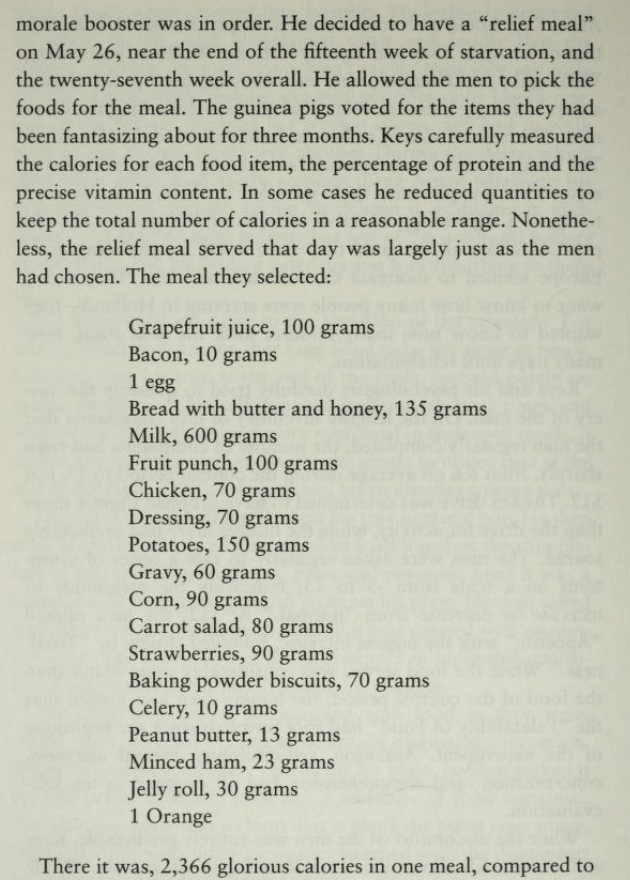
In the Minnesota Starvation Experiment, they housed the men and fed them at baseline to keep them weight stable. Again, late 1940s, the norm for a man was to weigh ~150, and eat well over 3,000 calories daily! But take a look at their preferred foods!
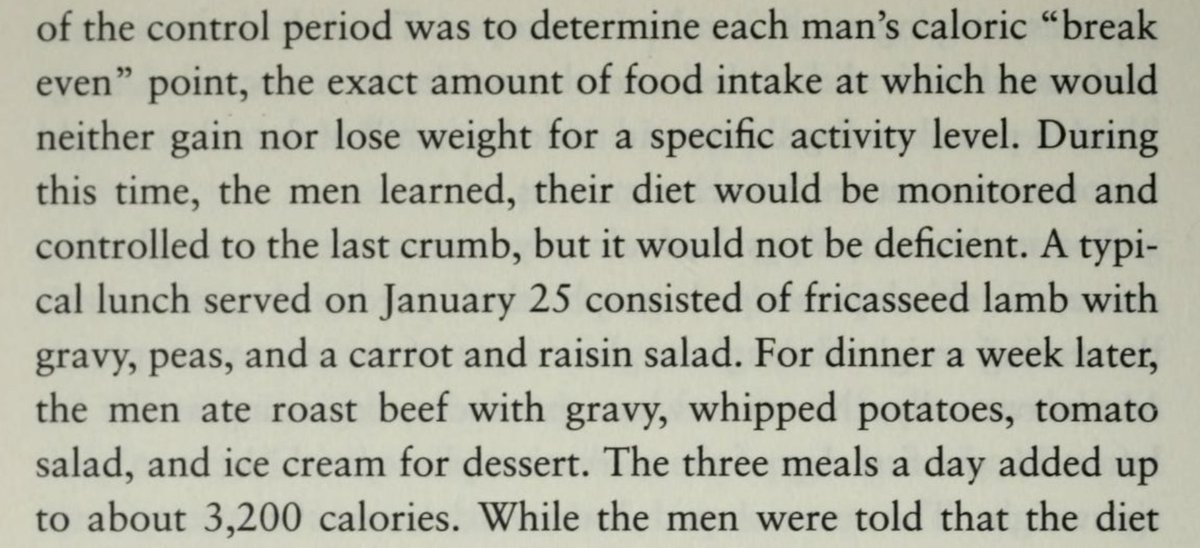
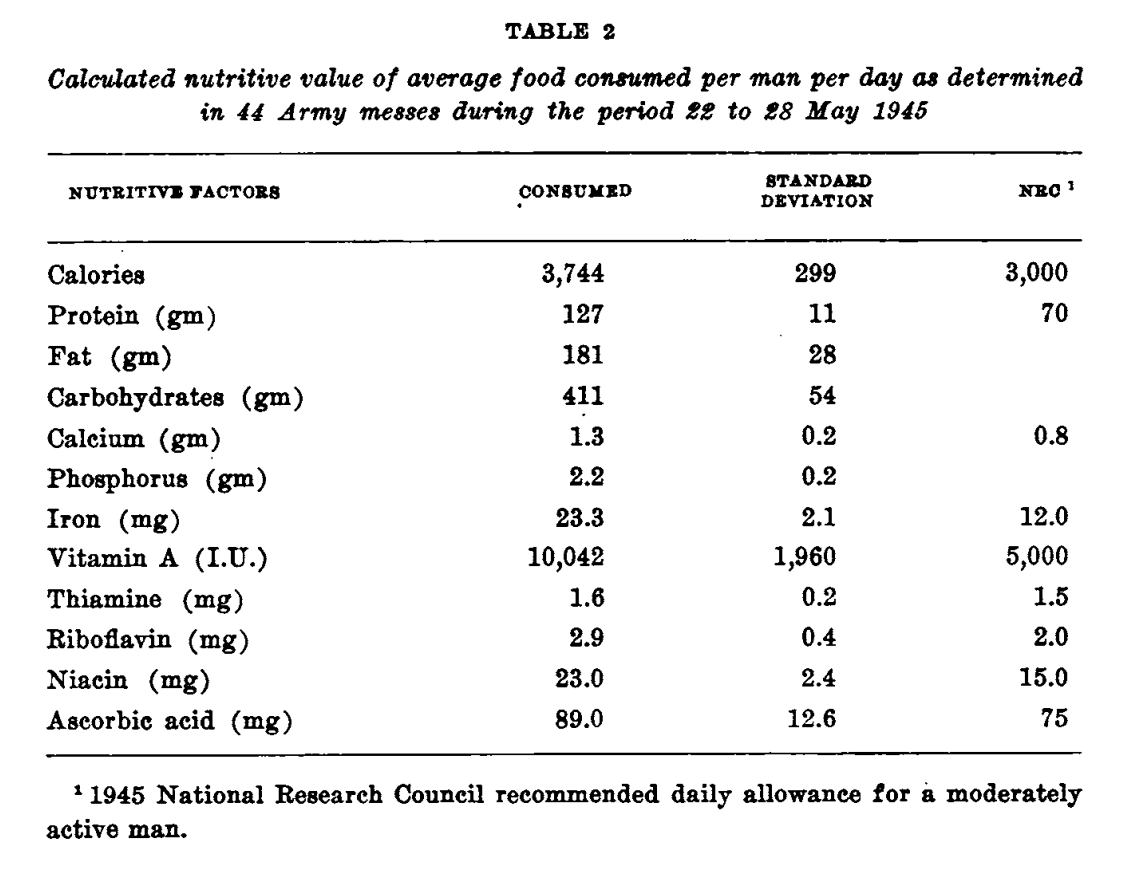
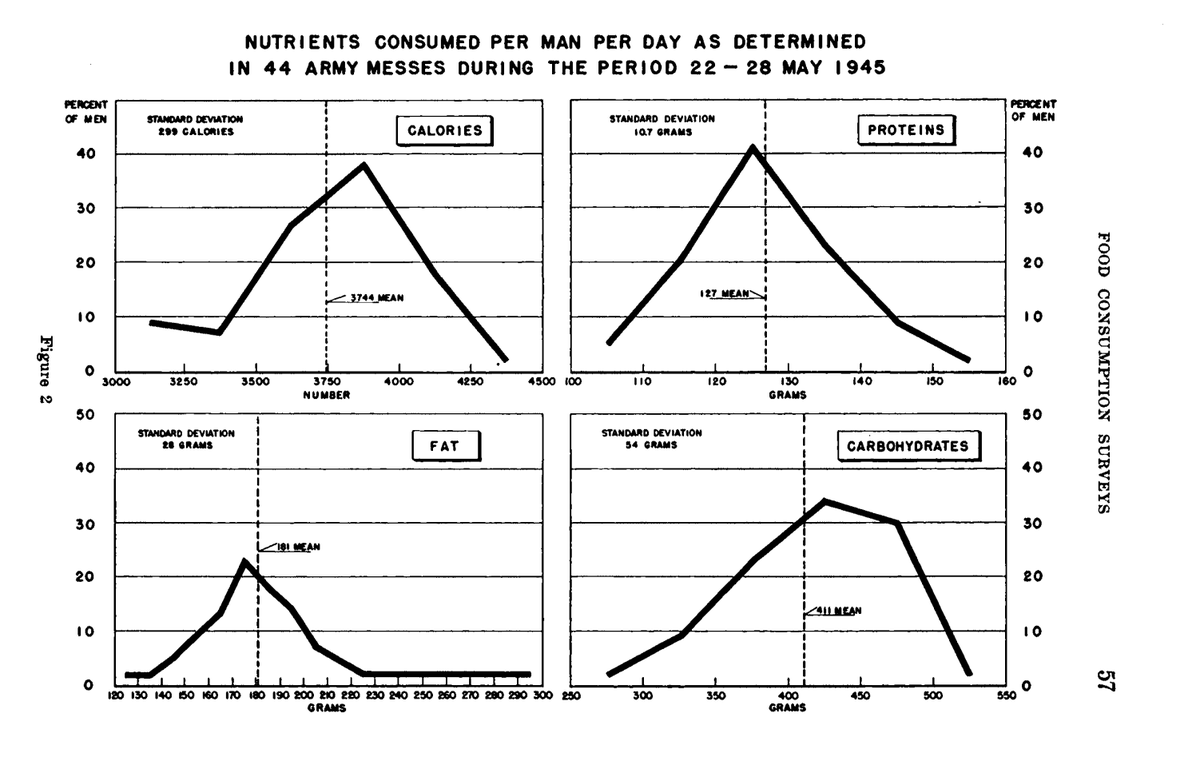
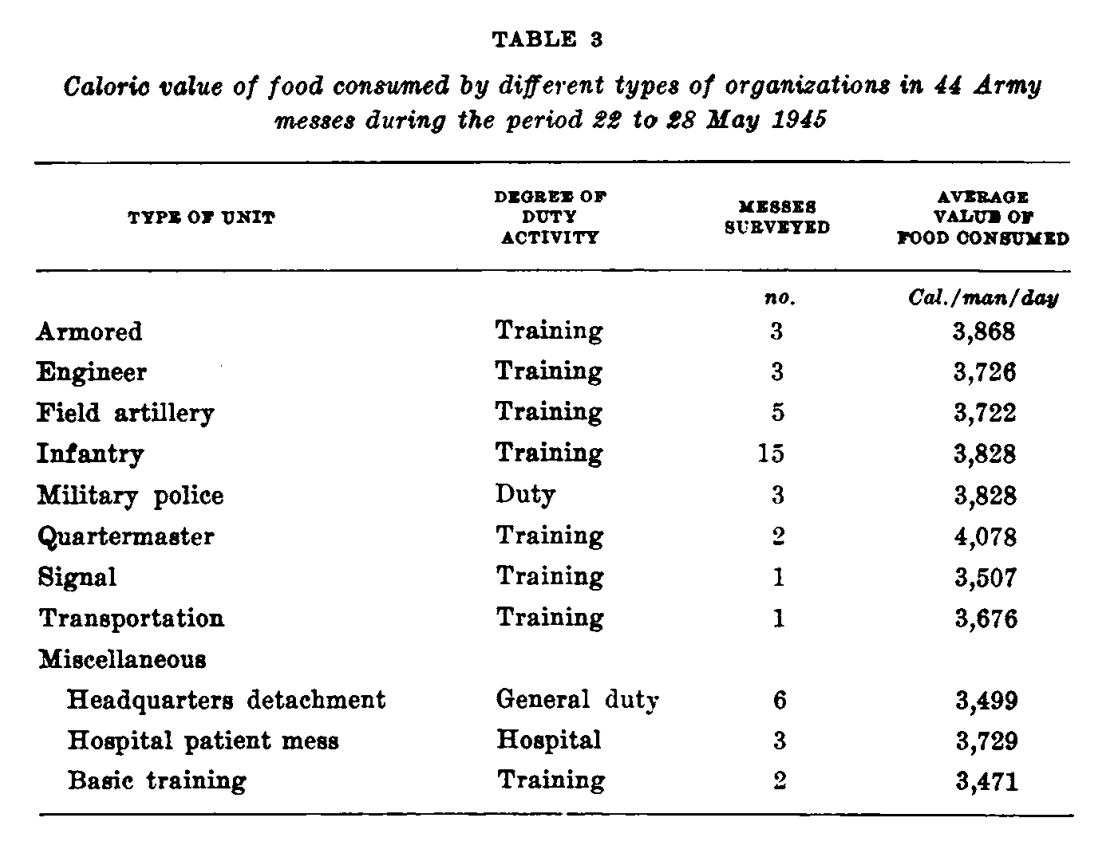
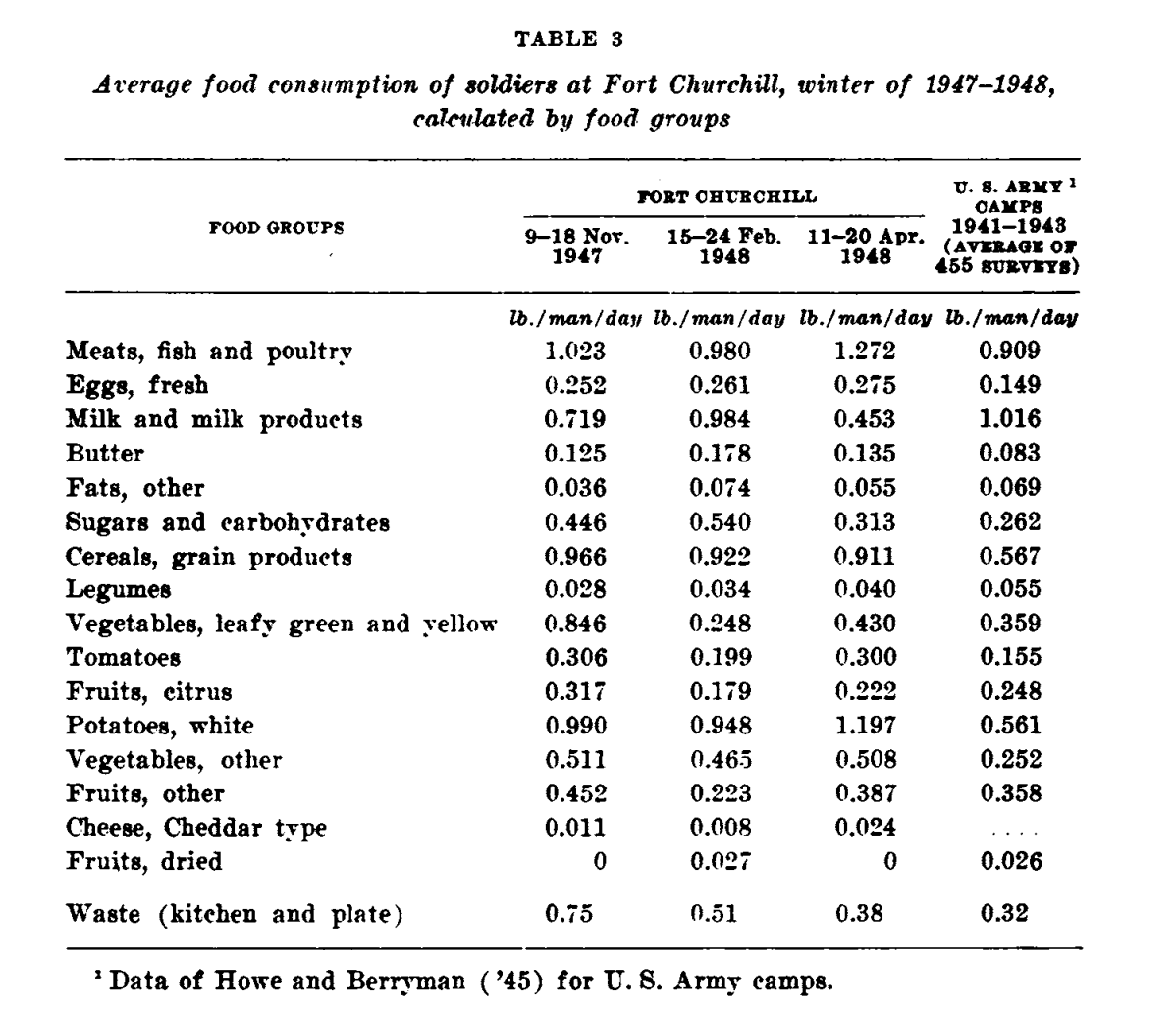
1945, US soldiers ate an average of 3,700 calories a day, over 400 g carbohydrate, 180 g fat daily. Importantly: “These figures indicate there was no significant variation of caloric intake with degree of activity of troops”
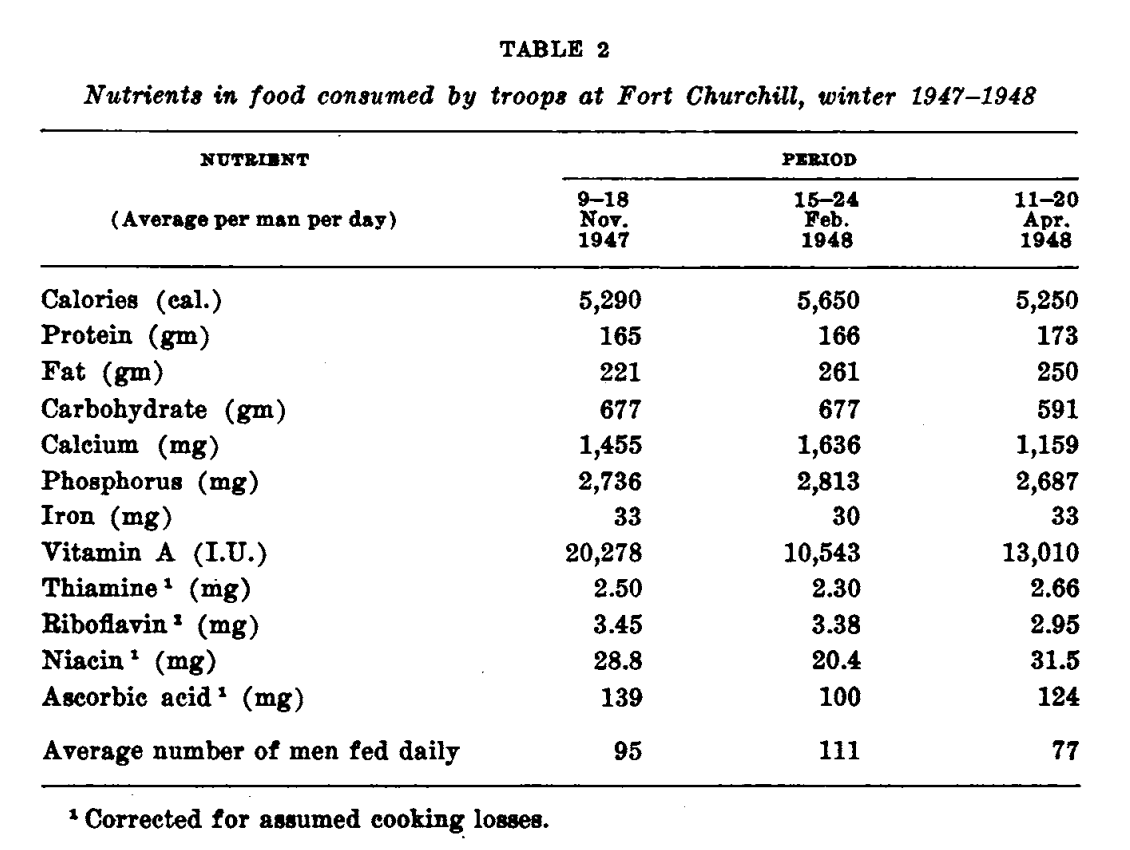
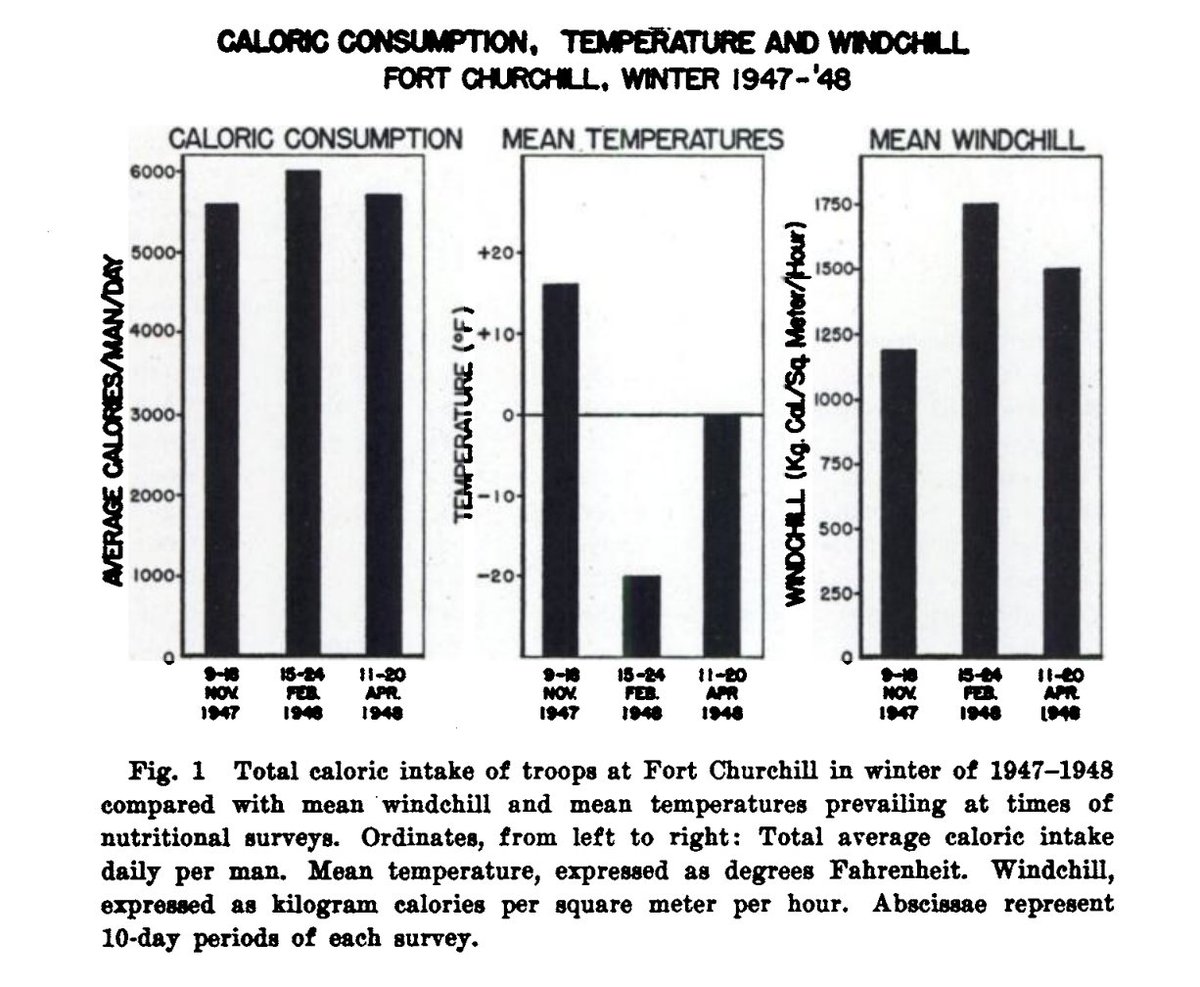
1947-48 is even crazier, troops were eating nearly 6,000 calories daily! They weren't working out like maniacs to "earn those calories" either! “judging by interrogation and observation, the average man was moderately active and spent about three hours daily in the open.”
The soldier ate more when it got colder, likely to increase the metabolic rate and heat production adaptively. These food estimates, gorging on milk, meat, bread, potatoes and sugar for 5,000+ calories a day, were pretty consistent throughout the 1940s.
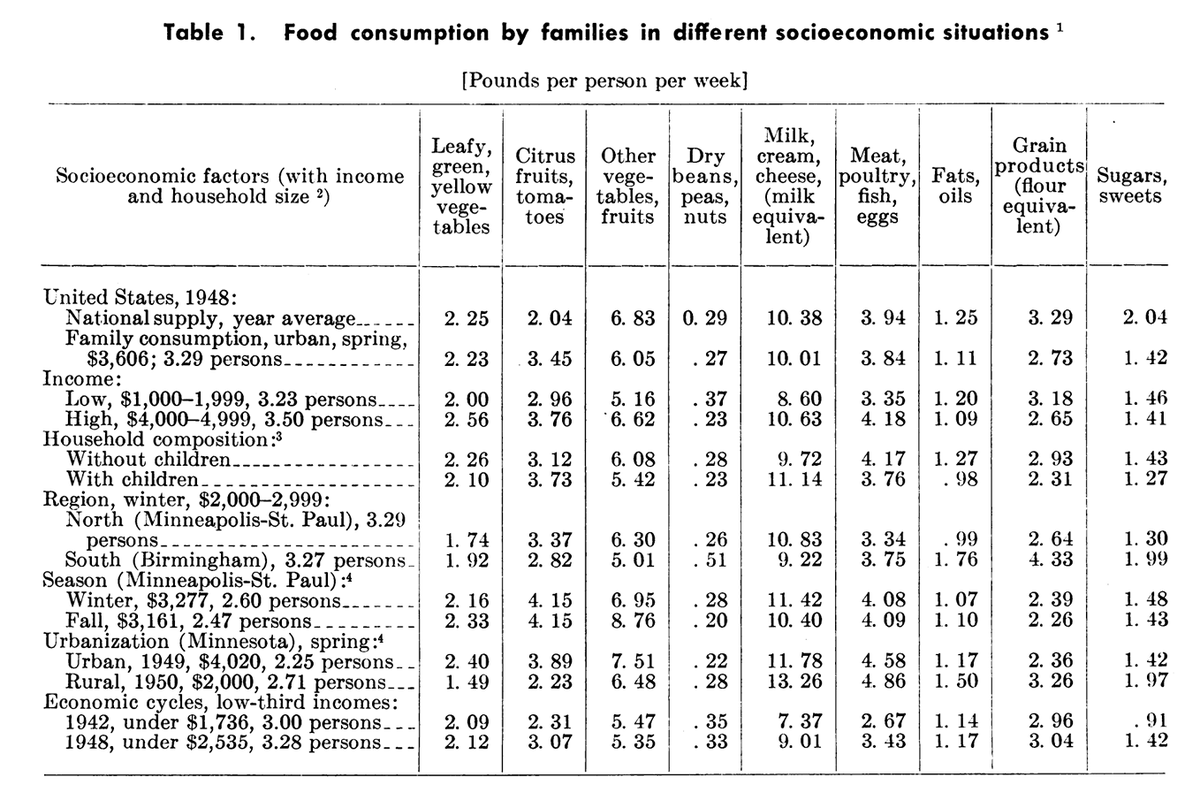
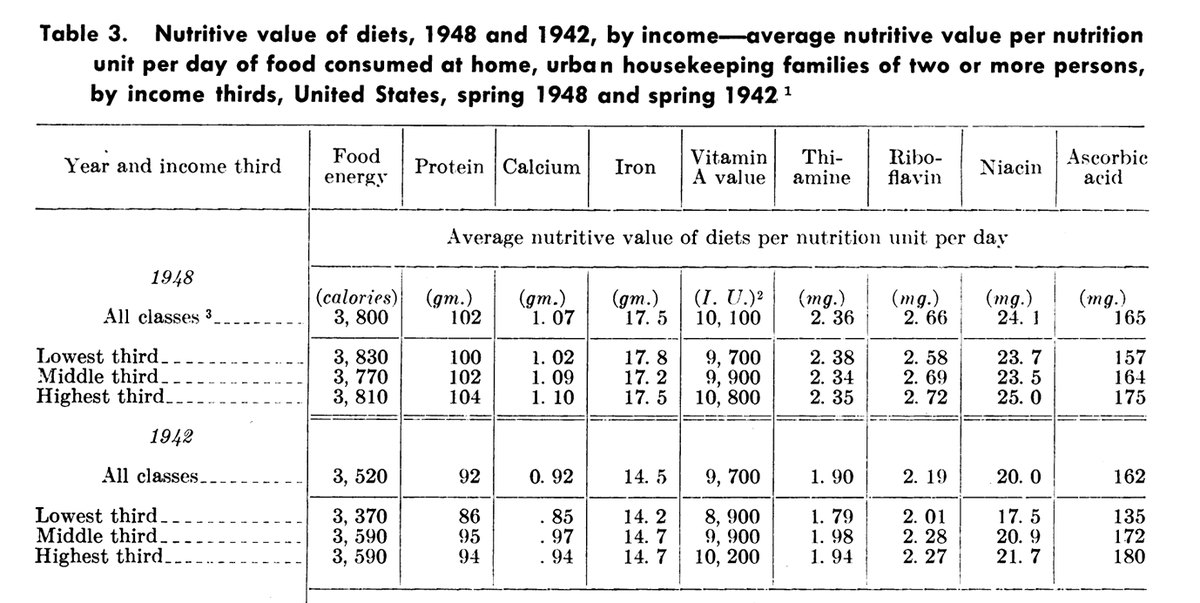
In 1942 and 1948, again we see that the wealthiest folks would eat the most despite moving the least. In 1942, the average was around 3,500 calories, while in 1948 it was up to around 3,800 calories! 1-2 pounds of white sugar per week! We were not sick! We were not fat!
England, 1954. Factory workers consistently ate over 3,200 calories per day, even non-active workers like the glorious roles of “filler (tooth brushes), rotary-machine operator, and polisher.”
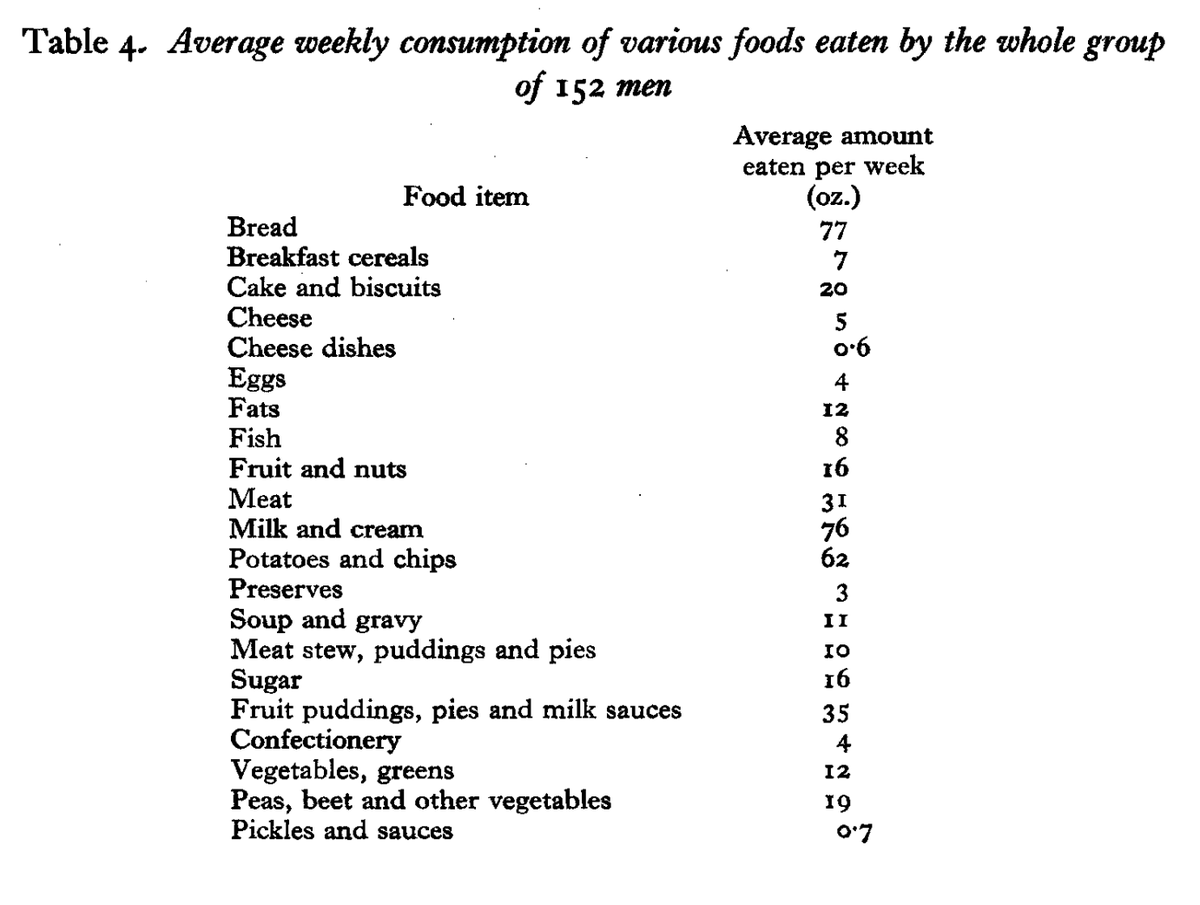
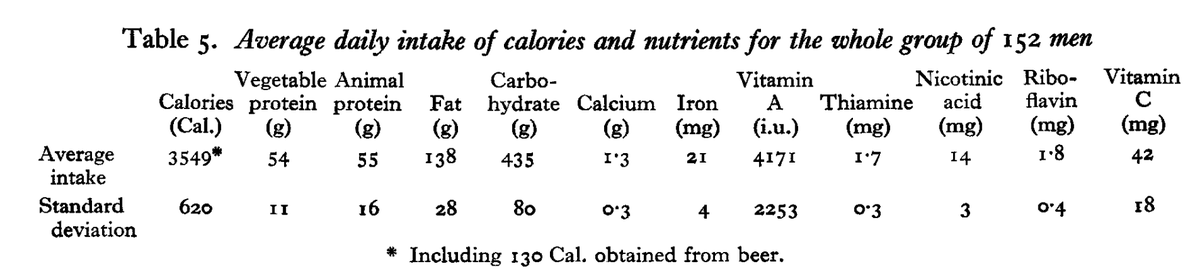
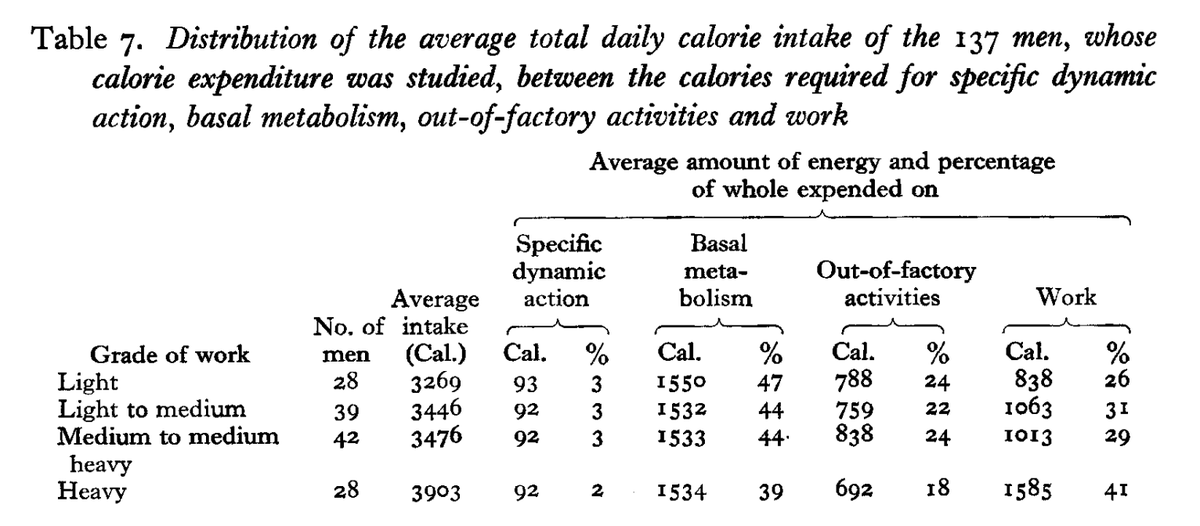
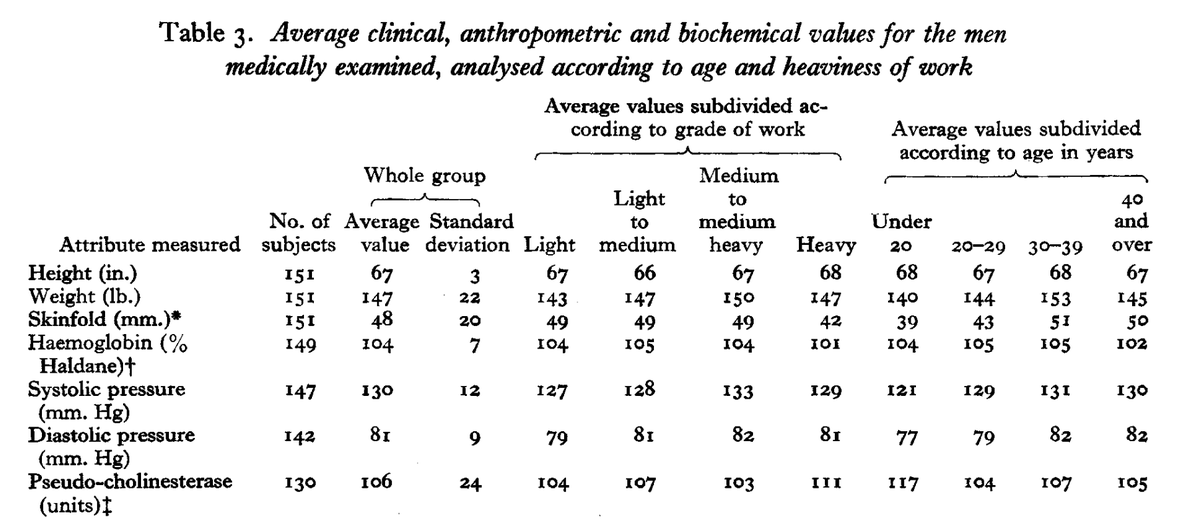
They also mention: “A previous pilot study (Ministry of Health, 1950) showed that calorie intake did not on the average vary between groups of men doing work of different degrees of activity” Average man was 5'7 and 147 lbs. 3,500 calories a day.
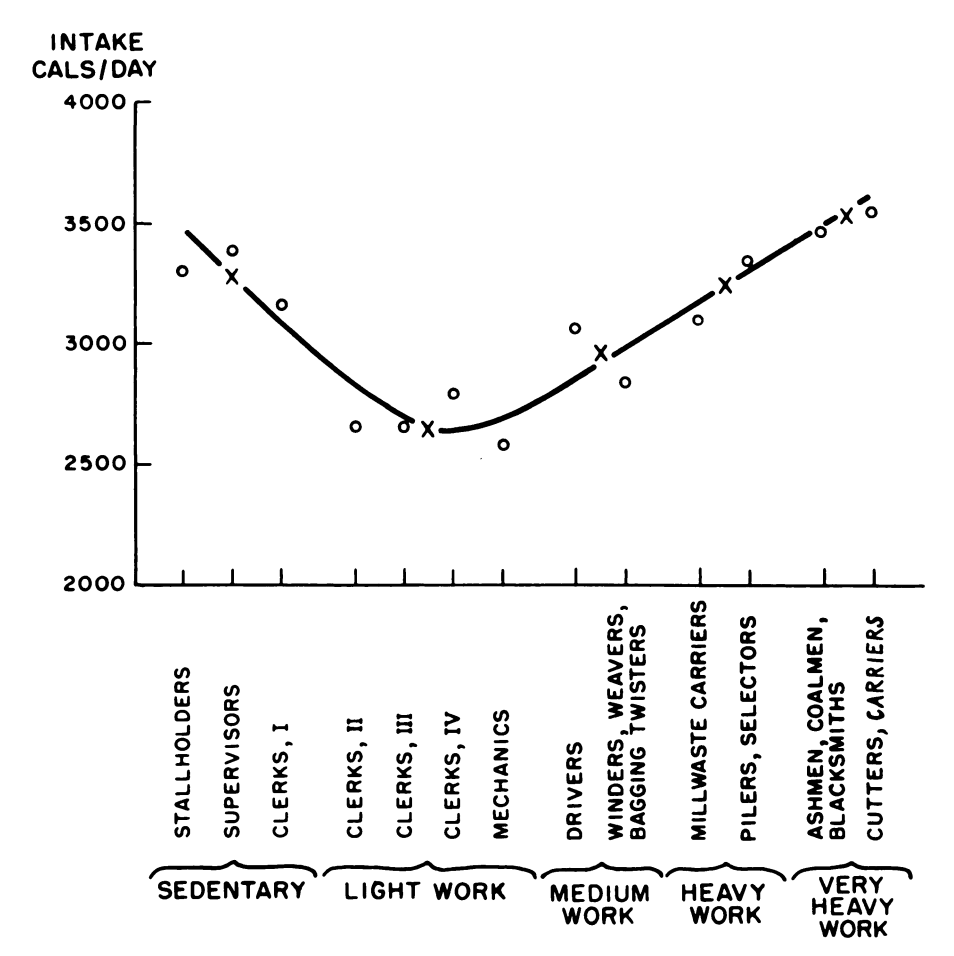
1956, West Bengal, we see a U shaped curve where the least active people ate just as much as the most active, which was around 3,500 calories, but there was still no signs of obesity
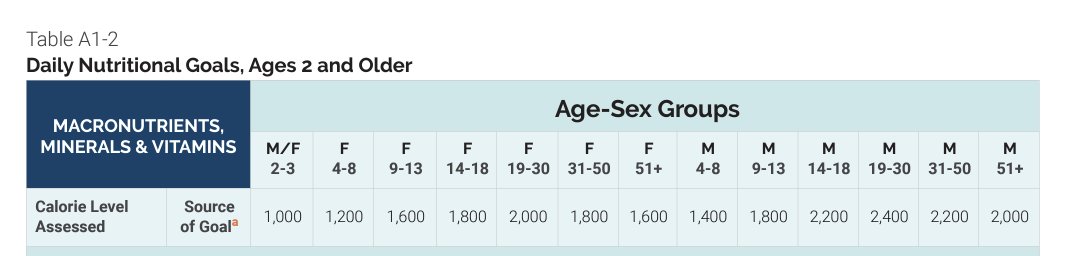
This is the dietary guidelines from 1941. Calories were treated like any other nutrient, i.e, they were concerned about people getting *enough,* whereas today the RDAs have calorie limits Recommended intake was around 3,000 for an average man, who by the way, weighed ~154 lb
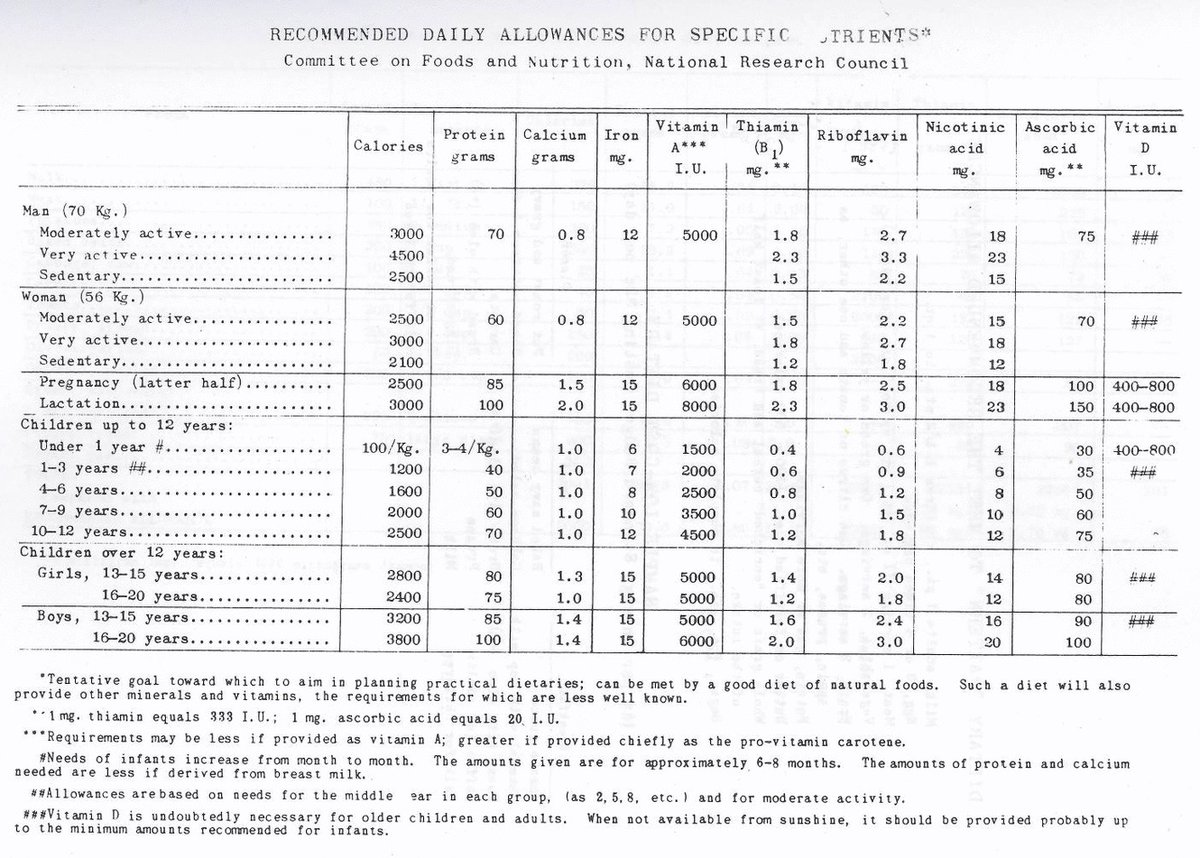
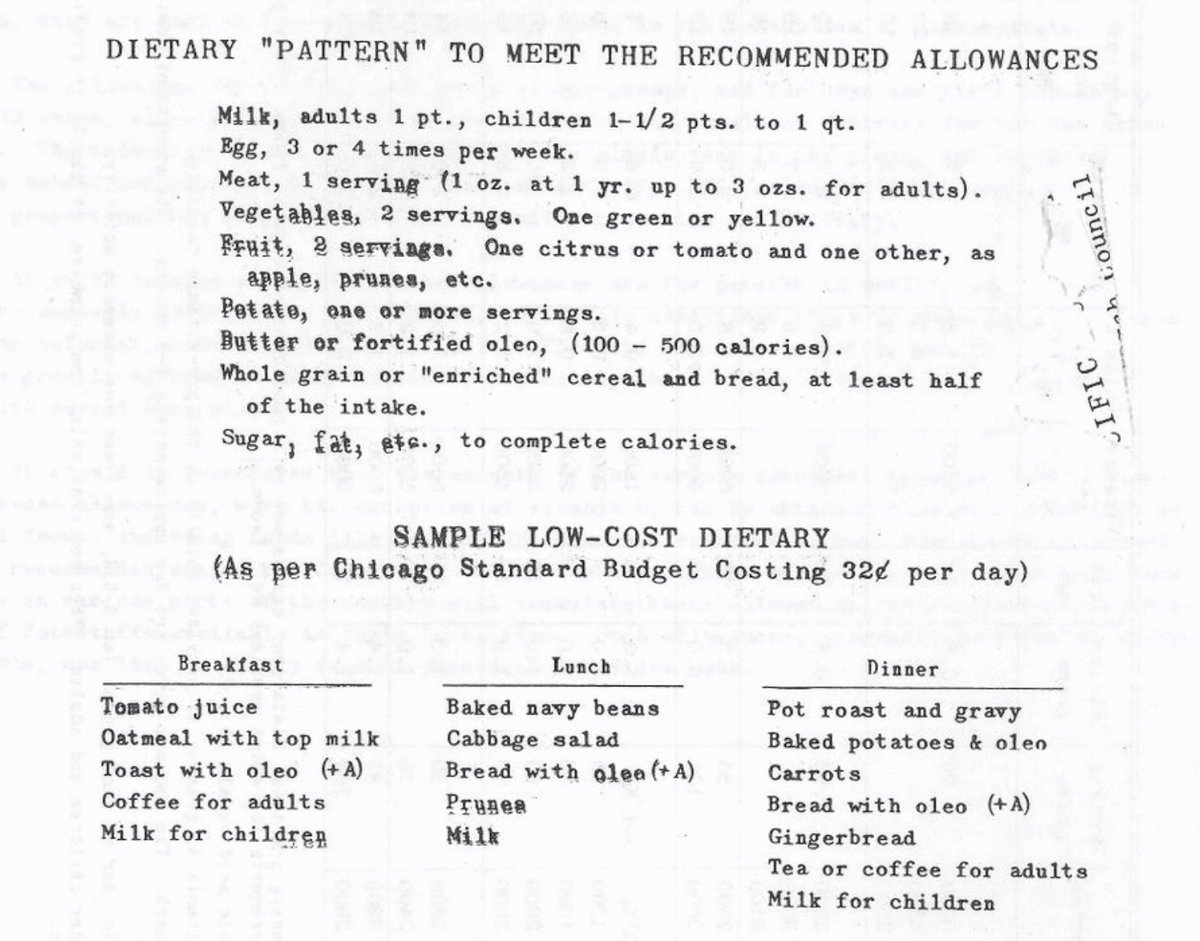
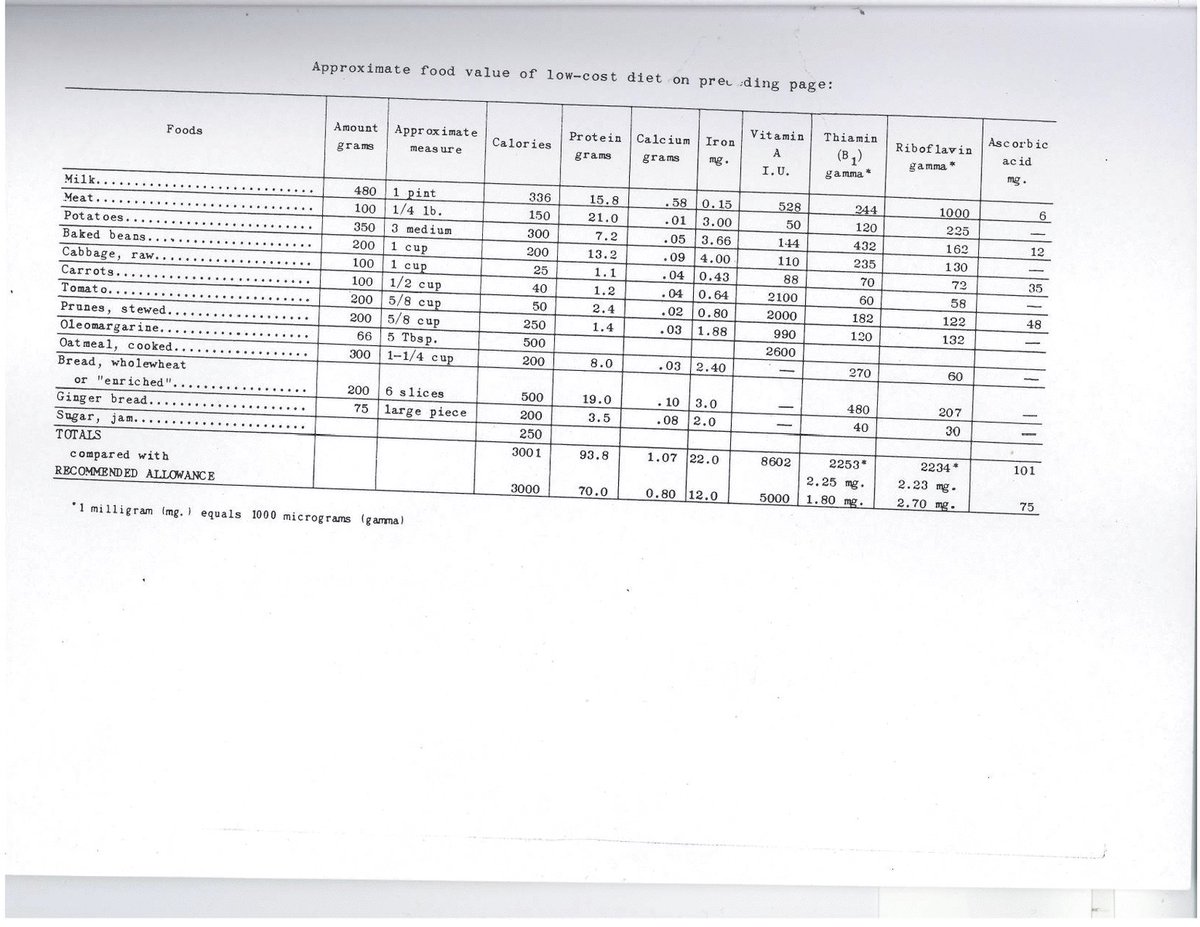
They also provided meal plans. This was a pretty typical diet back in the late 30s/40s in the US. Milk at every meal, meat, bread, potatoes, sugar, fruits and vegetables. Lol at the low cost 32 cents per day diet!
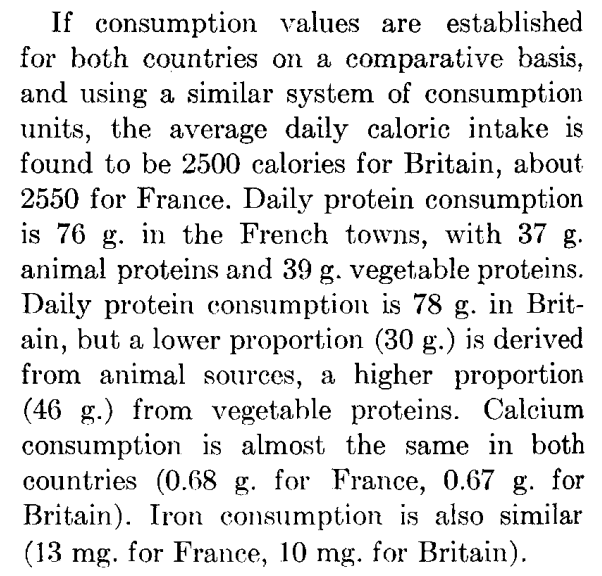
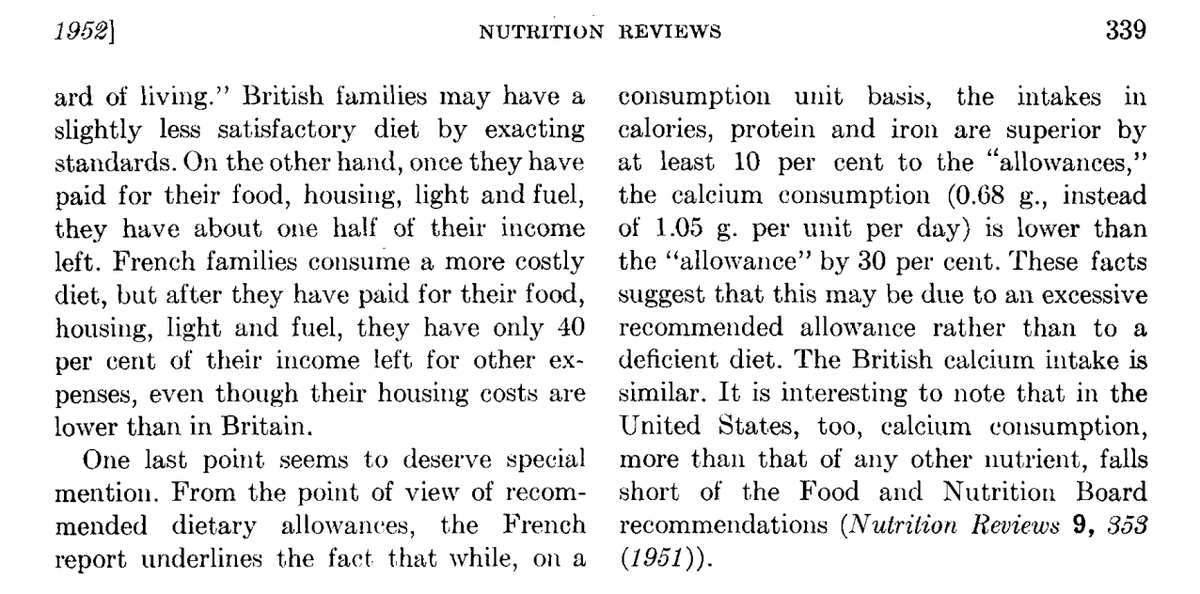
This was paralleled in other countries. This 1952 report examining France and Britain, referred to the French's diet was "superior," in part due to more calories
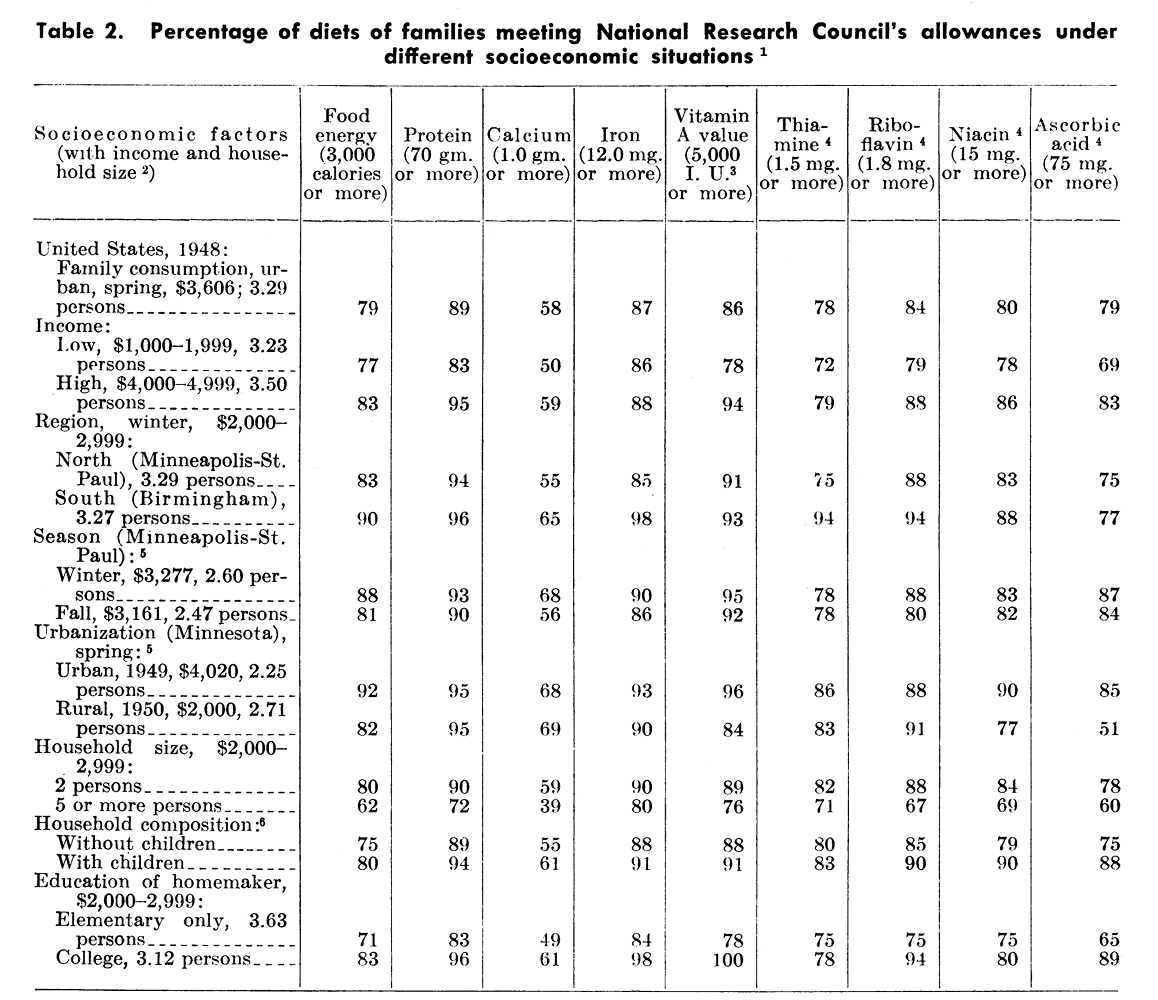
1948 United States, the reason a lot of this research was done was to ensure people were eating enough, whereas now it is all about trying to get people to eat less. Here, they were looking at the % of families who met the recommended amount of calories (which was at least 3,000
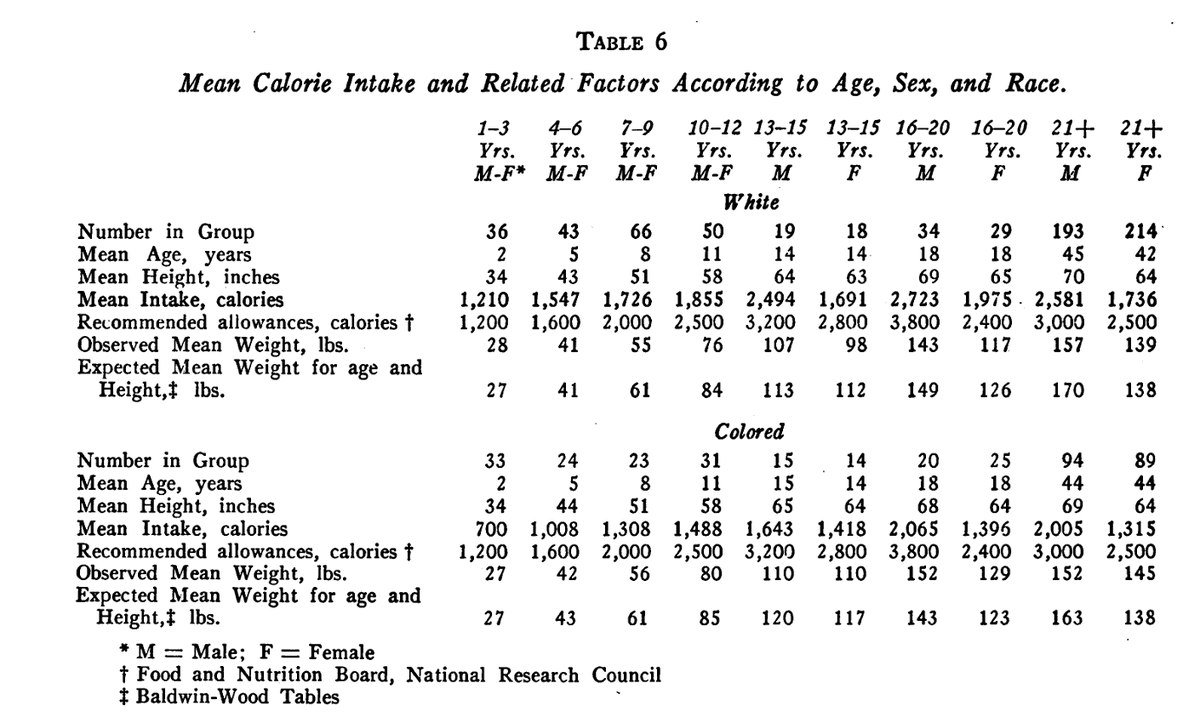
This research was done examining if people in rural Tennessee would eat enough, defined at 3,800 calories for a young man these men were expected to weigh around 149 lbs.
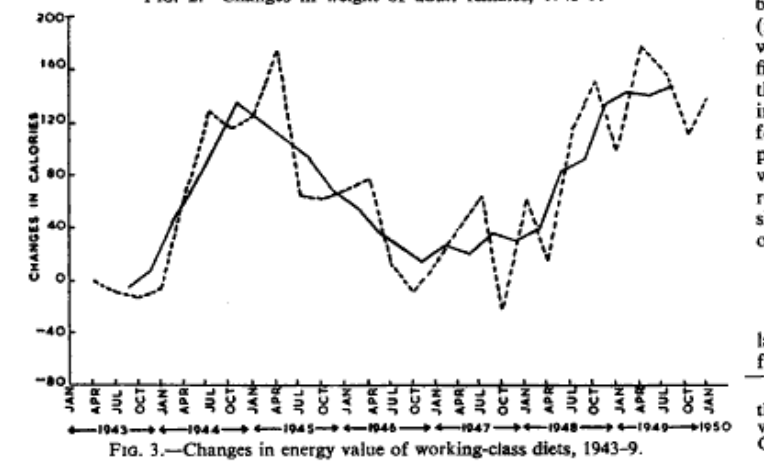
In Great Britain in the 1940s, people were up in arms that they only had access to 2,900 calories a day! “during 1946 and the early part of 1947, when the calorie level fell below 2,900, and dissatisfaction over the food supply was voiced publicly”
It's clear as day that before 1960, our perception and execution of nutrition was completely backwards what it is today we were eating TONS of food, even more than we do today, but weighed about 50 pounds less on average. Obesity was a fraction of what it is today. we ate white
on average, if you were a grown man in the 1930s or 40s, you would eat around 3,500 calories a day, 80-100 grams of protein, 400+ g carbs, 100-140 g fat, and weigh around 150. Scaled similarly for women too. you were eating lots of sugar, meat, saturated fat, simple carbs. how
@thejimmymackey Thought you’d like this one
@Outdoctrination Can you post a summary in a single tweet? Or is this designed to get people hooked and just keep reading more and more then watching more and more of your channel? Can you get to the point for busy people?
@Hasen_Judi Is there something specific about this thread that is unclear? It is intended to show that we have clear examples of people being very lean while eating lots of food (including sugar + fat). That simply eating more and moving less is not the driver of the massive amounts of
@Outdoctrination One interesting hypothesis is the prevalence of parasites in people’s guts: that would explain the huge discrepancy
@Outdoctrination Incredible info here. Amazing job curating it all.
@Outdoctrination I think it's some combination of "cars," "Internet," and "a chemical hunger."
@Outdoctrination This was such an interesting read! You got me to the edge of my seat! Thank you so much for sharing! Bookmarked!
@Outdoctrination What's your thoughts on this? Cc: @Babygravy9 @bronzeagemantis @SolBrah
@Outdoctrination Great thread! Possible contributors: Mass medication Ultra processed food EMFs everywhere Artificial light Plastic I also learned that at 5,8” and 155lbs it seems I am literally the average man.