
No one talks about relative advantages in crypto projects as we are too busy thinking about price all day. But these prices are simply the reflection of relative advantages in practice. Let's learn more about it today 🧵
The whole crypto space evolved on the foundation of relative advantage. Ethereum happened because Bitcoin was not scalable enough to build dapps, Solana happened because Ethereum gas fees were too high for more adoption onchain, Sui is happening because MoveVM has better
In that evolution of crypto projects -- we are witnessing a competition to build better products along with creating new opportunities for users. Teams are trying to make a better version of something that is already working, like L1s, DEXs, lending, and many more.
Projects based on relative advantages also have better chances to get visibility because they don’t really need to create a new audience from scratch, but they need to find a way to get visible to the existing audience which is already there.
For visibility, they could mint tokens and use them to drive incentives to bring people on board. Before the TGE, they make sure to attract capital allocators by showing the potential market they could capture from existing projects, demonstrating the relative advantage.
When they manage to raise funds from some tier 1 investors, their path to gaining visibility among users becomes much easier, and now all they need to do is create another promise of incentives for using what they built.
It’s the same script everyone uses -- but there are only a few teams that actually innovate on something that is being missed by many. There are only a few teams that could build the new primitive.
Those teams that could build new primitives which promise better tech, better experience, or even better tokenomics are the ones that could manage to survive and grow for the long term.
Their token price discovery would go through phases where they might reach the 0-1 stage even before TGE, but the real discovery will happen when the project spends at least 3 years in the stage of adoption. That’s when the point of inflection starts to push speculation above
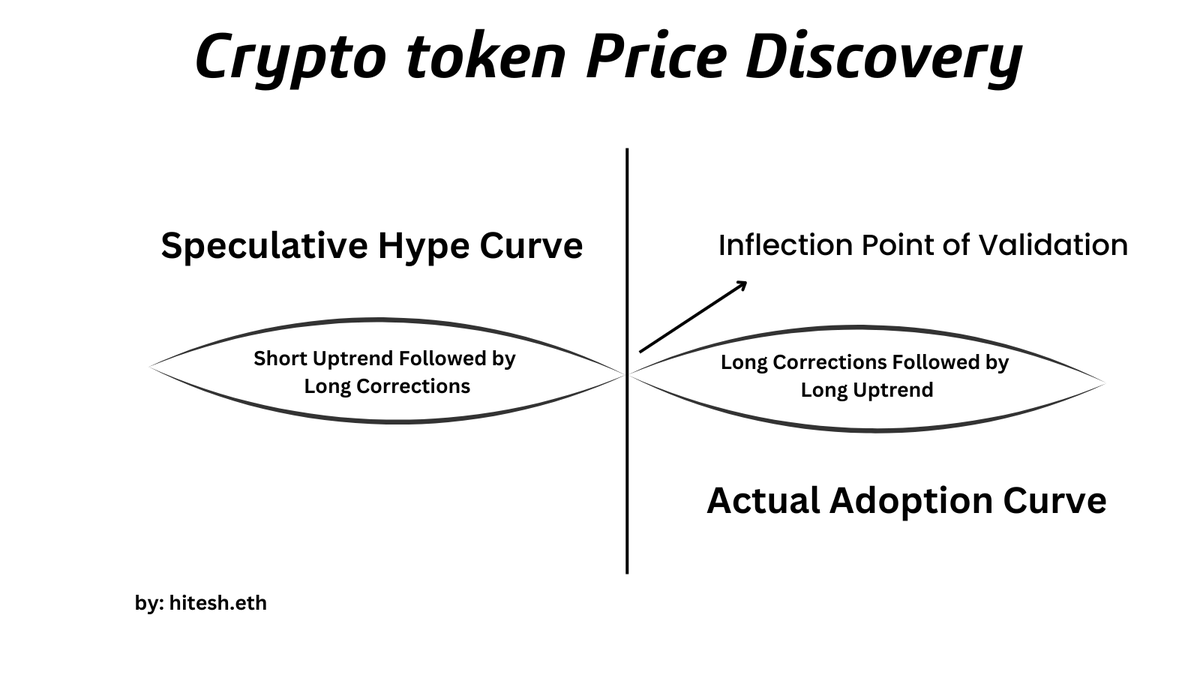
In summary: Hyperliquid is winning because it had a relative advantage over dYdX. Fluid is winning because it had a relative advantage over Uniswap. Euler is winning because it had a relative advantage over Aave. Rabby is winning because it had a relative advantage over
Now it’s time for you to find out that relative advantage, and you can do so by going deep into project docs and really figuring out what they are building and what kind of relative advantage they have against the market leader in the category they are operating in.
I hope you enjoyed reading this thread. If you appreciate my work, please like, share, and repost the tweet below
Thank you :)